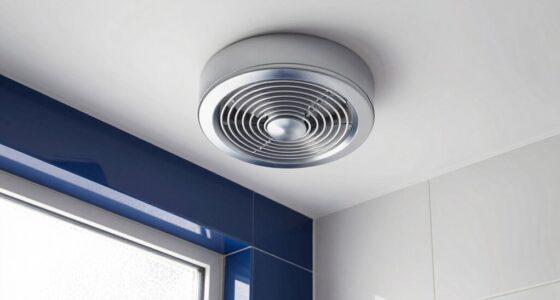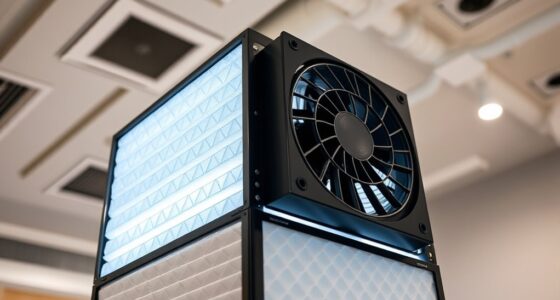
Incorporating air purification into passive house ventilation involves combining natural methods like indoor plants with advanced filtration systems such as HEPA and activated carbon filters. This approach helps you improve indoor air quality by filtering out pollutants and VOCs, while plants naturally absorb toxins and release oxygen. Proper placement, maintenance, and system integration ensure your home stays fresh and healthy. Keep exploring to discover how these techniques work together for ideal indoor air benefits.
Key Takeaways
- Combine natural indoor plants like snake plants or peace lilies with advanced filters to enhance air purification.
- Use HEPA and activated carbon filters in ventilation systems to trap particles and chemical pollutants effectively.
- Strategically place plants near vents or high-traffic areas to maximize their air-cleaning benefits.
- Regularly maintain and replace filters, and monitor indoor air quality for optimal system performance.
- Integrate natural and technological solutions to create a low-energy, healthy indoor environment in Passive Houses.
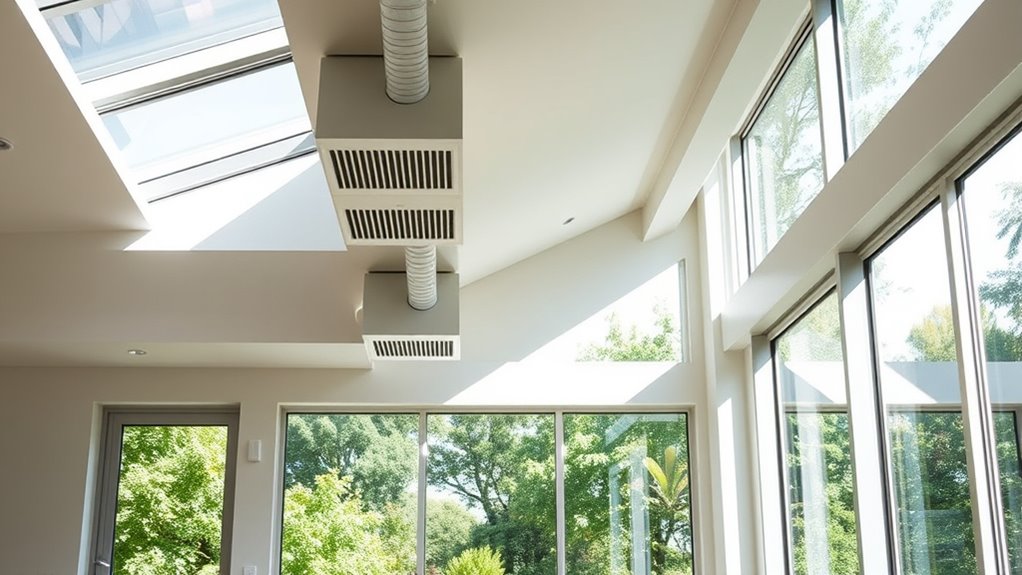
Passive House ventilation systems deliver clean, fresh air while minimizing energy loss. They’re designed to guarantee your home maintains excellent indoor air quality without sacrificing energy efficiency. One effective way to enhance these systems is by integrating indoor plants. Not only do plants add aesthetic value, but they also naturally purify the air by absorbing pollutants and releasing oxygen. When combined with advanced filtration technologies within your ventilation system, indoor plants can play a significant role in creating a healthier living environment. These plants act as natural air filters, reducing volatile organic compounds (VOCs) and other airborne toxins that can accumulate indoors, especially in tightly sealed Passive House homes. You might consider placing low-maintenance, air-purifying plants like snake plants, pothos, or peace lilies near intake vents or in common areas. These plants work synergistically with your mechanical filtration, providing an extra layer of air cleaning that’s both aesthetic and functional.
Advanced filtration technologies are central to improving your Passive House’s air quality. Modern filters, such as HEPA and activated carbon filters, are designed to trap tiny particles, allergens, and odors that traditional filters might miss. When integrated into your ventilation system, these advanced filters ensure that the air circulated throughout your home is as pure as possible. HEPA filters, for instance, can remove 99.97% of airborne particles as small as 0.3 microns, including dust, pollen, and pet dander, making them ideal for allergy sufferers or anyone sensitive to airborne irritants. Activated carbon filters are particularly effective at adsorbing VOCs and other chemical pollutants, further improving indoor air quality. By combining indoor plant integration with these advanced filtration technologies, you’re creating a multi-layered defense against airborne contaminants. This approach not only enhances the effectiveness of your ventilation system but also helps maintain a healthier, more comfortable living space. Incorporating air purification strategies can further optimize your system’s performance and ensure consistently high indoor air quality.
Incorporating air purification into your Passive House’s ventilation system isn’t complicated, but it does require some planning. Carefully selecting plants that thrive indoors and complement your filtration setup can make a noticeable difference. Regular maintenance of filters ensures they operate at peak efficiency, while monitoring indoor air quality can help you adjust your plant placement or upgrade your filtration components as needed. With these measures in place, you’ll enjoy fresh, clean air that’s free from pollutants and allergens, all while keeping energy consumption low. This balanced approach leverages natural and technological solutions to deliver superior indoor air quality, making your Passive House a healthier and more comfortable place to live.

Mintion 3D Printer Filtration System for Bambu Lab P1S/X1C, HEPA H13 & Carbon Air Purifier, Works with P2S/H2D & Enclosed Printers, Capture VOC & Ultrafine Particles for ABS/ASA/PLA/PETG/Nylon
🛡️ 【Purpose-Built for 3D Printer Emissions – Triple-Layer Filtration System】Unlike generic air purifiers, the V1 is engineered specifically…
As an affiliate, we earn on qualifying purchases.
As an affiliate, we earn on qualifying purchases.
Frequently Asked Questions
How Often Should Air Filters Be Replaced in Passive House Systems?
You should replace air filters in your passive house system every 3 to 6 months, depending on filter lifespan and your local air quality. Regular maintenance schedules help guarantee ideal air quality and system efficiency. Check your filters monthly, especially during high pollen or pollution seasons, and replace them promptly when they look dirty or clogged. Proper upkeep keeps your ventilation system running smoothly and maintains healthy indoor air.
Can Air Purifiers Eliminate All Indoor Airborne Pollutants Effectively?
Sure, air purifiers promise to banish all indoor pollutants, but don’t buy the myth. They have limitations, especially with sources like cooking fumes, pets, or cleaning chemicals that keep polluting the air. While they improve air quality, you still need proper ventilation and source control. Think of them as helpful sidekicks, not magic wands—so don’t expect them to eliminate every airborne pollutant entirely.
What Are the Cost Implications of Adding Air Purification to Passive Houses?
Adding air purification in passive houses impacts your budget through initial installation costs and ongoing maintenance. A detailed cost analysis shows that compatible, energy-efficient technology can minimize additional expenses. While the upfront investment might be higher, you benefit from improved indoor air quality and energy savings. Ensuring your chosen purification system aligns with your passive house’s ventilation design helps optimize performance and keeps costs manageable over time.
Are There Specific Air Purification Technologies Best Suited for Passive Houses?
Think of your passive house as a delicate garden needing just the right gust of fresh air. HEPA filters and activated carbon are your best allies, acting as vigilant guardians against pollutants and odors. HEPA filters trap microscopic particles, while activated carbon absorbs gases. Together, they create a purified airflow that preserves your home’s pristine environment, ensuring you breathe easy amidst the tranquility of your energy-efficient sanctuary.
How Does Humidity Control Interact With Air Purification in Passive Ventilation?
Humidity regulation and pollutant removal work together to improve your indoor air quality. When you control humidity levels, you prevent mold growth and reduce airborne allergens, making pollutant removal more effective. Proper passive ventilation systems can incorporate humidity sensors and purification devices that work in tandem, ensuring moisture levels stay balanced while airborne pollutants are filtered out. This synergy keeps your indoor environment healthy, comfortable, and energy-efficient.
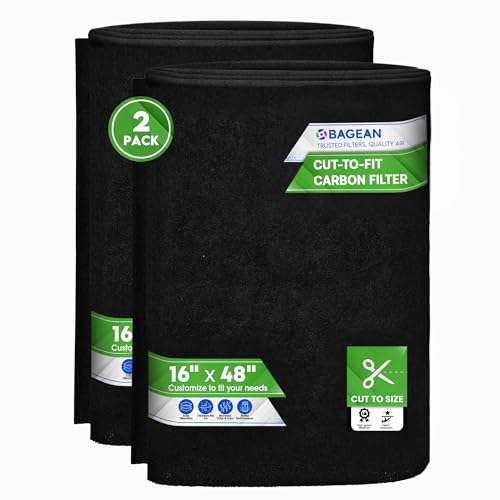
Cut to Fit Activated Carbon Filter Sheet 16” x 48” – Activated Carbon Air Filter for Air Purifiers Window AC Air Vent And More – Charcoal Filters Remove Odors & Freshens the Air (2-Pack)
FRESHEN THE AIR: Our activated carbon filter sheet freshens the air by removing odors ensuring a clean an…
As an affiliate, we earn on qualifying purchases.
As an affiliate, we earn on qualifying purchases.
Conclusion
By incorporating air purification into your Passive House ventilation system, you guarantee cleaner, healthier indoor air. Imagine a family living in a city with high pollution levels; their integrated system filters out pollutants, providing fresh air even during smoggy days. This seamless combination not only boosts indoor air quality but also maintains the energy efficiency you desire. Embrace this approach to create a safer, more comfortable home where every breath you take is purified and pure.

Easy to Grow Live Houseplants (6 Pack), Deluxe Collection of Assorted Air Purifying Indoor Plants, Peperomia, Spider Plants, No Duplicates, Pothos, Easy Plant Care, 2 in Pots, Begonia, Croton
LIVE INDOOR HOUSEPLANTS: Includes a rotating assortment of 6 popular indoor plants in 2 in. grower pots, ranging…
As an affiliate, we earn on qualifying purchases.
As an affiliate, we earn on qualifying purchases.

Aprilaire V22BEC Energy Recovery Ventilator (ERV), 120 CFM Air Exchanger for Homes up to 6,000 Sq. Ft. – Whole-House Fresh Air Ventilation System (HRV/ERV) with Wall, Ceiling, or Floor Mount Bracket
HEALTHY INDOOR AIR – Replaces stale indoor air with fresh outdoor air to improve Indoor Air Quality throughout…
As an affiliate, we earn on qualifying purchases.
As an affiliate, we earn on qualifying purchases.