
To keep your food processing facility safe and compliant, you need effective air quality solutions like HEPA filters, activated carbon, and biofilters to remove dust, bacteria, VOCs, and odors. Proper airflow management and sealing odor sources help maintain a clean environment. Regular maintenance and staff training ensure ideal performance. Implementing these measures safeguards product quality, boosts safety, and enhances efficiency—continue exploring how to improve your air quality systems for long-term success.
Key Takeaways
- Implement HEPA and activated carbon filters within ventilation systems to effectively remove airborne contaminants and odors.
- Regularly maintain and replace filters to ensure optimal air purification and system efficiency.
- Incorporate biofilters and ozone generators as eco-friendly or rapid odor control solutions.
- Seal odor and dust sources at their origin to reduce strain on filtration systems.
- Train staff on waste handling and system maintenance to sustain high air quality standards.
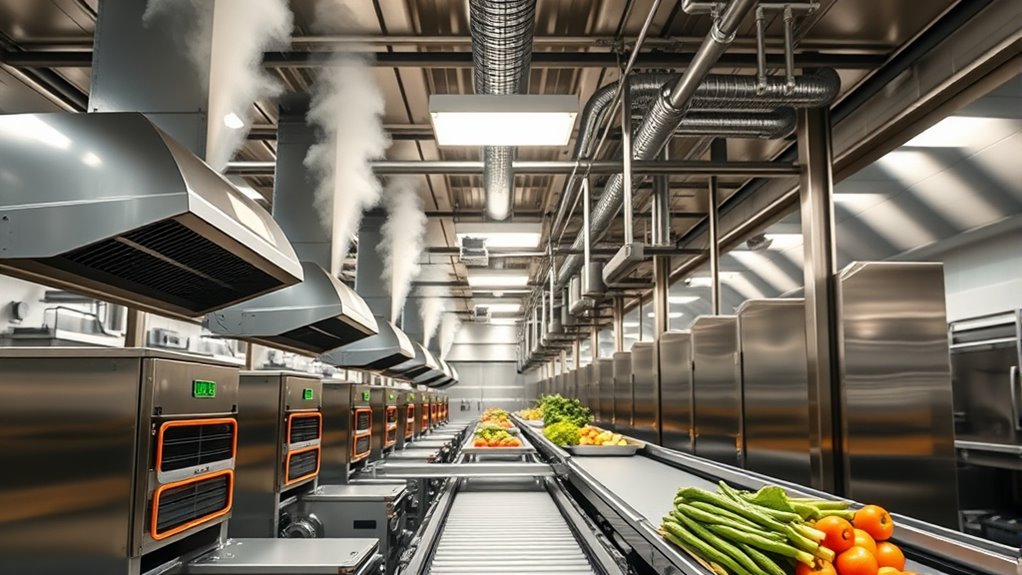
Are you concerned about maintaining ideal air quality in your food processing facility? If so, implementing effective air filtration and odor control measures is essential. In food processing environments, airborne contaminants, including dust, bacteria, and volatile organic compounds, can compromise product safety and worker health. Air filtration systems serve as the first line of defense, capturing particles and microorganisms before they circulate throughout your facility. High-efficiency particulate air (HEPA) filters are particularly effective at removing microscopic contaminants, ensuring that the air remains clean and safe. Regular maintenance and timely replacement of these filters are critical to maintaining their effectiveness. By investing in advanced air filtration, you reduce the risk of cross-contamination, spoilage, and regulatory non-compliance, creating a safer environment for your staff and consumers.
Effective air filtration is essential for ensuring safety and compliance in food processing facilities.
Odor control also plays an essential role in maintaining a positive working environment and meeting industry standards. Unpleasant odors from processing, packaging, or waste management can linger and affect employee morale, customer perception, and even nearby communities. Implementing odor control solutions such as activated carbon filters, biofilters, or ozone generators can considerably reduce these odors. Activated carbon filters are particularly popular because they adsorb a wide range of odor-causing compounds, providing a subtle yet effective barrier. Biofilters utilize naturally occurring microorganisms to break down odors biologically, making them an eco-friendly option. Ozone generators, when used correctly, can neutralize persistent smells quickly, but they require careful management to avoid health hazards. Additionally, understanding air quality standards helps ensure your facility remains compliant and safe.
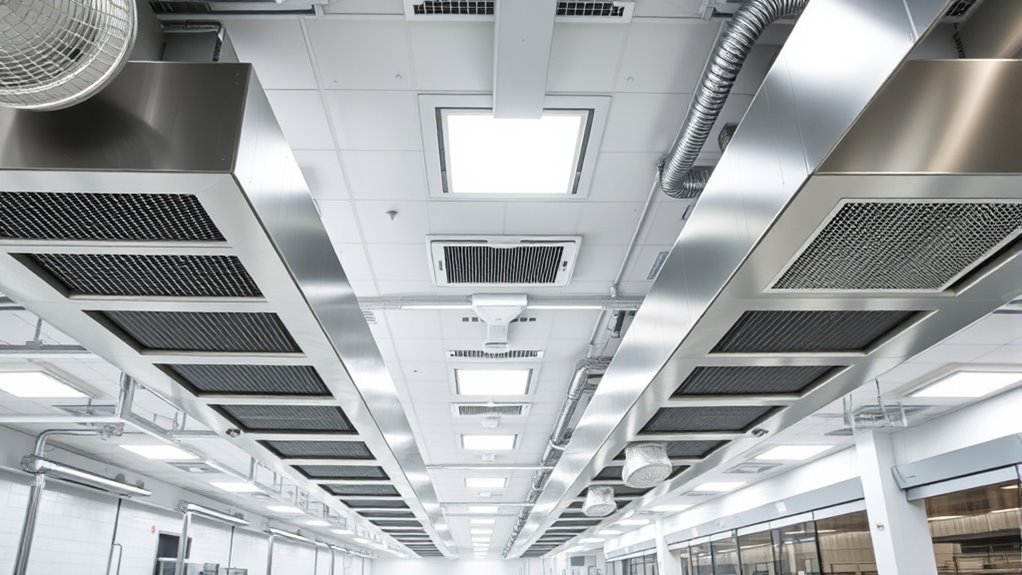
Combining air filtration with odor control strategies offers a thorough solution to air quality issues. For example, integrating activated carbon filters into your existing ventilation systems can target both airborne particles and odors simultaneously. Proper airflow management ensures these systems work efficiently, preventing buildup of contaminants and bad smells. Additionally, sealing potential sources of odor and dust at their origin can minimize the burden on your filtration systems. Educating your staff about best practices for waste handling and equipment cleaning further enhances the effectiveness of your air quality measures. Remember, maintaining ideal air quality isn’t a one-time effort; it demands ongoing attention, regular inspections, and system updates to adapt to changing processing demands.
Ultimately, prioritizing air filtration and odor control keeps your facility compliant with health standards, boosts productivity, and preserves your brand’s reputation. When your air remains clean and free from offensive smells, you create a safer, more pleasant environment for everyone involved. Investing in these solutions demonstrates your commitment to quality, safety, and sustainability in your food processing operations. By staying proactive and vigilant, you ensure that your air quality remains excellent, supporting your business’s success now and into the future.

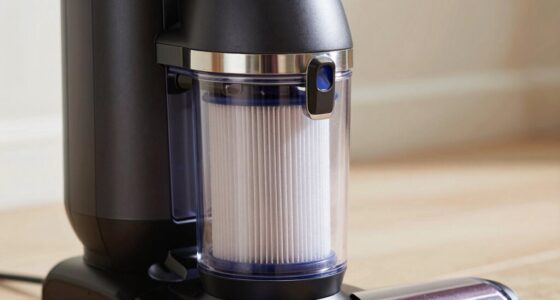
PUREBURG Replacement True HEPA Filters Compatible with TRUSTECH & Air Choice AP-1210 AP1210 Air Purifiers,H13 Air Clean Dust VOCs Odor PM2.5 Smoke,2-Pack
- Package Includes: 2 Replacement HEPA Filters
- Compatibility: Fits TRUSTECH & Air Choice AP-1210
- Filtration Efficiency: Removes dust, PM2.5, VOCs, odors
As an affiliate, we earn on qualifying purchases.
As an affiliate, we earn on qualifying purchases.
Frequently Asked Questions
How Often Should Air Quality Systems Be Maintained in Food Facilities?
You should perform maintenance schedules and system inspections at least every three to six months to guarantee ideal air quality in your food facility. Regular checks help identify issues early, prevent contamination, and maintain compliance with safety standards. Keep detailed records of inspections and maintenance activities, and promptly address any repairs or adjustments needed. Consistent upkeep ensures your air quality systems function effectively, safeguarding both your products and your staff’s health.
Are There Specific Regulations Impacting Air Filtration in Food Processing Plants?
You must follow strict regulations impacting air filtration in food processing plants, or risk catastrophic consequences. Regulatory compliance and air filtration standards are non-negotiable, guiding everything from filter types to maintenance schedules. These rules guarantee food safety and prevent contamination. Ignoring them could lead to hefty fines or shutdowns. Stay vigilant, implement rigorous filtration protocols, and regularly review compliance requirements to keep your facility safe and compliant.
What Are the Most Cost-Effective Air Quality Solutions for Small Facilities?
You can improve air quality in small facilities with budget-friendly upgrades like DIY air filtration systems. These cost-effective solutions often involve simple modifications, such as installing high-quality filters or portable air purifiers. By doing it yourself, you save money and customize your setup to meet your facility’s needs. Regular maintenance ensures peak performance, making DIY air filtration a practical choice for small food processing operations seeking affordable air quality improvements.
How Do Air Quality Systems Impact Food Product Shelf Life?
Air quality systems help extend your food product’s shelf life by reducing airborne bacteria that can cause spoilage. When you install effective air filtration and ventilation, you create a cleaner environment, limiting microbial growth. This means your products stay fresher longer, reducing waste and increasing customer satisfaction. Proper air quality management is essential for maintaining food safety and ensuring your products have a longer, safer shelf life.
Can Air Purification Systems Eliminate All Airborne Contaminants Completely?
Air purification systems can’t eliminate all airborne contaminants completely, but they substantially reduce airborne pathogens and odor, improving air quality. You’ll notice better odor control and a lower risk of contamination, which helps maintain food safety standards. However, some particles or microbes may still be present, so combining air purification with good hygiene practices is essential for the best results in food processing environments.
Conclusion
By implementing innovative air filtration, effective exhaust systems, and diligent maintenance, you can drastically diminish dust, odors, and contaminants in your food processing facility. Don’t delay in designing and deploying these dynamic, dependable solutions. Deliver a safer, cleaner, and compliant environment with ease. Remember, your proactive approach promotes purity, protects health, and propels productivity. Take charge today—make your facility a fortress of fresh, flawless airflow for flawless food production.