
Hospital air purification systems play a crucial role in protecting both patients and staff by removing harmful bacteria, viruses, dust, and pollutants. They use high-efficiency filters like HEPA and advanced technologies such as UV-C sterilization to guarantee clean, safe air. Proper system design, maintenance, and regular filter replacements are necessary for peak performance. To discover how these systems keep healthcare environments safe, keep exploring how these innovations work behind the scenes.

Get garden gear delivered free with Prime
- Fast, free delivery on millions of items
- Prime Video, Amazon Music and more included
- Member-only deals all year
Key Takeaways
- Advanced filtration systems like HEPA filters remove airborne bacteria, viruses, and pollutants, ensuring cleaner indoor air.
- UV-C sterilization enhances microbial inactivation, providing an extra layer of protection against pathogens.
- Proper system design and regular maintenance maintain high air quality and prevent contaminant buildup.
- Continuous air cycling and optimized airflow patterns reduce infection risks in sensitive hospital areas.
- Prioritizing air quality safeguards patient recovery and staff safety, supporting overall hospital health standards.
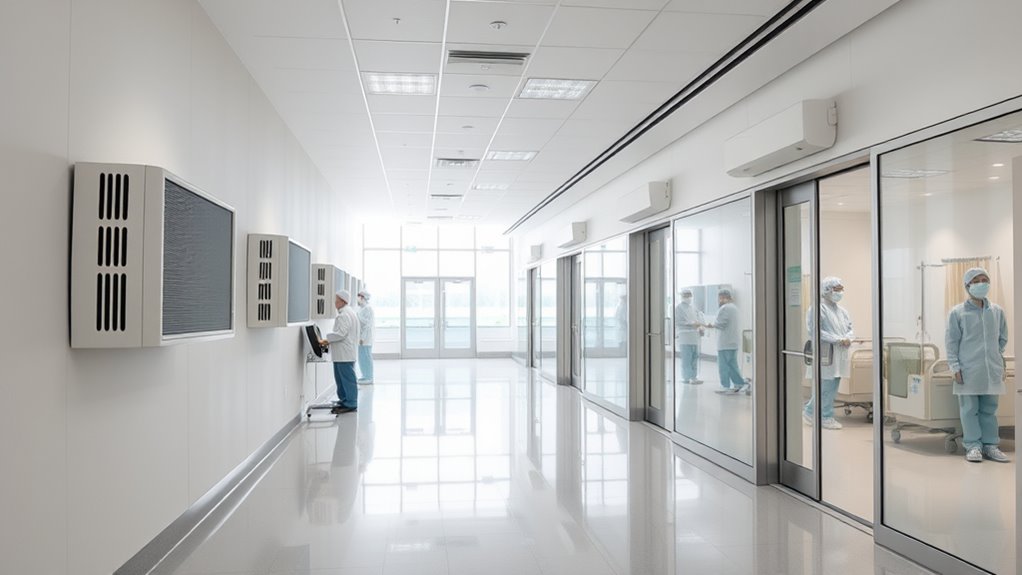
Have you ever wondered how hospitals keep the air clean and safe for patients and staff? The answer lies in the meticulous management of air quality through advanced filtration systems. Hospitals are environments where controlling airborne contaminants isn’t just about comfort; it’s about safety and preventing infections. To achieve this, they employ a variety of filtration systems designed to remove bacteria, viruses, dust, and other pollutants from the air. These systems are integral to maintaining a sterile environment, especially in operating rooms, intensive care units, and areas where immunocompromised patients are treated.
Modern hospital filtration systems work by continuously cycling the air through high-efficiency filters. These filters, such as HEPA (High-Efficiency Particulate Air) filters, are capable of trapping particles as small as 0.3 microns with 99.97% efficiency. This means that even tiny pathogens are captured before they can circulate and pose a threat. The process involves drawing in room air, forcing it through the filter media, and then releasing the clean, purified air back into the environment. This constant filtration cycle considerably reduces the presence of airborne infectious agents, lowering the risk of hospital-acquired infections.
Hospital filtration systems trap tiny pathogens with HEPA filters, reducing airborne infections through continuous, efficient air cycling.
In addition to HEPA filters, hospitals often utilize UV-C sterilization within their ventilation systems. UV-C light helps neutralize microorganisms that might bypass physical filters, adding an extra layer of protection. The integration of these technologies ensures that the air quality remains consistently high, even during busy periods when patient and staff traffic increases. The design of hospital ventilation systems also emphasizes proper airflow patterns, ensuring that contaminated air is swiftly removed from critical zones and replaced with filtered, clean air.
Maintaining ideal air quality through efficient filtration systems isn’t a one-time effort; it requires regular maintenance, timely replacement of filters, and monitoring. Hospital staff and facility managers keep a close eye on system performance to ensure filters aren’t clogged or compromised. When filters are replaced on schedule, the filtration systems operate at peak efficiency, providing continuous protection. This proactive approach helps prevent the buildup of pollutants and maintains a safe environment for everyone inside the hospital.
Ultimately, your health and safety depend on these sophisticated filtration systems working seamlessly behind the scenes. They are silent guardians, diligently purifying the air and reducing the risk of infection transmission. By prioritizing air quality through advanced filtration, hospitals create a safer space for recovery and care, giving both patients and staff peace of mind that their environment is as clean and safe as it can be.
HEPA air purifier for hospital use
As an affiliate, we earn on qualifying purchases.
As an affiliate, we earn on qualifying purchases.
Frequently Asked Questions
How Often Should Hospital Air Filtration Systems Be Serviced?
You should service your hospital air filtration systems regularly, typically every 6 to 12 months, depending on usage and manufacturer recommendations. Follow maintenance schedules closely and replace filters promptly when they reach their expiration or become visibly dirty. Regular filter replacement guarantees peak air quality and system efficiency, reducing the risk of airborne contaminants. Keep detailed records of servicing to maintain compliance and ensure continuous protection for patients and staff.
What Are the Latest Advancements in Hospital Air Purification Technology?
You’ll be glad to know that the latest advancements in hospital air purification include UV sterilization and HEPA filtration, which work together to eliminate pathogens effectively. UV sterilization destroys bacteria and viruses, while HEPA filters trap microscopic particles. These innovations guarantee cleaner air, reduce infection risks, and protect both patients and staff. Implementing these technologies keeps hospitals at the forefront of safety and health standards.
How Do Air Purifiers Impact Hospital Energy Consumption?
You’ll find that air purifiers impact hospital energy consumption, but modern models focus on energy efficiency to minimize this. They use advanced filters and smarter operation, which reduces power use. When doing a cost analysis, you’ll see that investing in energy-efficient systems can lower long-term operational costs despite initial expenses. Overall, these upgrades help balance improved air quality with sustainable energy use, benefiting both staff and patients.
Are Portable Air Purifiers Effective in Hospital Settings?
Portable air purifiers are like lungs for hospital rooms, breathing fresh life into the air. They can be highly effective in improving hospital air quality, especially in targeted areas. While they aren’t a complete solution, they help reduce airborne contaminants and pathogens, making environments safer for patients and staff. Proper placement and maintenance guarantee these devices work efficiently, supplementing the hospital’s overall air purification strategy.
What Are the Costs Associated With Upgrading Hospital Air Purification Systems?
Upgrading hospital air purification systems can be costly, and you should consider your budget considerations carefully. The expenses include new equipment, installation, and ongoing maintenance. To manage costs, explore funding strategies like grants, government programs, or reallocating existing resources. Planning ahead guarantees you allocate funds effectively, and you can prioritize system upgrades to maximize safety without exceeding your financial limits.
Conclusion
Think of your hospital as a fortress, where air purification acts as an invisible shield guarding everyone inside. By constantly filtering out harmful particles and pathogens, you’re creating a safe sanctuary for patients and staff alike. Just as a fortress relies on its defenses, your hospital’s air purification system stands guard, ensuring that every breath taken within these walls is clean and safe. Together, you’re building a resilient haven against unseen threats.
Fall Picks
fall essentials
As an affiliate, we earn on qualifying purchases.