
TL;DR

Get garden gear delivered free with Prime
- Fast, free delivery on millions of items
- Prime Video, Amazon Music and more included
- Member-only deals all year
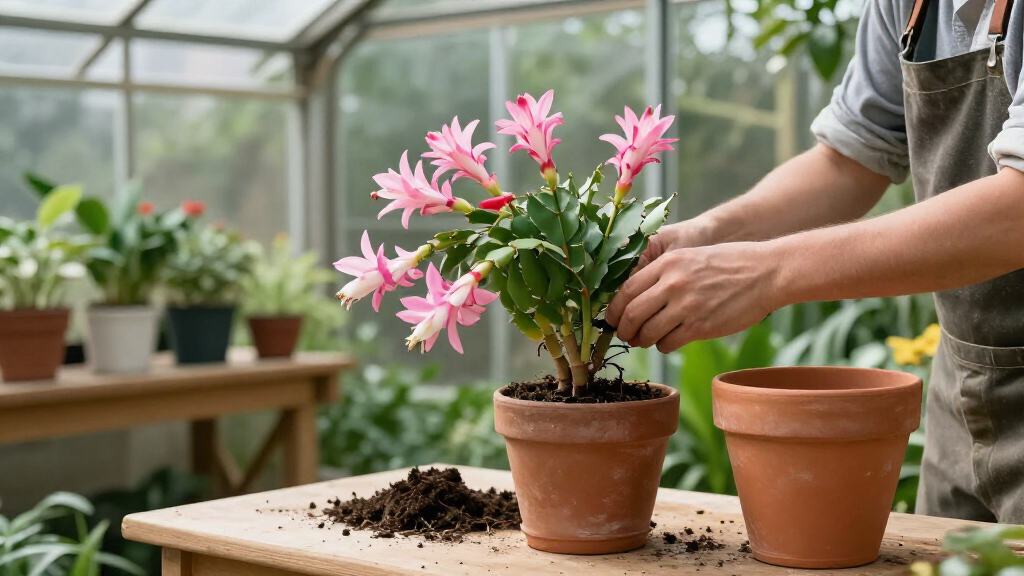
A Christmas cactus is best repotted in spring, after flowering, according to houseplant experts quoted by Ideal Home. Repotting during autumn bud formation may prompt buds to drop; act sooner only when problems such as a cracked pot or rotting roots make it necessary.
Christmas cactus owners should wait until spring to repot plants that are due for a new container, according to houseplant experts quoted in an Ideal Home report. Repotting while buds are forming in autumn can disturb the plant and may cause them to drop, putting the season’s flowers at risk.
Jo Lambell, founder of Beards & Daisies, told Ideal Home that the preferred time to repot is in spring, after the plant has finished flowering. She said the cactus begins putting on new growth then, helping it settle into a new pot. The advice is to wait rather than carry out routine repotting in October, when the plant is setting flower buds.
Repotting is not needed every year. Lambell said Christmas cacti prefer to be somewhat snug in their containers and that repotting every two or three years is generally sufficient. A plant looking large for its pot does not by itself mean it needs immediate attention, according to the report.
There are exceptions when a plant’s condition makes waiting inadvisable. Lambell cited a cracked pot or soggy, rotting roots as reasons to repot in autumn if necessary. In that case, she advised handling the plant gently, keeping the root ball as intact as possible and returning it to the same spot to limit disruption. Andy Little, houseplant buyer at British Garden Centres, said rotten sections can be removed and healthy sections used to grow new plants, though he said propagation is best done in spring.
Protecting This Season’s Buds
The timing advice matters because a Christmas cactus may already be preparing to flower well before its festive display appears. Moving or disturbing it during bud formation can lead to buds dropping, according to Lambell. For owners hoping to keep this year’s flowers, postponing a non-urgent pot change avoids adding stress at a sensitive stage.
The guidance also cautions against treating a snug pot as a problem on its own. Since the plant does not need frequent repotting, waiting can protect both its developing buds and its established root ball. However, root rot or a damaged container changes the calculation: those issues may require intervention even if flowering is at risk.
Christmas cactus pot with drainage holes
As an affiliate, we earn on qualifying purchases.
As an affiliate, we earn on qualifying purchases.
The Spring Repotting Window
The Ideal Home report focuses on the seasonal timing of care rather than a new product or change in horticultural guidance. Its advice follows the plant’s flowering cycle: autumn is when buds begin to form, while spring comes after flowering and coincides with new growth. Lambell said that spring growth helps a repotted plant settle into its new container.
The report also notes that Christmas cacti can be propagated from healthy sections, but Little recommends doing this in spring. That provides a consistent timetable for routine repotting and propagation: avoid unnecessary disturbance during bud formation, then assess the plant after flowering. The report does not give a specific spring month, since flowering and growth may vary by plant and conditions.
“The best time to repot a Christmas cactus is in spring, once it has finished flowering.”
— Jo Lambell, founder of Beards & Daisies, speaking to Ideal Home
When Waiting May Not Work
The report does not specify how quickly a plant may drop buds after being disturbed, or how likely bud loss is in any particular case. Lambell describes it as a risk rather than a guaranteed outcome. It also does not set out a detailed diagnosis for root rot or a threshold for when a damaged plant must be repotted immediately.
Plant condition should guide urgent decisions, but the available advice does not establish that every cracked pot or damp-looking root system requires the same response. The report gives no fixed date for spring repotting and does not address how differences in indoor conditions might affect flowering or new growth.
Assess the Plant After Flowering
For a healthy plant, the next step is to leave it undisturbed through bud formation and flowering, then check in spring whether it genuinely needs a larger or replacement pot. The report supports repotting only when needed, rather than on an annual schedule; Lambell’s suggested interval is about every two or three years.
If roots are rotting or a pot is cracked before then, Lambell’s advice is to handle the plant gently, preserve as much of the root ball as possible and return it to the same location. Owners considering propagation can use healthy sections, following Little’s advice to do this in spring when feasible. No more specific date or care schedule is given in the report.
Key Questions
When should I repot a Christmas cactus?
Spring, after flowering, is the recommended time, according to Jo Lambell in the Ideal Home report. The plant is then starting new growth and may settle into a new pot more readily.
Can repotting in autumn affect Christmas cactus flowers?
It may. Lambell said the plant starts setting buds in October and that disturbing it can cause buds to drop. The report advises postponing routine repotting to protect the developing flowers.
How often does a Christmas cactus need repotting?
Lambell said that every two or three years is plenty. The plant can tolerate being somewhat snug in its pot, so its size alone does not necessarily mean it needs repotting.
Should I wait if the pot is cracked or the roots are rotting?
Those are examples Lambell gave of reasons to repot in autumn if necessary. She advises keeping the root ball intact as much as possible, handling the plant gently and returning it to the same spot. The report does not provide a full diagnostic guide for root problems.
Can I propagate a Christmas cactus while repotting it?
Andy Little said rotten parts can be removed and healthy sections used to grow new plants, but he recommends doing this in spring where possible. The report gives no detailed propagation instructions.
Source: rss
Halloween Picks
halloween
As an affiliate, we earn on qualifying purchases.