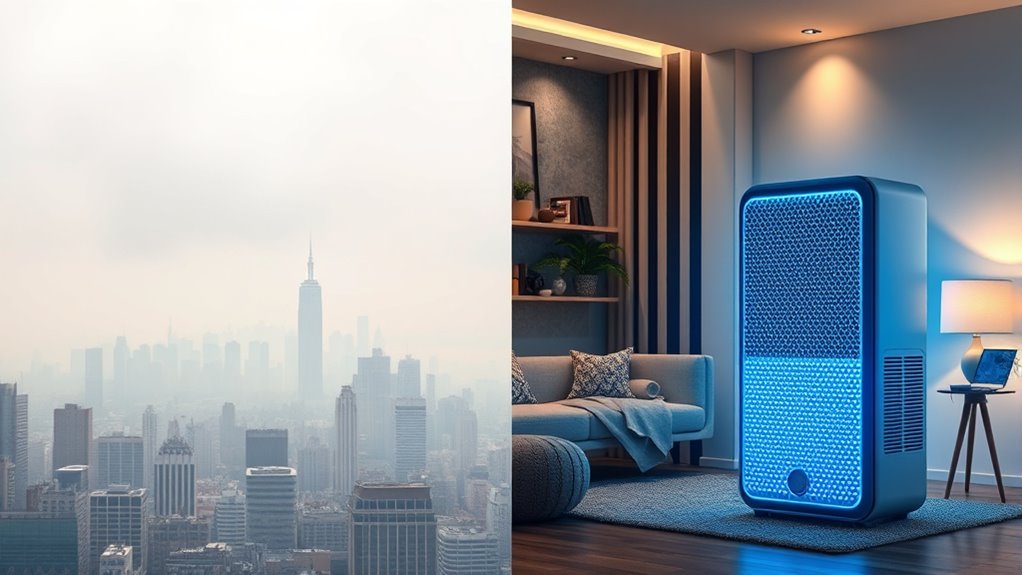

When outdoor AQI rises, indoor air quality typically worsens because pollutants like smog and particulate matter enter your home, especially if you don’t use proper filtration. High AQI levels mean more outdoor pollution, which can negatively impact indoor environments without proper ventilation or air cleaning systems in place. To keep your indoor air healthier during pollution spikes, it’s important to understand how outdoor air affects your space—stay with us to learn more about effective measures.
Key Takeaways
- Higher outdoor AQI often leads to increased indoor pollutant levels if ventilation isn’t properly managed.
- Effective indoor air filtration systems can mitigate the impact of outdoor pollution on indoor air quality.
- Maintaining HVAC filters and ventilation systems enhances indoor air safety during high AQI events.
- Reducing ventilation or recirculating indoor air during pollution spikes helps limit outdoor pollutant infiltration.
- Continuous outdoor AQI monitoring informs indoor air quality strategies and protective measures.

Understanding the relationship between outdoor Air Quality Index (AQI) and indoor air quality is vital because outdoor pollution often influences the air inside your home or workplace. When the AQI rises due to high levels of smog, particulate matter, or other pollutants, it’s likely that the indoor air will also become more contaminated if you don’t take steps to protect yourself. This connection highlights the significance of managing indoor air quality proactively, especially during smoggy days or high pollution events. One effective way to do this is through indoor air filtration systems. These devices filter out harmful particles, VOCs, and other pollutants that make their way inside, helping you breathe cleaner air regardless of outdoor conditions. Investing in a good air purifier with HEPA filters can make a noticeable difference, especially if you or family members have allergies or respiratory issues. Additionally, choosing performance kits for HVAC systems can improve their efficiency and filtration capacity, further enhancing indoor air quality.
However, indoor air filtration alone isn’t enough. Ventilation system maintenance plays a vital role in controlling indoor air quality, especially when outdoor AQI is high. Your ventilation system helps exchange indoor air with fresh outdoor air, diluting indoor pollutants and maintaining a healthier environment. Regularly cleaning and replacing filters in your HVAC or ventilation systems ensures they operate efficiently and don’t become sources of indoor pollution themselves. Poorly maintained systems can circulate dust, mold spores, or other contaminants, compounding the effects of outdoor pollution. When outdoor AQI spikes, you might want to temporarily reduce ventilation or switch to recirculating indoor air to prevent pollutants from entering. However, doing so without proper maintenance can also cause issues, so it’s essential to follow manufacturer guidelines and schedule routine inspections.

COOLJOB 2 Pairs Gardening Gloves for Women Ladies, Breathable Rubber Coated for Yard Garden, Outdoor Indoor Protective Work with Grip, Medium Size, Red & Green
- Designed for Women: Lightweight, breathable, comfortable fit
- Protective and Durable: Thick fingertips and flexible cuffs
- Multi-Purpose Use: Suitable for gardening, yard work, DIY projects
As an affiliate, we earn on qualifying purchases.
Frequently Asked Questions
How Do Different Building Materials Affect Indoor Air Quality?
Building materials markedly impact your indoor air quality through emissions and permeability. Materials with high emissions release volatile organic compounds (VOCs), which can cause health issues. Porous materials with high permeability allow pollutants and moisture to pass through, potentially fostering mold growth. Choosing low-emission, less permeable materials helps reduce indoor pollutants, making your indoor environment healthier and safer. Always consider material emissions and permeability when selecting building supplies for improved air quality.
Can Indoor Air Purifiers Fully Eliminate Outdoor Pollution Influence?
While indoor air purifiers do a great job cleaning your air, they can’t fully eliminate outdoor pollution influence due to their limitations. They excel at reducing indoor pollution sources but may struggle against persistent outdoor pollutants like vehicle emissions or pollen that seep inside. For ideal air quality, combine purifiers with good ventilation and outdoor air management, understanding that some outdoor particles might still linger despite your best efforts.
What Are Effective Ways to Reduce Indoor Pollution During High Outdoor AQI?
During high outdoor AQI, you can effectively reduce indoor pollution by using a high-quality air purifier that effectively targets airborne particles. Keep windows and doors closed to limit outdoor pollutants entering your space. Address indoor pollution sources like smoking, cooking, or using harsh cleaning products. Regularly ventilate when outdoor air quality improves, and maintain your air purifier for ideal air purifier effectiveness. These steps help keep your indoor air cleaner despite outdoor pollution levels.
How Does Ventilation Impact the Indoor-Outdoor Air Quality Relationship?
Imagine air flowing like a gentle river between your home and the outside world. Ventilation strategies, like opening windows or using exhaust fans, facilitate air exchange, impacting indoor air quality. When outdoor air is clean, this exchange refreshes your space; when polluted, it can bring in contaminants. Proper ventilation controls this flow, helping you balance outdoor influences and maintain a healthier indoor environment.
Are There Seasonal Variations in the Correlation Between Outdoor AQI and Indoor Air?
Yes, seasonal fluctuations affect the correlation between outdoor AQI and indoor air quality. During winter, pollutant dispersion decreases due to temperature inversions, leading to higher outdoor pollution levels that can seep indoors. Conversely, in summer, better dispersion reduces outdoor pollutants, improving indoor air quality if ventilation is adequate. These seasonal changes influence how outdoor air impacts indoor environments, emphasizing the need for seasonal awareness in air quality management.
Conclusion
Think of outdoor air quality as a mighty river shaping the landscape of your home. When the river runs dirty, it seeps into your sanctuary, clouding your indoor air. By keeping an eye on outdoor AQI, you become a vigilant gardener, shielding your indoor space from pollution’s reach. Remember, the health of your indoor air depends on the health of the environment outside—so stay alert and act early to keep your sanctuary pure and safe.