Measuring indoor ozone levels can be tricky because sensors may drift over time or be affected by interfering substances, leading to inaccurate readings. To overcome these challenges, you should choose reliable detection methods like electrochemical or UV absorption sensors and guarantee regular calibration against known standards. Proper maintenance, understanding sensor responses, and selecting devices with automatic calibration features help you get accurate, trustworthy data. Keep exploring, and you’ll discover more ways to ensure precise ozone monitoring indoors.
Key Takeaways
- Accurate indoor ozone measurement requires properly calibrated sensors to prevent drift and false readings.
- Electrochemical sensors are common but may need frequent calibration for reliable results.
- Interfering compounds and short-term ozone spikes can affect detection accuracy.
- Regular calibration against known standards ensures measurement reliability over time.
- Choosing sensors with appropriate detection methods (e.g., UV absorption or photometric) improves precision.

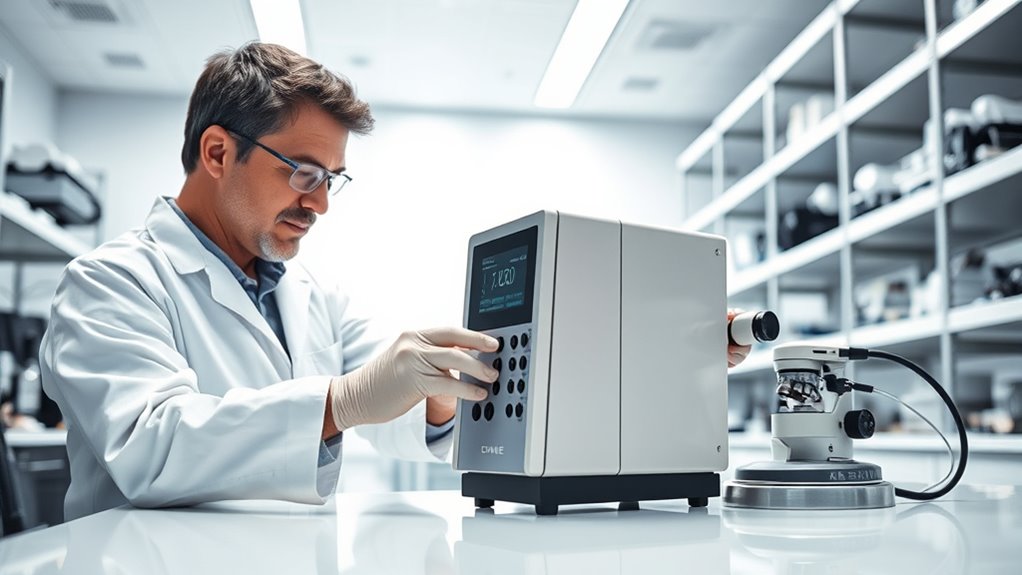
Have you ever wondered how to accurately measure ozone levels inside your home? If so, you’re not alone. Monitoring indoor ozone is essential for maintaining healthy air quality, but it’s not as straightforward as it might seem. One of the key challenges is guaranteeing that your measurement devices are providing reliable readings. This is where sensor calibration becomes indispensable. Over time, sensors can drift, meaning their accuracy diminishes, leading to false readings or missed detection of dangerous ozone concentrations. Regular calibration against known ozone standards helps keep your sensors precise and trustworthy, making sure you’re getting an accurate picture of your indoor environment. Many detection methods are available, from simple electrochemical sensors to more advanced photometric or chemiluminescent detectors. Each method has its strengths and limitations, but choosing the right one depends on your specific needs, budget, and the level of precision you require. For example, electrochemical sensors are affordable and easy to use, making them popular for home monitoring. However, they can be more susceptible to drift and interference, which highlights the importance of proper calibration. Detection methods utilizing optical techniques, like UV absorption, tend to be more accurate and stable over time but are often more expensive and complex to operate. When selecting a device, it’s essential to understand how it detects ozone and whether it includes features like automatic calibration or easy-to-follow calibration procedures. This can greatly improve long-term accuracy and ease of use. Moreover, understanding detection methods helps you interpret your readings correctly. Some sensors might respond to other volatile compounds, leading to false alarms, while others might have slow response times, missing short-term spikes in ozone levels. As a result, selecting a device with suitable detection capabilities is critical. Regular maintenance and calibration ensure your measurements reflect actual ozone concentrations rather than sensor inaccuracies. Many modern devices incorporate self-calibration features, but even these should be periodically checked against external standards. Additionally, understanding the impact of sensor technology on measurement accuracy can help you choose the most reliable device. To sum up, measuring ozone indoors requires careful attention to sensor calibration and choosing appropriate detection methods. Maintaining your sensors through regular calibration and understanding how your detection method works will give you the confidence that your indoor air quality readings are accurate. This knowledge empowers you to make informed decisions about your environment, whether it’s improving ventilation, reducing sources of ozone, or simply ensuring the safety of everyone in your home.

LEVOIT Air Purifier for Home Allergies and Pets Hair Smokers in Bedroom, H13 True HEPA Filter, 24db Filtration System Cleaner Odor Eliminators, Remove 99.97% Dust Smoke Mold Pollen, Core 300, White
- Certified by AHAM: Ensures reliable air quality performance
- Powerful Cleaning: 56W motor with 143 CFM CADR
- Effective Air Purification: HEPA-grade filter for dust, smoke, odors
As an affiliate, we earn on qualifying purchases.
Frequently Asked Questions
What Are the Health Effects of Low-Level Indoor Ozone Exposure?
Low-level indoor ozone exposure can pose health risks you might not notice right away. It can irritate your respiratory system, causing coughing, throat irritation, and shortness of breath. Prolonged exposure may worsen asthma symptoms or increase susceptibility to respiratory infections. Indoor ozone can also react with other indoor pollutants, creating harmful byproducts. To protect yourself, keep indoor ozone levels low and make sure good ventilation in your living spaces.
How Does Humidity Affect Indoor Ozone Measurement Accuracy?
Humidity interference can markedly impact your indoor ozone measurements, leading to inaccuracies. High humidity levels can cause measurement calibration issues, making readings appear higher or lower than actual ozone levels. Conversely, low humidity can reduce sensor sensitivity. To maintain accuracy, you should regularly calibrate your instruments, accounting for humidity fluctuations, and consider using sensors designed to minimize humidity interference, ensuring your ozone assessments are reliable and precise.
Are There Cost-Effective Portable Devices for Home Ozone Testing?
Yes, there are cost-effective methods and portable sensors for home ozone testing. You can find handheld devices that measure ozone levels affordably, making it easy to monitor indoor air quality yourself. These portable sensors often provide quick, reliable readings and are user-friendly, helping you identify ozone sources or guarantee safe levels without breaking the bank. Just look for models with good reviews and calibration features for accurate results.
Can Air Purifiers Eliminate Indoor Ozone Effectively?
Air purifiers with specialized filters can help with indoor ozone removal, but their effectiveness varies. If your air purifier ozone is designed to target ozone, it can reduce indoor ozone levels, improving air quality. However, not all purifiers are effective at indoor ozone removal, so check the specifications. To truly minimize ozone, consider using purifiers with activated carbon filters, which can absorb ozone better than standard HEPA filters.
How Often Should Indoor Ozone Levels Be Monitored?
You should monitor indoor ozone levels regularly, ideally weekly, to guarantee they stay safe. Use sensors that are properly calibrated to maintain accuracy and enable data logging, which helps track changes over time. Frequent monitoring helps you identify any spikes caused by appliances or environmental factors. By staying vigilant, you can take prompt action if ozone levels rise, protecting your health and maintaining a safe indoor environment.
Conclusion
Measuring ozone indoors is like catching whispers in a crowded room—you need precision amid the chaos. With the right tools and understanding, you can uncover the invisible dance of molecules swirling around you. By embracing these challenges, you transform uncertainty into clarity, breathing easier in a space where every breath counts. Remember, the key lies in patience and vigilance—turning elusive measurements into a steady rhythm of safety and awareness.