
When planning construction cleanup, relying on just one tool isn’t enough to guarantee air safety. You need to combine multiple strategies like HEPA vacuums, air scrubbers, wet methods, and containment to control dust effectively. Proper ventilation and real-time air monitoring are also essential. These layered approaches work together to protect workers, the community, and the environment. Keep exploring to discover how deploying the right mix of tools makes all the difference.

Get garden gear delivered free — and shop member deals
- Fast, free delivery on millions of items
- Access to Prime Big Deal Days deals on October 6–7
- Prime Video, Amazon Music and more included
Key Takeaways
- Relying on a single method like sweeping or ventilation leaves safety gaps; multiple tools ensure comprehensive dust control.
- Combining HEPA vacuums, air scrubbers, and containment measures effectively reduces airborne hazards.
- Wet methods and proper containment prevent dust from becoming airborne during cleanup.
- Using both negative air pressure and portable filtration systems maintains safe indoor air quality.
- A layered strategy minimizes environmental impact and enhances worker and community health protection.
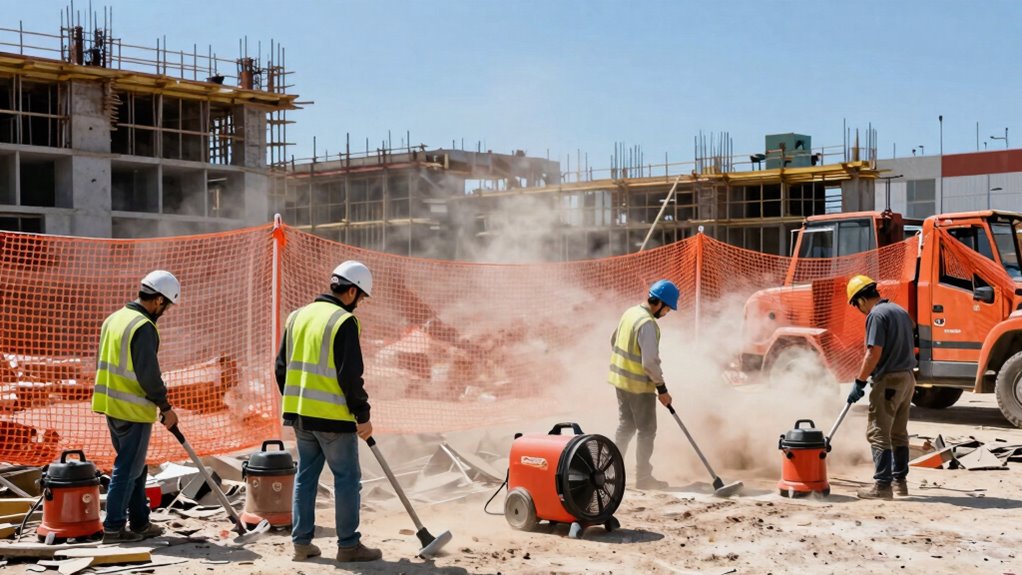
Have you considered how construction cleanup air plans can protect both workers and the surrounding community? When you’re managing a construction cleanup, focusing solely on removing debris isn’t enough. You need a thorough approach to guarantee indoor air quality remains safe, and hazardous dust doesn’t pose health risks. Relying on just one tool or method can leave gaps that compromise safety and environmental standards. To effectively control airborne contaminants, you must implement multiple strategies that work together to mitigate hazards.
A comprehensive construction cleanup plan uses multiple strategies to protect workers, the community, and the environment from hazardous dust.
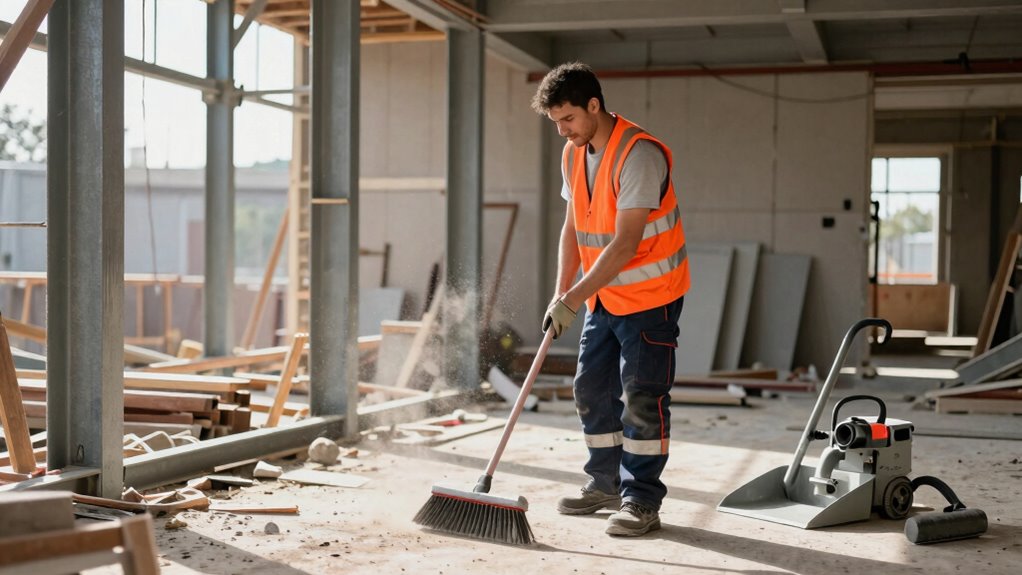
Hazardous dust is a common issue during cleanup, especially in environments with dust-generating activities like sanding, drilling, or demolition. Dust particles can become airborne easily, posing inhalation risks to workers and nearby residents. That’s why hazardous dust mitigation is essential. Using high-efficiency particulate air (HEPA) vacuums, for example, is an effective first step. These vacuums trap fine particles that standard cleaners might miss, markedly improving indoor air quality. But relying solely on vacuuming isn’t enough. Additional tools like air scrubbers equipped with activated carbon filters can help remove airborne contaminants and odors, further reducing health risks.
Controlling dust at the source is another vital part of a well-rounded air plan. Wet methods, such as misting or applying water to dust-producing surfaces, prevent particles from becoming airborne in the first place. This technique complements vacuuming and filtration, creating a layered defense system. Furthermore, proper containment—using plastic sheeting and sealed enclosures—limits dust spread beyond the work zone, protecting the surrounding community and indoor environments. Incorporating air quality monitoring can also help assess real-time hazards and ensure controls are effective throughout the project. Additionally, understanding the importance of dust suppression techniques can guide the implementation of effective measures tailored to specific job sites. Employing dust control products designed specifically for construction sites can further enhance this layered approach.
You also need to consider proper ventilation. Negative air pressure setups, where contaminated air is exhausted outside before it can circulate, are highly effective. They ensure that airborne hazards stay contained and don’t migrate to other areas or into the community. Combining negative pressure with portable air purifiers enhances this effect, especially in enclosed or partially sealed spaces. Recognizing the importance of air filtration can significantly improve overall safety measures. Implementing ventilation strategies that optimize air exchange rates is another key component to maintaining a safe environment.
In short, a successful construction cleanup air plan depends on multiple tools working in harmony. Relying on a single method, like just sweeping or opening windows, won’t adequately protect indoor air quality or mitigate hazardous dust. Instead, you need a layered approach—using HEPA vacuums, air scrubbers, wet techniques, containment measures, and proper ventilation. This holistic strategy not only keeps your workers safe but also minimizes environmental impact, fostering a healthier community environment. Remember, effective hazardous dust mitigation isn’t about one magic tool; it’s about deploying a well-rounded arsenal of strategies.
As an affiliate, we earn on qualifying purchases.
Frequently Asked Questions
How Often Should Air Plans Be Updated During Construction?
You should update your air plans regularly during construction, especially when there are significant changes or new activities that could impact air quality. Keep a close eye on ventilation systems to guarantee they’re functioning properly, and adjust your plans accordingly. Frequent updates help maintain good air quality, reduce hazards, and meet safety standards. It’s best to review and revise your air plans at least monthly or whenever major modifications occur on-site.
What Are the Cost Implications of Using Multiple Air Tools?
Using multiple air tools can increase your costs initially, but proper air tool maintenance helps manage expenses over time. Regular maintenance reduces breakdowns, ensuring tools operate efficiently and last longer, which supports cost reduction. While investing in various tools may seem costly upfront, their versatility can streamline cleanup tasks, saving you labor time. Overall, the key is balancing tool investment with ongoing maintenance to keep costs manageable and performance ideal.
Are There Specific Certifications Required for Implementing Air Plans?
You need to guarantee you meet certification requirements for implementing air plans, especially for regulatory compliance. Depending on your project’s scope, you might need certifications like OSHA or EPA approvals, or specific training in air quality management. These certifications confirm your understanding of safety standards and environmental regulations, helping you avoid penalties. Always verify local regulations to guarantee you’re fully compliant and equipped to handle air quality control properly during construction cleanup.
How Do Weather Conditions Impact Air Plan Effectiveness?
Weather conditions considerably impact your air plan‘s effectiveness. Weather variability, such as wind, rain, or temperature changes, can alter air quality and the dispersion of dust and pollutants. On windy days, airborne particles spread more quickly, reducing control, while rain can help settle dust. You must monitor weather forecasts closely and adapt your air plan accordingly to guarantee ideal dust mitigation and maintain safe, healthy air quality during construction cleanup.
Can Existing Buildings Integrate New Air Plan Tools Seamlessly?
Seamlessly integrating new air plan tools into existing buildings is achievable when you prioritize precise indoor ventilation and thorough air quality testing. You’ll smoothly synchronize systems, ensuring safety and sustainability while safeguarding occupants. With strategic setup and smart system adjustments, you can streamline the shift, bring balance to airflow, and bolster overall air quality. This proactive approach keeps your environment healthy, highlighting your dedication to diligent, dynamic, and decisive indoor air management.
Conclusion
To truly clear the air during construction cleanup, you need more than just one tool in your kit. Think of your plan as a garden — relying on a single watering can won’t make it flourish. Embrace a variety of strategies, each like different seeds, to guarantee your project breathes fresh and clean. When you diversify your approach, you’re planting the seeds for a healthier, safer environment that blossoms long after the dust settles.
Fall yard work Picks
leaf blowers
As an affiliate, we earn on qualifying purchases.