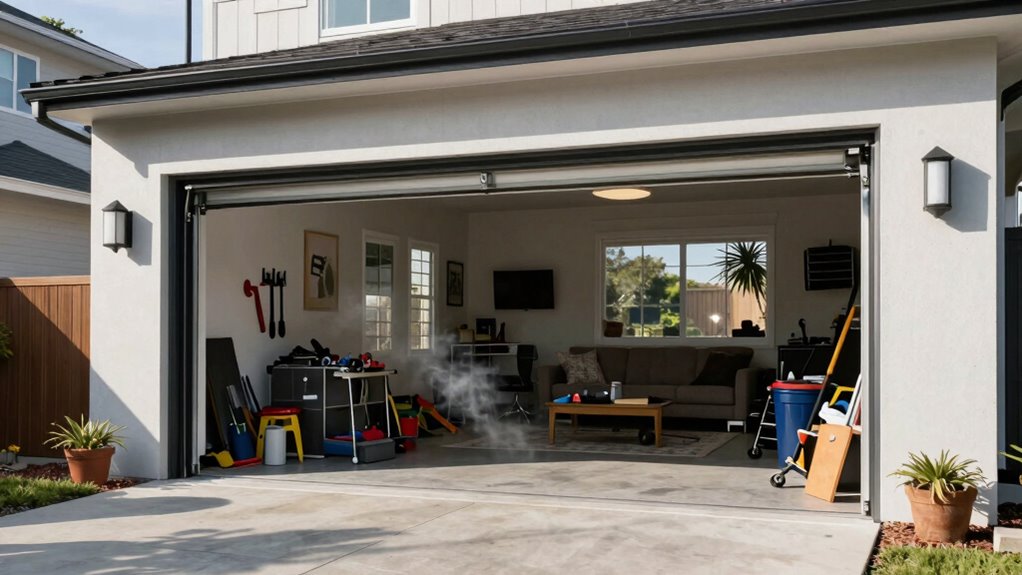

An attached garage can impact your home’s air quality by letting vehicle fumes, chemicals, and pollutants seep into your living space if not properly sealed or ventilated. Gaps and cracks between your garage and home enable these fumes to transfer, while lack of ventilation allows pollutants to build up inside. By sealing entry points and maintaining good ventilation, you can reduce these risks. Keep going to discover simple ways to protect your home’s air quality effectively.

Get garden gear delivered free with Prime
- Fast, free delivery on millions of items
- Prime Video, Amazon Music and more included
- Member-only deals all year
Key Takeaways
- Attached garages can introduce pollutants like vehicle exhaust and household chemicals into living spaces.
- Gaps and cracks between the garage and home allow fumes to migrate indoors.
- Proper ventilation systems help remove garage fumes and improve indoor air quality.
- Sealing entry points and storing chemicals outside reduce indoor pollutant infiltration.
- Regular maintenance of ventilation and air purification systems enhances overall indoor air safety.
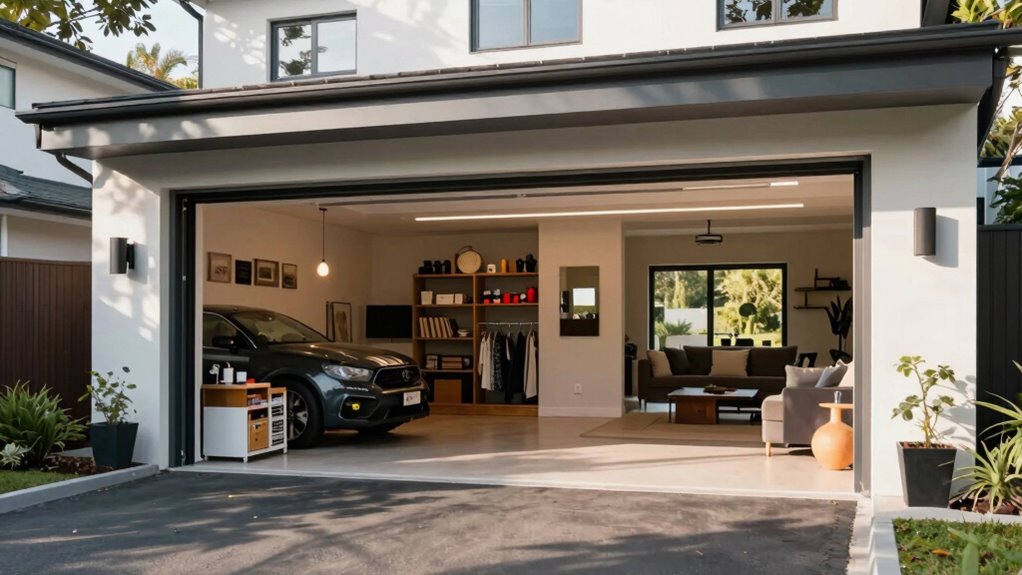
If you have an attached garage, you might not realize it can impact your home’s indoor air quality. While garages offer convenience, they can also be a source of indoor pollutants that seep into your living spaces. Gasoline fumes, vehicle exhaust, and household chemicals stored in the garage release volatile organic compounds (VOCs) and other pollutants that can compromise your family’s health. Without proper attention, these pollutants can migrate through the walls, doors, or ventilation pathways into your home, creating an environment where indoor air quality diminishes over time.
One of the key factors in preventing this is understanding how ventilation systems play a role. Proper ventilation helps regulate airflow, ensuring that harmful indoor pollutants don’t accumulate. If your home lacks an effective ventilation system, pollutants from the garage can linger and infiltrate your living areas more easily. Installing or upgrading ventilation systems, such as exhaust fans or dedicated air exchange units, can markedly reduce the concentration of indoor pollutants. These systems work by drawing contaminated air out of the garage and pushing fresh air into your home, creating a healthier environment for you and your family. Regular inspection and maintenance of these systems are crucial to ensure they operate effectively over time. Additionally, understanding air exchange processes can help you optimize your home’s ventilation strategy for better indoor air quality.
Additionally, sealing gaps and cracks between your garage and living space is vital. Even small openings can allow fumes and chemicals to migrate indoors. Weather stripping, door seals, and airtight barriers help prevent the transfer of pollutants, making your home safer. Be mindful of how you store chemicals and automotive supplies, keeping them in well-ventilated cabinets or outside the house whenever possible. This minimizes the chance of fumes escaping into your living areas. Proper storage practices are a simple yet effective way to limit chemical emissions and protect indoor air quality. Incorporating ventilation best practices can further enhance your efforts to reduce pollutant transfer. Recognizing the importance of proper home sealing is also essential for maintaining a safe indoor environment.
Regular maintenance of your home’s ventilation systems is also essential. Filters should be replaced routinely, and exhaust fans need to be checked to ensure they’re functioning properly. You might also consider adding air purifiers equipped with activated carbon filters, which can absorb chemical pollutants and improve indoor air quality further. These measures combined can considerably lower the risk posed by indoor pollutants originating from attached garages. Implementing these preventative measures can significantly improve your home’s indoor air quality.
In the end, understanding how attached garages influence indoor air quality helps you take proactive steps to safeguard your home environment. By investing in effective ventilation systems, sealing entry points, and maintaining good household habits, you create a barrier against harmful pollutants. This not only protects your health but also ensures your home remains a safe, comfortable space for everyone. Recognizing the importance of proper ventilation and other preventative measures is essential for maintaining a healthy indoor environment.
As an affiliate, we earn on qualifying purchases.
Frequently Asked Questions
Can Attached Garages Increase Indoor Humidity Levels?
Yes, attached garages can increase indoor humidity levels, especially if garage insulation isn’t adequate. When moisture builds up in the garage, it can seep into your home through the air exchange process, raising indoor humidity. Proper garage insulation helps prevent temperature fluctuations and moisture buildup, reducing humidity transfer. Ensuring good air exchange between your garage and house also helps control humidity, making your home more comfortable and healthier.
Do Attached Garages Contribute to Mold Growth Inside Homes?
Imagine mold silently creeping in, threatening your family’s health—yes, attached garages can contribute to mold growth inside your home. Poor garage insulation and chemical off gassing from stored items create damp, stifling conditions that foster mold. To prevent this, guarantee proper insulation, ventilate regularly, and store chemicals carefully. Staying vigilant keeps your home’s air quality safe, protecting your loved ones from hidden dangers lurking just beyond the garage door.
How Do Garage Ventilation Systems Impact Air Quality?
Garage ventilation systems greatly influence your home’s air quality by enhancing air circulation and decreasing pollutants. Proper ventilation helps eliminate fumes from vehicles, chemicals, and dust, preventing them from entering your living spaces. You should regularly maintain and upgrade your garage ventilation to guarantee ideal airflow, which keeps the air fresh and safe. Good air circulation not only minimizes odors but also reduces health risks associated with poor indoor air quality.
Are Certain Building Materials in Garages More Harmful to Air Quality?
Think of garage insulation like a sponge soaking up chemicals; some materials release harmful chemical emissions over time. Certain building materials, like pressed wood or foam insulation, can emit volatile organic compounds (VOCs), which harm your air quality. You should choose low-emission options to keep your home safe. Using non-toxic, eco-friendly materials minimizes chemical emissions, helping your family breathe easier and protecting your home’s indoor air quality.
How Often Should Garage Air Quality Be Tested?
You should test your garage air quality at least once a year, especially if it’s attached to your home. Regular testing helps identify issues like mold, fumes, or pollutants from garage insulation or vehicle emissions. Integrate your garage with your HVAC system to improve ventilation and air circulation. This way, you’ll guarantee safe, clean air, and catch potential problems early before they affect your family’s health.
Conclusion
Your attached garage is like a silent gatekeeper, quietly influencing the air you breathe every day. When you understand its role, you can take steps to keep that gate secure, preventing pollutants from seeping into your home’s sanctuary. Think of it as a shield—strong yet vulnerable—reminding you that vigilance protects your family’s health. By managing what enters through this gateway, you preserve the purity of your indoor air, ensuring your home remains a safe haven for all.
Halloween Picks
halloween
As an affiliate, we earn on qualifying purchases.