
To measure radon, you typically use units like picoCuries per liter (pCi/L) to gauge levels. Techniques include short-term tests with charcoal canisters or alpha track detectors, and long-term assessments using electronic monitors for more detailed results. Elevated radon can harm your health over time, increasing lung cancer risk. Proper testing and interpretation help guarantee your home’s safety. Keep exploring to learn more about effective measurement methods and health safeguards.
Key Takeaways
- Radon levels are measured in picoCuries per liter (pCi/L), indicating the concentration of radioactive gas indoors.
- Short-term tests (2-7 days) and long-term tests (over 90 days) are common measurement techniques.
- Charcoal canisters, alpha track detectors, and electronic monitors are primary devices used for radon detection.
- Elevated radon levels above 4 pCi/L pose significant health risks, increasing lung cancer chances over time.
- Regular testing and accurate measurement help identify indoor radon risks and guide necessary mitigation actions.
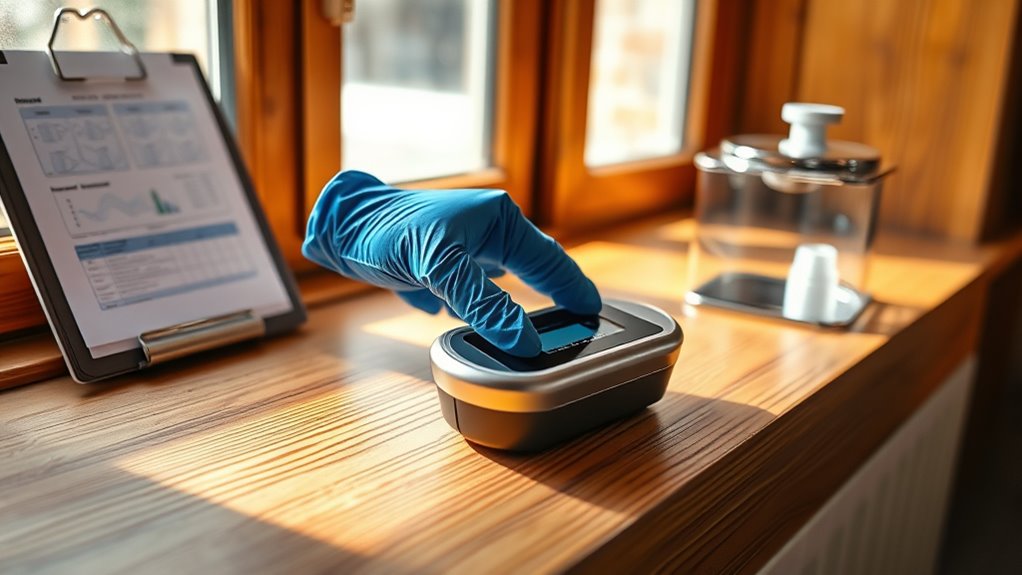
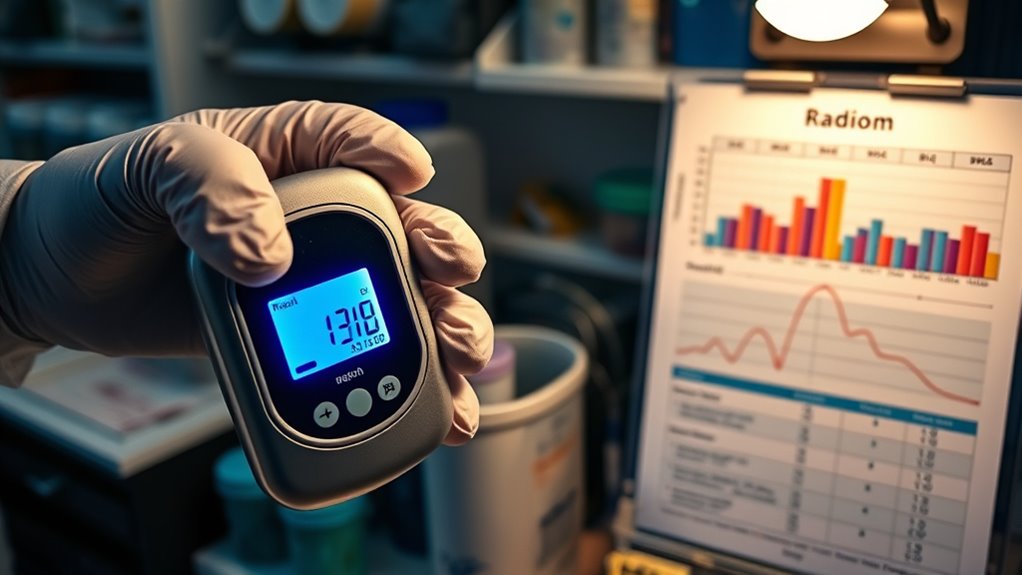
Have you ever wondered how to determine if your home has dangerous levels of radon? Radon detection is essential because this radioactive gas can pose serious health risks over time. To accurately assess your home’s radon levels, you need reliable measurement devices. These devices come in various forms, including short-term and long-term test kits, which are designed to give you an accurate picture of radon concentration inside your living space. Short-term detectors typically stay in place for two to seven days and provide a quick snapshot, while long-term devices, left for more than 90 days, give a more detailed reading that accounts for fluctuations in radon levels due to weather and seasonal changes.
Using measurement devices is straightforward, but understanding how they work helps you interpret the results better. Most radon detection devices include charcoal canisters, alpha track detectors, or electronic monitors. Charcoal canisters absorb radon from the air, and after the testing period, they are sent to a lab for analysis. Alpha track detectors use a small film that records radiation, giving a permanent record that can be analyzed later. Electronic devices, on the other hand, provide immediate readings and can be used repeatedly, making them ideal for ongoing monitoring. Additionally, the placement of detection devices in your home can significantly influence the accuracy of your measurements proper placement.
Whichever device you choose, it’s essential to follow the instructions carefully to guarantee accurate measurements. Improper placement or timing can lead to misleading results, which might either cause unnecessary worry or a false sense of security.
Once you have your measurement results, you’ll want to compare them to the EPA’s recommended action level of 4 picocuries per liter (pCi/L). If your readings exceed this threshold, it indicates a significant radon problem that requires mitigation. Remember, radon levels can vary markedly from one home to another, even within the same neighborhood, so thorough testing is indispensable. Regular monitoring with measurement devices ensures you stay informed about your indoor air quality and can take timely action if radon levels rise.
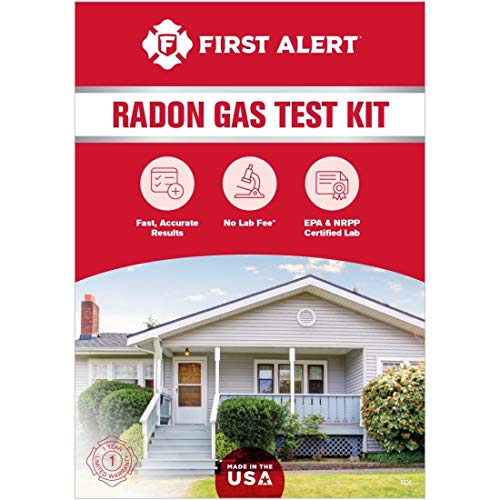
First Alert Radon Gas Test Kit, RD1
- Easy and safe radon testing: Simple, safe radon test method
- EPA-listed for accuracy: Certified under EPA radon program
- All-in-one test kit: Includes test materials and lab fees
As an affiliate, we earn on qualifying purchases.
As an affiliate, we earn on qualifying purchases.
Frequently Asked Questions
How Often Should I Test for Radon in My Home?
You should test your home for radon at least every two years, or more often if you’ve had radon mitigation done. Regular testing helps guarantee accurate readings and maintains testing accuracy. If test results are elevated, consider radon mitigation measures to reduce health risks. Keep in mind, changes in weather or home renovations can affect radon levels, so consistent testing is key to keeping your family safe.
Are There Seasonal Variations in Radon Levels?
Imagine the air as a dance floor, changing with the seasons. Yes, radon levels experience seasonal fluctuations due to outdoor influences like temperature and ventilation. During winter, tighter homes trap radon, causing levels to rise. In summer, open windows help lower radon. To stay safe, test your home regularly, especially during winter and after seasonal changes, to monitor these variations and protect your health.
Can Radon Levels Vary Between Different Rooms?
Yes, radon levels can vary between different rooms due to room-to-room variation influenced by building design. Factors like ventilation, insulation, and the presence of cracks or gaps affect radon accumulation. Basement and ground-floor rooms often have higher levels because they’re closer to the soil, where radon originates. To verify safety, you should measure radon in multiple rooms, especially in areas where people spend a lot of time.
What Are the Costs of Radon Testing and Mitigation?
Imagine discovering radon in your home, and now you’re wondering about costs. Radon testing typically costs $20 to $150, while mitigation can range from $800 to $2,500, depending on the home’s size and severity. You should compare costs, look for financial assistance programs, and choose a qualified contractor. Addressing radon early not only protects your health but also helps avoid costly future repairs.
Are There Specific Health Risks for Children and Pets?
Yes, children and pets are more vulnerable to radon health risks because their developing bodies and smaller sizes make them more susceptible to radiation exposure. You should prioritize child health and pet safety by regularly testing your home for radon and taking mitigation steps if levels are high. Reducing radon exposure helps protect their long-term health, preventing issues like lung problems and other radiation-related illnesses.
Conclusion
Now that you understand how to measure radon using different units and techniques, you’re equipped to protect yourself and your home. Remember, radon is like an unseen villain lurking in the shadows—without proper detection, it can silently cause serious health issues. Regular testing isn’t just a good idea; it’s your shield against this invisible threat. Stay vigilant, measure regularly, and breathe easier knowing you’re taking control of your environment before radon becomes a hidden monster.