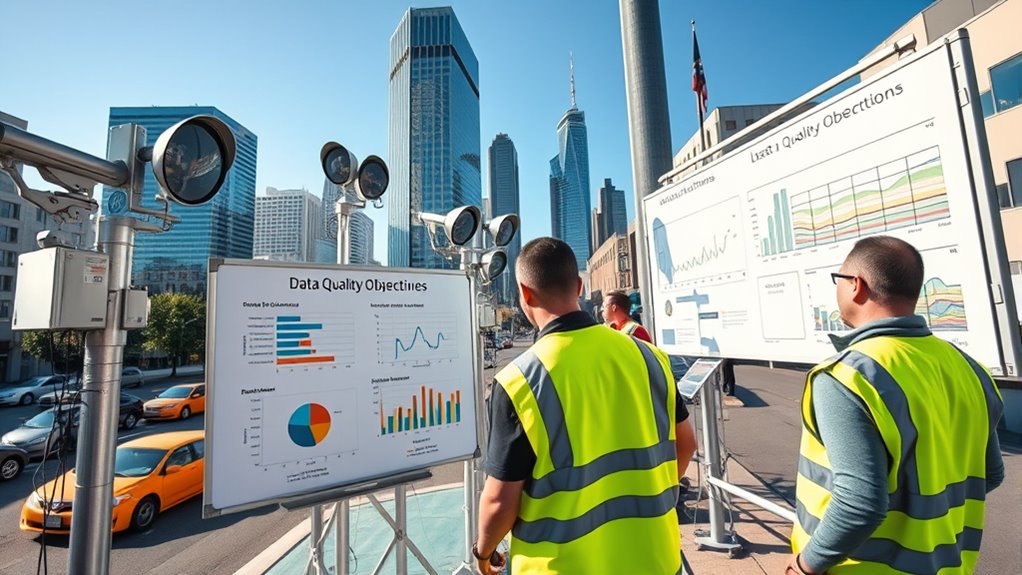

When setting Data Quality Objectives (DQOs) in air monitoring, you define clear standards for accuracy, precision, and reliability to guarantee your data meets study and regulatory needs. These objectives guide calibration schedules, validation procedures, and data review processes. By establishing solid DQOs, you help maintain data integrity and support accurate decision-making. If you want to understand how DQOs influence calibration and validation efforts, continue exploring these essential practices.
Key Takeaways
- DQOs establish measurement precision, accuracy, and reliability standards to ensure air monitoring data is meaningful and fit for purpose.
- Clear DQOs guide calibration schedules and validation procedures to maintain data integrity throughout the study.
- Proper calibration and validation prevent sensor drift and bias, supporting reliable pollutant measurements aligned with study goals.
- Data validation processes identify anomalies and errors, ensuring only high-quality data inform analysis and decision-making.
- Documenting calibration and validation activities promotes transparency, regulatory compliance, and continuous improvement in air monitoring efforts.
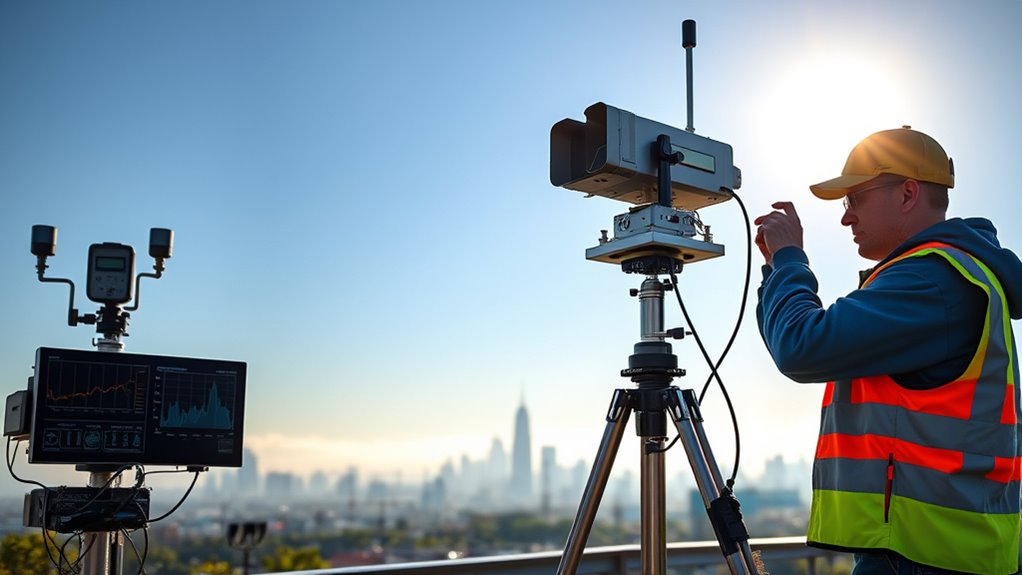
Establishing clear Data Quality Objectives (DQOs) is essential for ensuring reliable and meaningful results in air monitoring studies. When setting your DQOs, you define what levels of precision, accuracy, and reliability are necessary to meet your study’s goals. One critical aspect of achieving this is ensuring your sensors are properly calibrated. Sensor calibration involves adjusting your monitoring devices to produce accurate measurements that reflect true pollutant concentrations. Without regular calibration, sensors can drift, leading to biased or inconsistent data that compromise your study’s integrity. Consequently, part of your DQO process must include routine calibration schedules based on manufacturer recommendations and field conditions. Proper calibration ensures that your sensors provide valid data, reducing uncertainties that could skew your results. Additionally, understanding the specifics of sensor types helps in selecting appropriate calibration methods tailored to your monitoring needs.
Alongside calibration, data validation plays a vital role in upholding your data quality standards. Data validation involves systematically reviewing your collected data to identify anomalies, errors, or inconsistencies. It’s not just about checking for missing data but also verifying that the measurements fall within expected ranges and are free from artifacts caused by environmental interference or equipment malfunction. Implementing robust data validation protocols helps you catch issues early, allowing you to correct or flag questionable data before it influences your analysis. This process supports your DQOs by confirming that only high-quality, reliable data feeds into your decision-making process.
Your DQOs will naturally influence your procedures for sensor calibration and data validation. For example, if your study requires precise measurements of low-level pollutants, you’ll need a stricter calibration protocol and more frequent validation checks. Conversely, for broader regional assessments, your calibration and validation procedures might be less intensive but still sufficient to meet your quality standards. Additionally, documenting calibration and validation activities ensures transparency and accountability, which are crucial for regulatory compliance and peer review. It also helps you identify trends or recurring issues with your equipment, enabling continuous improvement of your air monitoring practices.
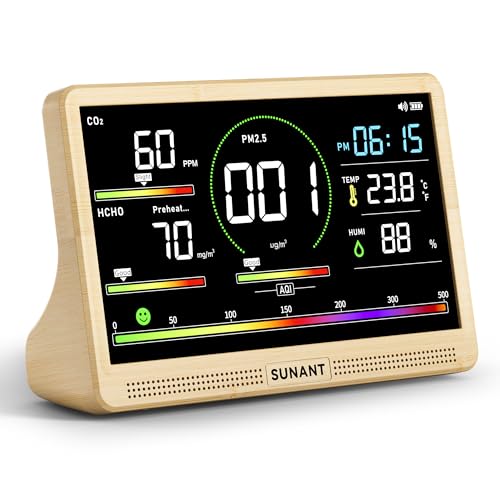
16-in-1 Air Quality Monitor Indoor, 7' Smart Large Display 9 AQI+7 Alarm Alerts, Real Time CO2, Formaldehyde, TVOC, PM2.5, PM10, Temperature & Humidity Portable Battery Powered Tester for Home, Office
- 16-in-1 Indoor Air Quality Monitoring: Detects 9 key air parameters
- High-Precision External Sensors: Provides accurate, fast data updates
- Real-Time AQI Alerts with Mute: 7 alert modes with silent option
As an affiliate, we earn on qualifying purchases.
As an affiliate, we earn on qualifying purchases.
Frequently Asked Questions
How Do DQOS Differ From General Quality Assurance Protocols?
DQOs focus on defining specific measurement precision and data consistency goals for your air monitoring data, ensuring it meets project needs. Unlike general quality assurance protocols, which provide broad guidelines, DQOs tailor standards to your study’s objectives. They help you identify acceptable error margins and data quality thresholds, ultimately guiding your sampling methods and data analysis to produce reliable, accurate results tailored to your monitoring goals.
What Are Common Challenges in Setting Realistic DQOS?
You might find it challenging to set realistic DQOs because balancing measurement precision with achievable data consistency can be tough. You need to contemplate the variability in air quality measurements and how precise your instruments can be. Sometimes, aiming for ideal data quality conflicts with practical constraints like budget or equipment limitations. Ensuring your DQOs reflect real-world conditions helps you gather reliable data without setting unachievable standards.
How Often Should DQOS Be Reviewed and Updated?
Your DQOs should be reviewed and updated at least annually, or more frequently if there are significant changes in monitoring conditions or regulations. Establish a consistent review frequency to catch issues early and ensure your data remains reliable. The update process involves evaluating current performance, incorporating new information, and adjusting objectives accordingly. Staying proactive prevents your data from becoming outdated, which could lead to critical inaccuracies in your air quality assessments.
Can DQOS Be Applied to Mobile Air Monitoring Studies?
Yes, you can apply DQOs to mobile air monitoring studies. You should incorporate mobile calibration procedures to guarantee data accuracy during field measurements. Additionally, conduct data validation regularly to verify that the data meets quality standards. By integrating these practices, you maintain reliable results, address potential variability from mobile sources, and ensure your monitoring efforts effectively support air quality assessments.
What Role Do Stakeholder Inputs Play in Defining DQOS?
Stakeholder inputs are vital—they shape your Data Quality Objectives by incorporating community engagement and ensuring regulatory compliance. When you involve community members and regulators early, you uncover priorities and concerns that might otherwise be overlooked. This collaboration enhances the study’s credibility, builds trust, and guarantees that your air monitoring aligns with legal standards and community needs. Without these inputs, your DQOs risk being incomplete, jeopardizing the study’s success and acceptance.
Conclusion
By setting clear data quality objectives, you guarantee your air monitoring study is as reliable as the legendary compass guiding explorers through uncharted waters. Think of these objectives as your modern-day GPS, preventing you from wandering into the fog of uncertainty. With precise goals in mind, you’ll navigate the complexities of air quality data confidently, making informed decisions that protect public health—no need to rely on a crystal ball, just good science and sharp focus.