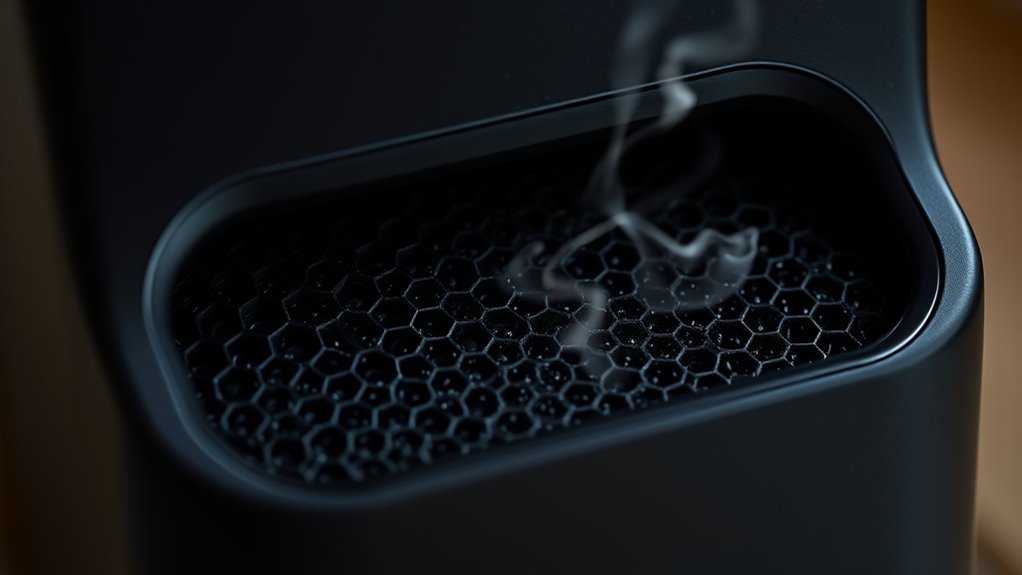
Activated carbon purifiers work by trapping VOCs and odors through their porous surfaces, effectively improving indoor air and water quality. They target common sources like paints, cleaning products, and pet odors, reducing harmful molecules and leaving your space fresher and healthier. Their efficiency depends on the quality and size of the carbon bed, and regular maintenance is essential for peak performance. To discover how these systems can fit your needs, keep exploring these powerful solutions.
Key Takeaways
- Activated carbon purifiers effectively trap VOCs and odors through adsorption, improving indoor air and water quality.
- They remove harmful airborne molecules from sources like paints, cleaning products, and furniture, reducing health risks.
- These purifiers eliminate persistent odors such as cooking smells, pet odors, and cigarette smoke for a fresher environment.
- The effectiveness depends on carbon quality, surface area, and regular maintenance like filter replacement.
- Combining activated carbon with other filtration methods enhances overall pollutant removal, including particulates.
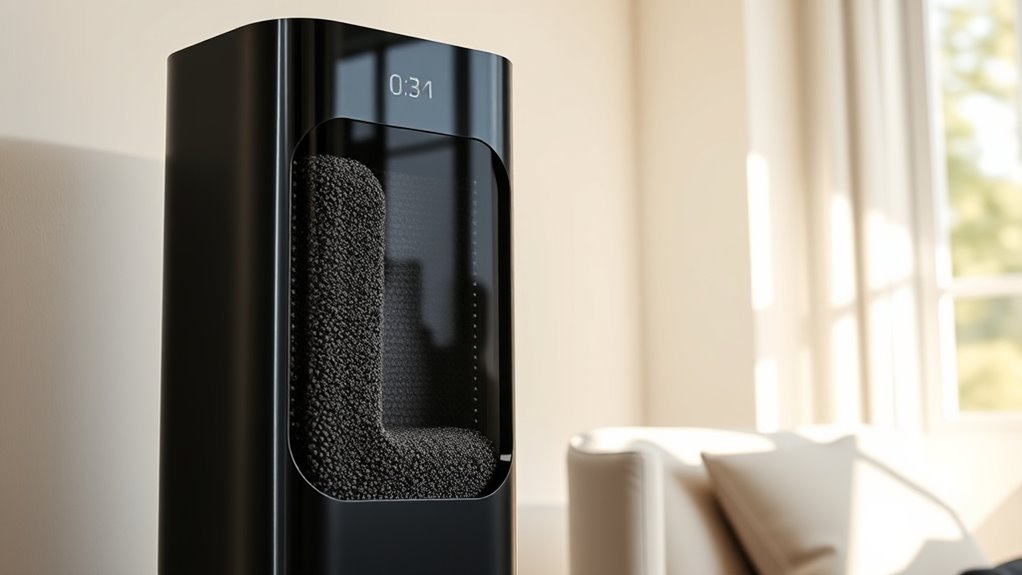
Activated carbon purifiers are highly effective devices that improve indoor air and water quality by removing contaminants through adsorption. When it comes to maintaining a healthier environment inside your home or workspace, these purifiers play a crucial role, especially in tackling volatile organic compounds (VOCs) and odors. VOC removal is vital because these chemicals can originate from paints, cleaning products, furniture, and even certain building materials. Without proper filtration, VOCs can linger in the air, leading to headaches, respiratory issues, or other health problems. Activated carbon filters trap these harmful molecules, preventing them from circulating and reducing your exposure to airborne toxins. Incorporating automation in filtration systems can further optimize their performance and maintenance schedules.
Activated carbon purifiers effectively remove VOCs and odors, promoting healthier indoor air and water quality.
Odor control is another significant benefit of activated carbon purifiers. Whether it’s cooking smells, pet odors, cigarette smoke, or lingering mustiness, these purifiers can eliminate unpleasant smells effectively. Unlike air fresheners that mask odors temporarily, activated carbon works by adsorbing odor-causing molecules onto its porous surface. As air passes through the filter, these molecules are captured and held, resulting in fresher, cleaner indoor air. This makes activated carbon purifiers especially valuable in spaces where odors tend to accumulate or persist, such as kitchens, bathrooms, and pet areas.
You’ll find that the effectiveness of these purifiers depends largely on the quality and capacity of the activated carbon used. Higher-quality carbon with a larger surface area will adsorb more VOCs and odors, providing longer-lasting filtration. It’s essential to replace or regenerate the filters regularly to maintain optimal performance. When shopping for an activated carbon purifier, consider the size of the space you want to treat and the level of contamination. Larger or heavily polluted environments may require units with more substantial carbon beds or additional filtration stages.
Using activated carbon purifiers is straightforward and cost-effective. They don’t produce ozone or other harmful byproducts, and they require minimal maintenance beyond periodic filter replacement. You can combine these purifiers with other filtration methods, such as HEPA filters, to target a broader range of pollutants. Keep in mind that while activated carbon excels at VOC removal and odor control, it’s less effective against particulate matter like dust or pollen. For comprehensive air purification, combining multiple technologies can deliver the best results.

MOOKA Air Purifiers for Home Large Room up to 1076ft², H13 True HEPA Air Filter Cleaner, Odor Eliminator, Remove Smoke Dust Pollen Pet Dander, Night Light, B-D02L White
- Large Coverage Area: Covers up to 1076 ft² with 6 air changes/hour
- High-Efficiency Filtration: Captures pet hair, dander, smoke, and dust
- True HEPA Filter: Removes airborne particles as small as 0.3 microns
As an affiliate, we earn on qualifying purchases.
As an affiliate, we earn on qualifying purchases.
Frequently Asked Questions
How Often Should I Replace Activated Carbon Filters?
You should replace your activated carbon filter every 3 to 6 months, depending on the filter’s lifespan and how often you use your purifier. Keep an eye on replacement indicators, like a decrease in air quality or a change in smell. Regularly check for visible dirt or reduced airflow, which signal it’s time for a new filter. Proper timing guarantees your purifier stays effective at adsorbing VOCs and odors.
Can Activated Carbon Purifiers Remove Airborne Viruses?
Activated carbon purifiers are not designed for viral filtration, so they can’t reliably remove airborne viruses. While they excel at odor removal by adsorbing VOCs, their ability to capture viruses is limited. For effective viral filtration, consider HEPA filters, which are proven to trap airborne pathogens. Using a combination of activated carbon and HEPA filters offers broader protection, tackling odors and improving air quality overall.
Are There Health Risks From Activated Carbon Dust?
Health concerns from activated carbon dust are minimal if you handle the purifier properly. Dust exposure can cause respiratory irritation or allergic reactions in sensitive individuals, so it’s crucial to follow the manufacturer’s instructions for maintenance and filter replacement. Avoid generating dust by wearing a mask during filter changes, and ensure good ventilation. Regular upkeep minimizes risks, keeping your air clean without exposing you to unnecessary health concerns.
Do Activated Carbon Purifiers Work Effectively in Large Spaces?
Ever wondered if activated carbon purifiers can handle large spaces? They can, but you need to take into account large space filtration and monitor carbon capacity indicators regularly. These purifiers are effective if appropriately sized for your area, but their efficiency depends on the amount of activated carbon and airflow. To maximize performance, choose models designed for bigger spaces, and keep an eye on capacity indicators to ensure continued adsorption of VOCs and odors.
How Do I Know if My Purifier’s Carbon Is Saturated?
You’ll notice your purifier’s carbon filter is saturated when odors become more noticeable or air quality seems to decline. Typically, this happens after several months of use, depending on VOC levels. To check for filter saturation, look for reduced odor detection and decreased airflow. Some purifiers have indicator lights that signal when replacement is needed. Regular maintenance guarantees your purifier continues to effectively adsorb VOCs and odors.
Conclusion
Activated carbon purifiers are your ultimate shield against VOCs and odors, transforming your space into a fresh paradise. With their unmatched ability to adsorb pollutants, you’ll breathe easier and feel revitalized every day. Don’t underestimate their power—these purifiers can make air quality so pure, it’s almost like inhaling the essence of a mountain breeze. Invest in one today, and experience a cleaner, healthier life that’s truly a gust of fresh air.