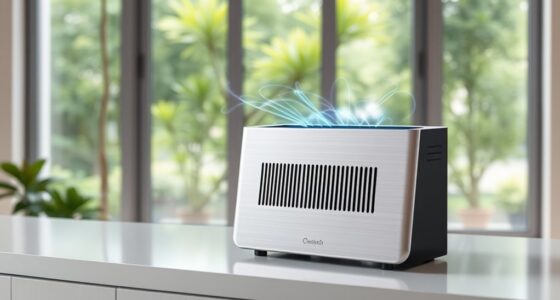

Nano-fiber filters are a next-generation technology that enhances traditional HEPA systems by using ultra-fine fibers with diameters under 100 nanometers. These fibers increase surface area and improve particle capture, including tiny dust, bacteria, and viruses. Their electrostatic charge further boosts filtration without airflow resistance. Made from durable materials, they offer long-lasting performance and efficiency, even in harsh conditions. To discover how these advanced filters can transform air quality, keep exploring the details ahead.
Key Takeaways
- Nano-fiber filters feature fibers under 100 nanometers, offering a larger surface area for enhanced particle capture.
- They utilize electrostatic charges to attract and trap tiny airborne particles efficiently.
- Composed of durable polymers, nano-fiber filters maintain performance over time and resist environmental stresses.
- Combining electrostatic charge with material durability extends filter lifespan and maintains high filtration efficiency.
- These advanced filters are applicable in healthcare, industrial, and household air purification for superior air quality.

Have you ever wondered how tiny fibers can dramatically improve air and water filtration? The secret lies in the remarkable properties of nano-fibers, which are incredibly thin, often less than 100 nanometers in diameter. These fibers provide a larger surface area relative to their size, allowing them to trap more particles efficiently. One of the key innovations in nano-fiber filters is their ability to harness electrostatic charging. By applying an electrostatic charge to the fibers, they can attract and hold onto tiny particles like dust, pollen, bacteria, and even some viruses, which would otherwise pass through traditional filters. This electrostatic effect substantially boosts filtration performance without increasing airflow resistance, making these filters more effective and energy-efficient.
Material durability is another critical factor that makes nano-fiber filters stand out. Since these fibers are incredibly thin and delicate, you might worry about their longevity. However, advances in material science have led to the development of durable polymers and composites that maintain their structural integrity over time. These materials can withstand moisture, temperature fluctuations, and physical stress, ensuring the filter remains effective for longer periods. The durability of nano-fibers means you don’t have to replace these filters as often, saving you money and reducing waste. Plus, their resilience ensures consistent filtration performance, whether you’re using them in high-humidity environments or in harsh outdoor conditions.
When you combine electrostatic charging with durable materials, nano-fiber filters become a game-changer. They can capture a broader spectrum of airborne particles while maintaining airflow and minimizing pressure drops. This means cleaner air and water with less effort and lower energy consumption. The electrostatic charge also allows the filters to regenerate some of their ability to attract particles, extending their lifespan even further. You get the benefits of high filtration efficiency without sacrificing durability or causing considerable airflow resistance.
In practice, these nano-fiber filters are transforming industries—from healthcare, where they help prevent the spread of infections, to industrial settings, where they improve air quality and protect workers. They’re also increasingly used in household air purifiers and water treatment systems. By understanding how electrostatic charging enhances filtration and how material durability ensures long-term performance, you can appreciate just how revolutionary nano-fiber technology truly is. It’s a perfect example of how tiny fibers, combined with smart engineering, can have a huge impact on your health and environment. Moreover, ongoing research into high-performance materials promises to further enhance their capabilities and lifespan.
Frequently Asked Questions
How Do Nano-Fiber Filters Compare Cost-Wise to Traditional HEPA Filters?
You’ll find nano-fiber filters are typically more expensive upfront due to higher manufacturing expenses. However, their cost comparison over time often favors them because they last longer and provide better filtration efficiency. While the initial investment is higher, you save on replacements and energy costs. So, despite the higher initial price, nano-fiber filters can be more cost-effective in the long run, offering better value for your investment.
Are Nano-Fiber Filters Environmentally Friendly and Recyclable?
Sure, nano-fiber filters are pretty eco-friendly—if you ignore the recyclability challenges that come with cutting-edge technology. They’re made through eco-conscious manufacturing processes, reducing environmental impact during production. However, recycling them isn’t straightforward, and disposal can pose issues. So, while they seem green at first glance, you might need to dig a little deeper to truly understand their environmental footprint. Think of it as superficial sustainability, shiny but complex beneath the surface.
What Is the Lifespan of a Nano-Fiber Filter in Typical Use?
You can expect a nano-fiber filter to last between 6 to 12 months with typical use. To guarantee peak performance, follow the maintenance schedule and monitor filter replacement needs regularly. Factors like air quality and usage frequency affect lifespan, so check for signs of clogging or reduced airflow. Replacing the filter promptly helps maintain indoor air quality and prolongs the effectiveness of your filtration system.
Can Nano-Fiber Filters Remove Gases and Odors Effectively?
Think of nano-fiber filters like a sponge for gases and odors—highly absorbent and efficient. They effectively remove gases and neutralize odors through advanced gas absorption techniques. For example, in a smoky room, these filters can markedly cut down strong smells and harmful gases. Their design ensures you breathe cleaner air, making them a superior choice for odor neutralization and gas removal in your home or workspace.
Are There Health Risks Associated With Nano-Fiber Filter Production or Use?
You should be aware that there are some health risks associated with nano-fiber filter production and use, mainly related to material toxicity and manufacturing safety. During manufacturing, workers might be exposed to fine particles or chemicals if safety protocols aren’t followed. When in use, nano-fibers generally pose low risks, but improper handling or disposal could lead to inhalation of tiny fibers. Ensuring proper safety measures minimizes these potential health hazards.
Conclusion
Imagine tiny nano-fibers forming an almost invisible web, gracefully trapping particles as air flows smoothly through. With this next-generation HEPA technology, you’re breathing cleaner, invigorating air, like a gentle breeze on a clear day. These filters stand guard, silently capturing pollutants and allergens, ensuring your space feels pure and revitalized. Embrace this innovation, and let every breath you take be a refreshing reminder of the power of tiny fibers working tirelessly for your health.