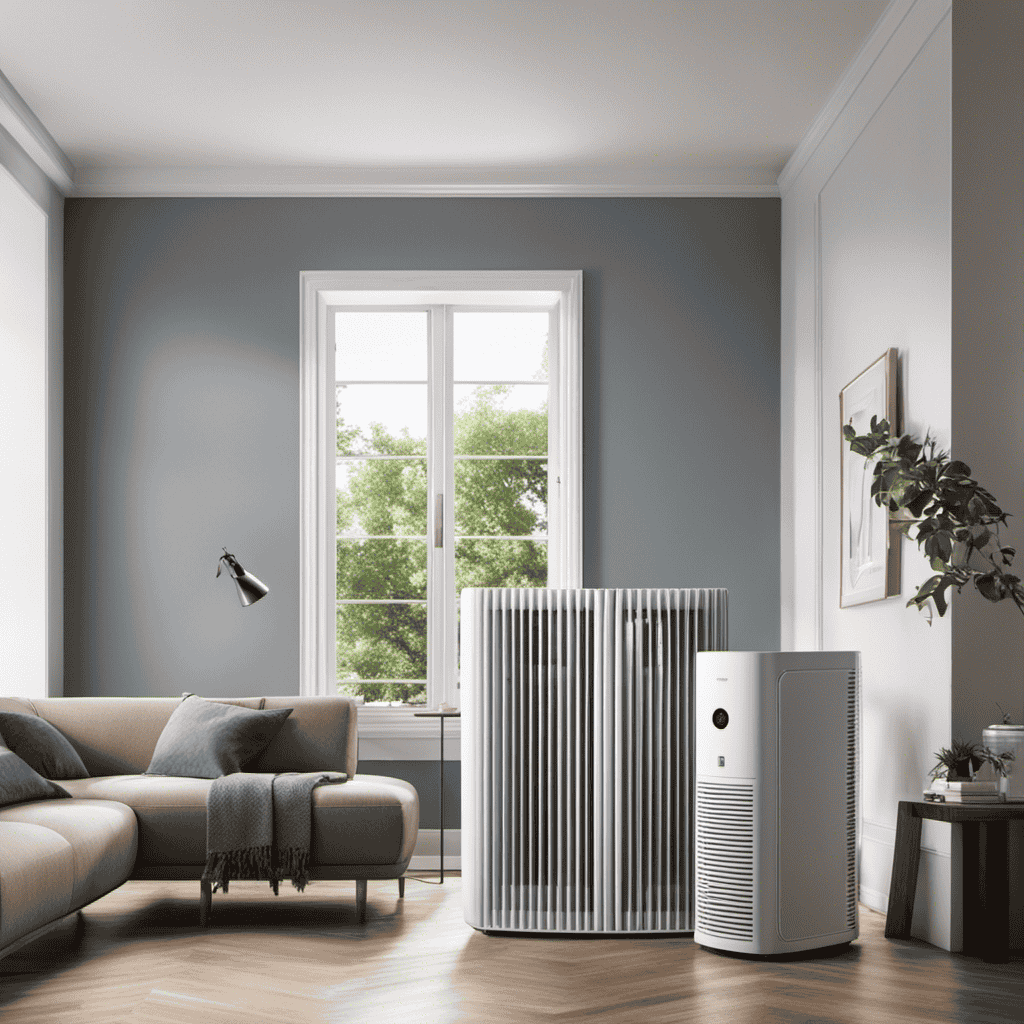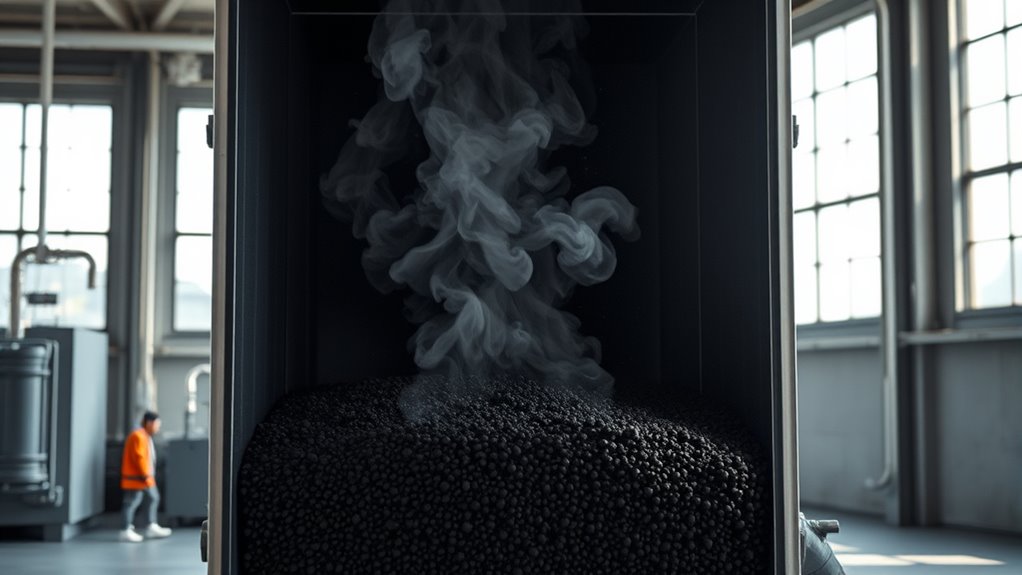

Activated carbon filters are effective in reducing VOCs because they trap harmful chemicals on their porous surfaces, improving indoor air quality. To guarantee their effectiveness, you need to monitor the filters regularly, watch for signs of saturation like lingering odors or increased VOC levels, and replace or regenerate them as recommended. Proper maintenance and choosing the right filter size can maximize VOC removal, helping you create a safer environment. For more tips, keep exploring how these filters work and stay ahead of saturation.

Get garden gear delivered free — and shop member deals
- Fast, free delivery on millions of items
- Access to Prime Big Deal Days deals on October 6–7
- Prime Video, Amazon Music and more included
Key Takeaways
- Activated carbon filters adsorb VOCs onto their porous surfaces, effectively removing harmful chemicals from indoor air.
- Regular monitoring and timely replacement prevent saturation, maintaining optimal VOC reduction performance.
- The effectiveness depends on filter design, amount of activated carbon, and contact time with air.
- Lingering odors and increased VOC levels indicate filter saturation and reduced adsorption efficiency.
- Proper maintenance and choosing high-quality filters ensure maximum VOC removal and improve indoor air quality.
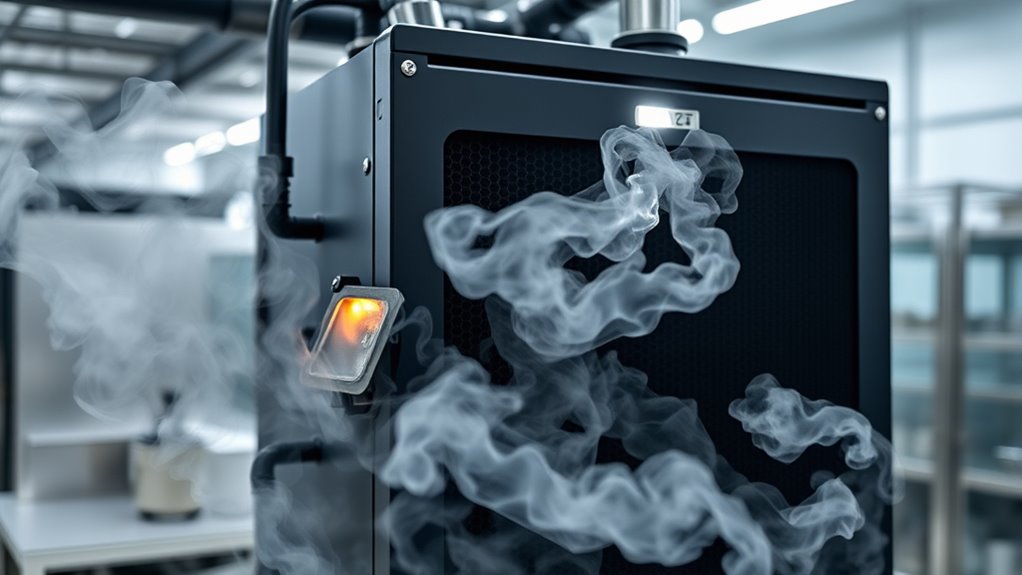
Volatile Organic Compounds (VOCs) are common indoor pollutants that can harm your health and reduce air quality. When you’re trying to make your environment safer, activated carbon filters are one of the most effective tools for reducing VOCs. These filters work by adsorbing harmful chemicals onto their porous surfaces, trapping pollutants before they can circulate through your indoor air. However, to guarantee they perform at their best, you need to pay attention to their adsorption efficiency and regularly maintain your filters.
Adsorption efficiency refers to how well the activated carbon can attract and hold VOC molecules. Over time, the filter’s ability to adsorb pollutants diminishes as its surface becomes saturated. This means that even if your filter looks clean, it might no longer be effectively removing VOCs. To keep your air clean, you should monitor your filter’s performance and replace or regenerate it as recommended by the manufacturer. Regular filter maintenance isn’t just about changing the filter; it’s about taking into account that each replacement restores maximum adsorption efficiency. Neglecting this can lead to decreased air quality, as saturated filters will no longer trap VOCs effectively, allowing pollutants to escape back into your indoor environment.
You might notice that over time, your activated carbon filter’s performance drops, which is a clear sign that it’s reaching saturation. Some signs include a lingering chemical smell or increased indoor VOC levels detected by air quality monitors. To prevent this, set a schedule for filter replacement based on usage and manufacturer guidelines. Proper filter maintenance also involves cleaning the surrounding area and ensuring that your air purifier or filtration unit is functioning correctly. This proactive approach guarantees that you’re continuously removing VOCs from your space and protecting your health.
Choosing the right activated carbon filter is just the first step. To maximize its effectiveness, you need to take into account factors like the amount of activated carbon used, the contact time with pollutants, and the overall design of the filter. The more efficient the adsorption process, the better your filter will be at capturing a wide range of VOCs. Remember, no filter lasts forever. Regular maintenance and timely replacement keep the adsorption efficiency high, ensuring your indoor air remains healthier and safer. By paying attention to these details, you’re actively reducing VOC exposure and improving your indoor air quality over the long term.
activated carbon air filter for VOC removal
As an affiliate, we earn on qualifying purchases.
As an affiliate, we earn on qualifying purchases.
Frequently Asked Questions
How Long Do Activated Carbon Filters Typically Last?
Activated carbon filters typically last between 3 to 6 months, depending on usage and air quality. You should monitor the filter lifespan and replace the filter as recommended by the manufacturer to maintain effectiveness. Regular replacement frequency ensures your air stays clean and VOCs are properly absorbed. If you notice a decrease in filter performance or odors lingering, it’s time for a new one. Staying proactive keeps your environment healthier.
Are Activated Carbon Filters Effective Against All Types of VOCS?
Activated carbon filters are highly effective against many VOCs through chemical adsorption, but they don’t work equally well for all types. Their effectiveness depends on the filter capacity and the specific VOCs present. Some compounds may require specialized filters or additional treatment methods. You should regularly check the filter’s condition and replace it when its capacity is reached to maintain peak VOC removal.
Can Activated Carbon Filters Remove Odors Caused by VOCS?
Yes, activated carbon filters effectively remove odors caused by VOCs through VOC absorption, making them great for odor elimination. When you use these filters, they trap and neutralize odor molecules, improving air quality. Keep in mind, the filter’s effectiveness depends on its size, quality, and exposure time. Regular replacement guarantees continued odor elimination, keeping your environment fresh and free from unwanted VOC-related smells.
How Often Should I Replace My Activated Carbon Filter?
You should replace your activated carbon filter every 3 to 6 months to make certain of effective VOCs and odor removal. Regular filter maintenance is essential because the filter’s adsorption capacity decreases over time as it traps contaminants. Check the manufacturer’s recommended replacement schedule and monitor for signs of saturation, like odors lingering or reduced airflow. Prompt replacement keeps your air cleaner and your system working efficiently.
Are There Any Health Risks Associated With Activated Carbon Filters?
You’re right to ask if activated carbon filters pose health risks, as potential toxin exposure is a concern. While generally safe, poorly maintained filters can harbor bacteria or mold, raising filter health concerns. To stay on the safe side, change filters regularly and ensure proper ventilation. If you notice a strange odor or allergy symptoms, it’s best to replace the filter promptly, so you’re not barking up the wrong tree.
Conclusion
Think of activated carbon filters as your home’s loyal guardian, silently patrolling and catching unwanted VOCs before they can cause harm. Just like a vigilant gatekeeper, they stand watch, ensuring fresh, clean air flows freely through your space. By trusting these filters, you’re creating a fortress of safety, turning your home into a sanctuary. Embrace activated carbon, and let it be the quiet hero defending your air quality every day.
Fall yard work Picks
leaf blowers
As an affiliate, we earn on qualifying purchases.