Research emphasizes that combining good ventilation with air purification can greatly lower the risk of airborne disease spread during gatherings. Opening windows, using HVAC systems with high-efficiency filters, and adding air purifiers with HEPA filters or UV-C light help dilute and deactivate pathogens. Proper placement and maintenance improve effectiveness. Limiting attendees, shortening events, and encouraging outdoor activities also boost safety. Keep exploring to discover more ways to create safer indoor environments during gatherings.

Get garden gear delivered free — and shop member deals
- Fast, free delivery on millions of items
- Access to Prime Big Deal Days deals on October 6–7
- Prime Video, Amazon Music and more included
Key Takeaways
- Combining ventilation and air purification significantly reduces airborne pathogen concentration during gatherings.
- HEPA filters effectively capture small particles, including viruses, enhancing indoor air safety.
- Proper placement and maintenance of air purifiers optimize their effectiveness in enclosed spaces.
- Increasing outdoor air exchange dilutes indoor contaminants, lowering transmission risk.
- Behavioral strategies, like limiting attendance and duration, complement air cleaning for better safety.

During gatherings, especially larger ones, maintaining good air quality is vital to reduce the risk of airborne illnesses. Research shows that implementing effective ventilation strategies considerably lowers the concentration of airborne pathogens. Proper ventilation involves increasing the exchange of indoor and outdoor air, which dilutes contaminants and reduces the likelihood of virus transmission. Mechanical systems, such as HVAC units with high-efficiency filters, play an essential role in this process. Additionally, opening windows and doors can boost air circulation naturally, especially in settings where mechanical ventilation isn’t sufficient or available.
Effective ventilation, including natural airflow and high-efficiency HVAC filters, is key to reducing airborne illness risks during gatherings.
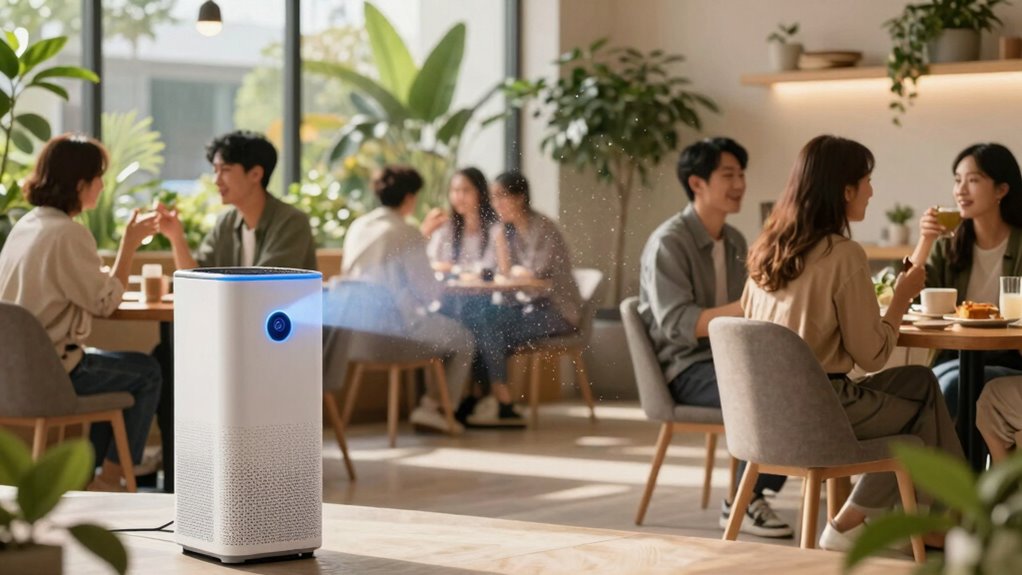
You should consider the latest air purifier technologies to further improve indoor air quality during gatherings. Modern air purifiers equipped with HEPA filters are proven to capture particles as small as 0.3 microns, including viruses and bacteria. Some advanced models also incorporate UV-C light or ionization features, which deactivate pathogens and remove airborne pollutants more effectively. These devices are especially useful in enclosed spaces where fresh air exchange might be limited. Research confirms that combining good ventilation with air purifiers creates a layered defense, reducing the risk of airborne disease spread.
Studies also highlight the importance of placement and operation of air purification devices. Positioning air purifiers in high-traffic areas or central locations ensures maximum coverage. Running these units at best settings during gatherings enhances their effectiveness. It’s also essential to maintain and replace filters regularly, as clogged filters diminish performance and can even release trapped contaminants back into the air. Incorporating ventilation strategies such as exhaust fans and air exchange systems further amplifies the reduction of airborne particles. Implementing air exchange systems can optimize airflow and ensure continuous removal of indoor pollutants, especially during prolonged events. Proper airflow management techniques can further improve the efficiency of these systems and minimize stagnant air zones. Moreover, educating attendees about air quality practices can help foster a collective effort towards maintaining healthier indoor environments.
Beyond mechanical solutions, researchers emphasize behavioral strategies that support air quality. Limiting the number of attendees, encouraging outdoor activities, and reducing duration of gatherings all help decrease airborne risks. Proper mask-wearing combined with improved ventilation and air purification further reduces exposure to respiratory aerosols. The science clearly indicates that no single method is sufficient alone; rather, an integrated approach combining ventilation strategies with advanced air purifier technologies offers the best protection. Incorporating education and awareness about air quality measures can also motivate individuals to adopt healthier practices during gatherings.
HEPA air purifier for large rooms
As an affiliate, we earn on qualifying purchases.
As an affiliate, we earn on qualifying purchases.
Frequently Asked Questions
How Effective Are Portable Air Cleaners in Large Outdoor Events?
Portable air cleaners can be somewhat effective at large outdoor events, especially when paired with good outdoor ventilation. They help reduce airborne particles and improve air quality in crowded areas. However, their effectiveness depends on factors like size, airflow capacity, and placement. While portable filtration devices can supplement outdoor ventilation, they shouldn’t replace natural airflow or proper spacing. Using a combination of outdoor ventilation and portable air cleaners offers the best protection.
Do Air Purifiers Remove All Types of Airborne Viruses?
Imagine a gentle breeze sweeping through a crowded room, trying to carry away virus transmission. While air purifiers can reduce many airborne viruses, they don’t remove all types due to limitations like filter efficiency and particle size. Some viruses, especially tiny aerosols, can slip through. So, you can’t rely solely on air purifiers to stop all airborne threats — combine them with masks and ventilation for better protection.
What Maintenance Is Required for Optimal Air Cleaning During Gatherings?
To keep your air purifier working effectively during gatherings, you need to regularly check and replace the filters as recommended by the manufacturer. Proper device placement is also essential; place it in a central location away from obstructions to maximize coverage. Clean the exterior periodically, and guarantee the unit has proper airflow. These steps ensure maximum air cleaning, reducing airborne contaminants and keeping your space healthier during gatherings.
Are There Specific Air Cleaning Strategies for Different Types of Gatherings?
You might think one-size-fits-all, but different gatherings demand tailored air cleaning strategies. For indoor ventilation, you’ll want high-efficiency filters and increased airflow to dilute contaminants. Outdoor filtration, on the other hand, benefits from portable air cleaners or air purifiers nearby. Ironically, the more diverse your gathering, the more you realize that customizing indoor ventilation and outdoor filtration methods keeps everyone safer and happier.
How Does Crowd Density Impact the Effectiveness of Air Cleaning Devices?
As crowd density increases, the effectiveness of air cleaning devices can decrease because ventilation effectiveness drops and air circulation becomes more challenging. You might notice that in crowded spaces, pollutants and aerosols linger longer, reducing air cleaning efficiency. To improve outcomes, you should boost ventilation, increase air exchange rates, and guarantee proper device placement. These steps help maintain good air circulation, minimizing airborne risks during densely populated gatherings.
Conclusion
You might think air cleaning isn’t necessary if everyone’s vaccinated or outdoors, but research shows indoor gatherings still pose risks for airborne transmission. Air purifiers and good ventilation considerably reduce pathogens, making your gatherings safer. Don’t let false security or assumptions put you at risk—prioritize air quality to protect yourself and your loved ones. Taking simple steps now can prevent bigger health issues later. So, don’t wait—clean the air, and enjoy your time together safely.
Fall Picks
fall essentials
As an affiliate, we earn on qualifying purchases.