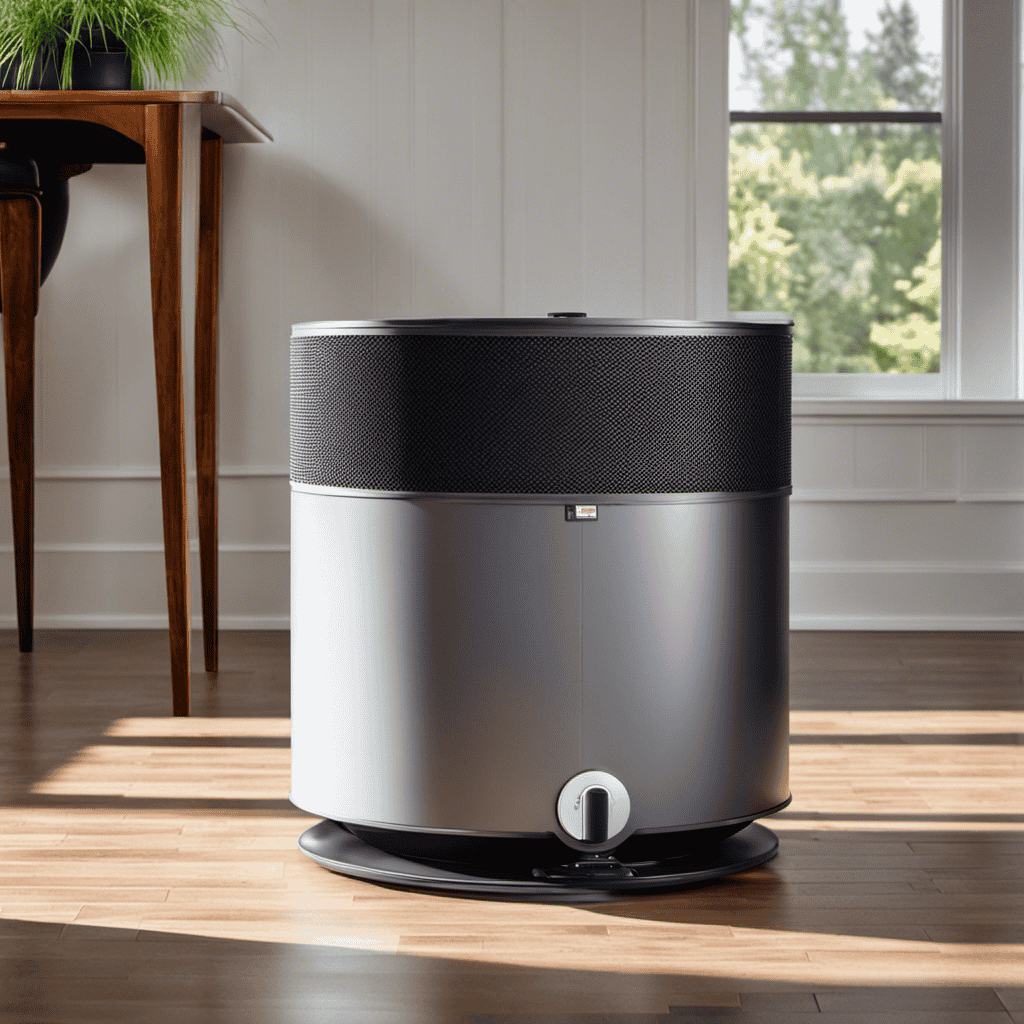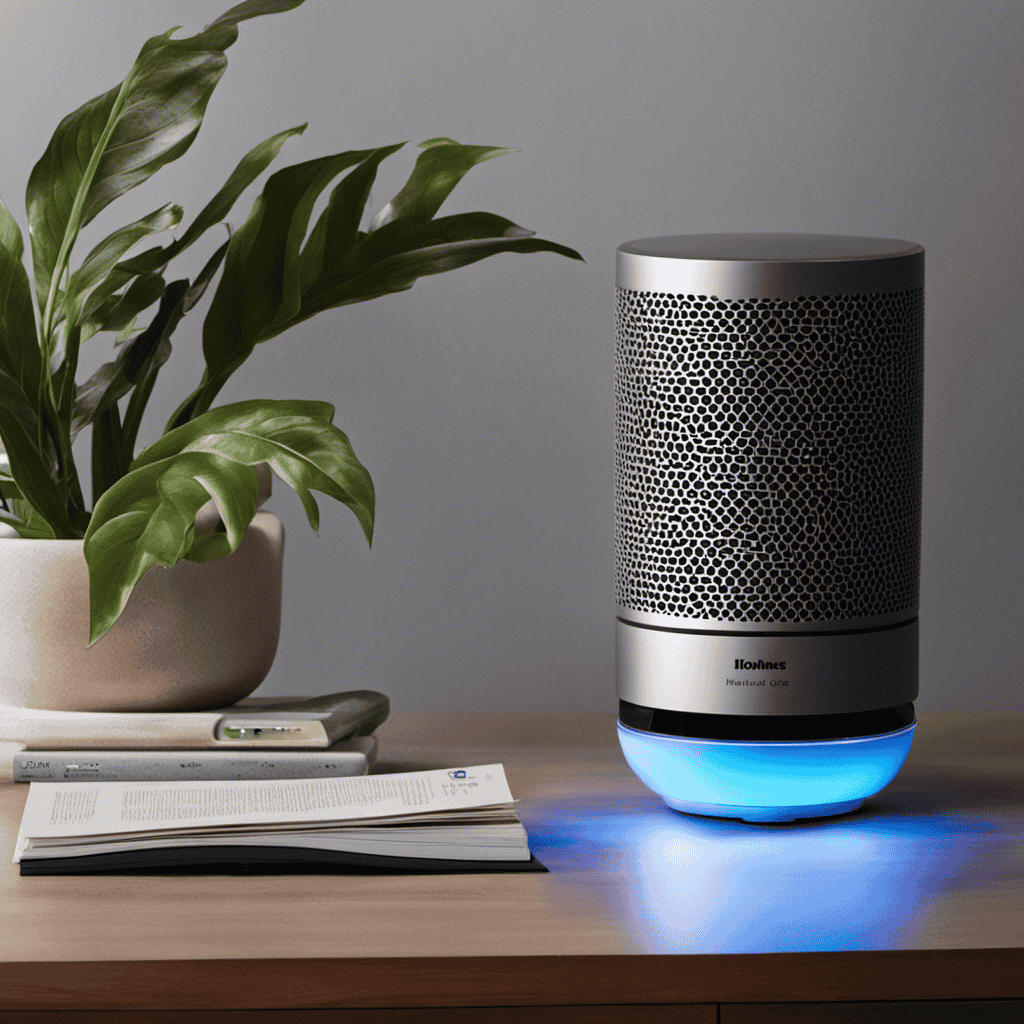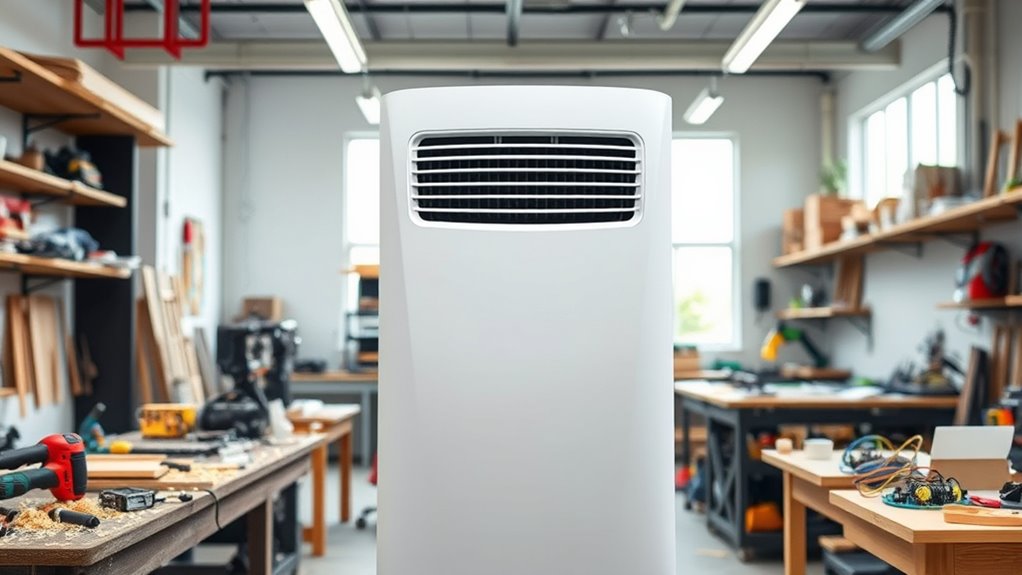

To keep your vocational workshop or makerspace safe, choose air purifiers with HEPA filters and VOC removal features. These units effectively trap dust, woodworking debris, and allergens while adsorbing harmful gases from paints, adhesives, and solvents. Look for models with high CADR ratings for larger spaces and regular filter replacements to maintain performance. If you want to find the best solutions for your workspace, discover more about the options that suit your needs.
Key Takeaways
- Choose air purifiers with HEPA filters capable of capturing particles smaller than 0.3 microns to effectively remove dust and debris.
- Select units equipped with activated carbon or specialty filters to adsorb VOCs from paints, adhesives, and solvents.
- Ensure the purifier’s CADR rating matches the size and airflow needs of your workshop or makerspace for optimal air circulation.
- Regularly replace filters as recommended by manufacturers to maintain high filtration efficiency and air quality.
- Combine air purifiers with proper ventilation and dust management practices for comprehensive workspace air safety.

Vocational workshops and makerspaces often generate dust, fumes, and particles that can compromise air quality and pose health risks. If you work in such environments, maintaining clean, safe air is vital. One of the most effective ways to do this is by using air purifiers equipped with HEPA filtration and VOC removal capabilities. HEPA filters are designed to capture tiny airborne particles, including dust, woodworking debris, and other allergens, which are common in workshops. By trapping these particles, HEPA filters prevent them from recirculating into the air you breathe, reducing respiratory irritation and long-term health issues.
In addition to filtering particles, VOC removal is equally important in these settings. Volatile Organic Compounds (VOCs) are gases emitted from paints, adhesives, solvents, and other chemicals frequently used in workshops. Continuous exposure to VOCs can cause headaches, dizziness, and more severe health problems over time. Air purifiers with VOC removal features use activated carbon or other specialized filters to adsorb these harmful gases, effectively reducing their concentration in the air. This dual approach—combining HEPA filtration with VOC removal—ensures that both particulate matter and gaseous pollutants are addressed, providing all-encompassing air purification.
Choosing the right air purifier for your workshop involves considering the size of the space and the type of work you do. For larger areas with high dust and chemical emissions, you’ll need models with higher CADR (Clean Air Delivery Rate) ratings to guarantee efficient circulation and filtration. Look for units that specify HEPA filters capable of capturing particles as small as 0.3 microns, and check that they include VOC removal features. Some advanced purifiers incorporate activated carbon filters alongside HEPA filters, offering a one-two punch against airborne contaminants. Regular maintenance is vital to keep your air purifier functioning at its best. Replace filters according to the manufacturer’s recommendations, especially if you notice a decline in air quality or the device’s performance. Properly maintained filters will ensure continuous HEPA filtration and VOC removal, safeguarding your health and productivity. Keep in mind that air purifiers are only part of an all-encompassing approach to air quality; good workshop ventilation and dust management practices further enhance safety. Additionally, selecting an air purifier with HEPA filtration and VOC removal capabilities can significantly improve the overall air quality in your workspace.

VEVOR Air Scrubber 550 CFM 3-Stage Filtration Stackable Negative Machine
- 3-Stage Filtration System: Pre-filter, carbon filter, HEPA filter
- High Airflow Capacity: 550 CFM adjustable airflow
- Large Filtration Area: Covers 5,500 cubic feet
As an affiliate, we earn on qualifying purchases.
As an affiliate, we earn on qualifying purchases.
Frequently Asked Questions
How Often Should Filters Be Replaced in Workshop Air Purifiers?
You should replace filters in your workshop air purifier based on the filter lifespan and your replacement schedule. Typically, HEPA filters last about 6 to 12 months, while carbon filters may need changing every 3 to 6 months. Check your device’s manual for specific recommendations, and monitor for reduced airflow or odors, which indicate it’s time for replacement. Regularly maintaining your filters guarantees peak air quality and performance.
Are There Specific Air Purifiers Suitable for Chemical Fumes?
Yes, you should choose air purifiers specifically designed for chemical fume filtration. Look for models with VOC removal technologies like activated carbon filters and specialty HEPA filters. These purifiers effectively trap chemical fumes, vapors, and hazardous particles, ensuring a safer workspace. Make sure to select units with sufficient airflow and replace filters regularly to maintain peak chemical fume filtration performance.
Can Portable Purifiers Handle Large Workshop Spaces Effectively?
Portable purifiers can handle large workshop spaces effectively if they have a high portable capacity, guaranteeing they circulate and filter enough air for the area. Keep in mind that higher capacity units might produce more noise, so check noise levels to balance performance and comfort. Choose a model designed for bigger spaces, and consider multiple units if necessary to ensure proper air quality throughout your workshop.
Do Air Purifiers Remove All Types of Airborne Particulates?
Air purifiers don’t remove all types of airborne particulates, but they target many, like dust, pollen, and some fumes. The effectiveness depends on the filter type and its lifespan; HEPA filters, for example, excel at capturing fine particulates. However, over time, filters wear out and need replacing to maintain performance. So, while they improve air quality, they don’t eliminate every airborne particle completely.
What Maintenance Is Required for Long-Term Purifier Operation?
To keep your air purifier running smoothly long-term, you need to regularly inspect the filters and replace or clean them as recommended by the manufacturer. Check for any buildup that might restrict airflow. Additionally, ensure that vents and filters are clean to optimize airflow, which maintains efficiency. Proper maintenance like this helps your purifier effectively remove airborne particulates and prolongs its lifespan.
Conclusion
Think of air purifiers as the fresh breath of air your workshop needs—like a gentle breeze clearing away the dust and fumes that cloud your space. By investing in the right purifier, you create a safer, healthier environment where creativity can flourish without worries. Just as a gardener nurtures their plants, you’ll nurture your workspace, ensuring every project grows in clean, pure air. Make that investment today and watch your workshop thrive like a well-tended garden.