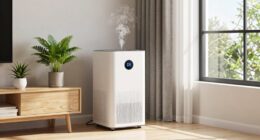
Avoid choosing a bigger air purifier just to boost performance, because the right size is what truly matters. A unit that’s too large won’t run efficiently or consistently, while an undersized one won’t improve your air quality. Focus on your room’s square footage to find a model that fits perfectly. When you select the proper capacity, you’ll get better filtration, less noise, and more energy savings. Keep going to discover how to pick the perfect fit for your space.
Key Takeaways
- Choose a purifier that matches your room size for optimal efficiency and effective air cleaning.
- Oversized units can be noisy, waste energy, and may not run long enough to clean the air properly.
- Proper sizing ensures continuous filtration, improving air quality and respiratory health.
- Focus on capacity and filtration technology rather than physical size when selecting an air purifier.
- Regular filter maintenance is essential for peak performance, regardless of purifier size.
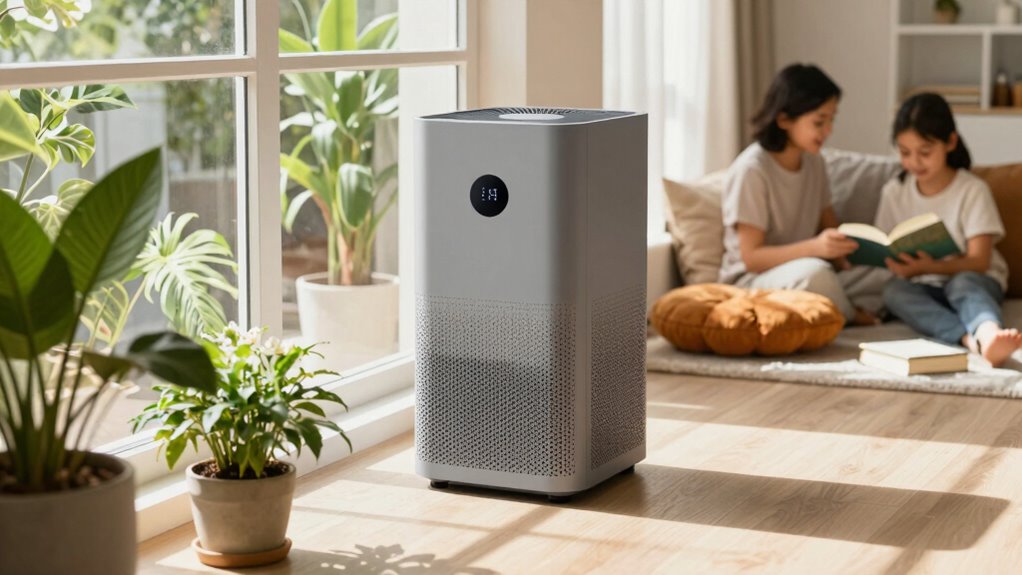
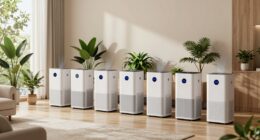
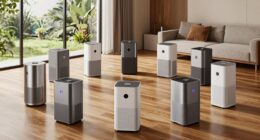
When choosing an air purifier, many people assume that bigger is better, thinking a larger unit will clean the air more effectively. While size does matter to some extent, it’s more important to match the purifier to your specific space and needs. A unit that’s too large for a small room can be noisy and unnecessary, while one that’s too small won’t effectively improve your air quality. Instead of focusing solely on size, you should prioritize the purifier’s capacity, measured in square footage, ensuring it’s appropriate for your room. This way, you’ll get maximum performance without wasting energy or creating excess noise.
Air quality depends heavily on how well your purifier can handle the pollutants in your environment. An oversized unit might seem like a safe bet, but it can actually be counterproductive if it doesn’t run long enough to filter the air thoroughly. Conversely, a smaller unit designed for your room size will run efficiently and maintain consistent filtration. This consistency is key to improving your overall air quality, especially if you suffer from allergies, asthma, or other respiratory issues. Remember, the goal is to maintain a clean, fresh environment without overtaxing the device or your budget.
Furthermore, understanding the importance of air filtration technology can help you choose a more effective purifier tailored to your needs. Filter replacement plays a crucial role in keeping your purifier functioning at its best. No matter how powerful or large your unit is, it won’t do its job if the filters aren’t replaced regularly. Over time, filters trap dust, pollen, pet dander, and other airborne particles, but they can become clogged or less effective if ignored. Many manufacturers recommend replacing filters every 6 to 12 months, depending on usage and air quality conditions. Failing to keep up with filter replacement not only diminishes your air quality but also strains the motor, leading to potential breakdowns and higher energy consumption. Choosing a model with easily accessible filters and affordable replacement costs makes it easier to maintain peak performance.
Ultimately, selecting the right air purifier isn’t about size; it’s about understanding your space and needs. Focus on an appropriately sized unit for your room, and stay committed to regular filter replacements. This approach ensures you get the most effective air purification, improving your air quality without unnecessary waste or expense. Buying the right device means better air, fewer headaches, and a healthier environment for you and your family.
Frequently Asked Questions
How Do I Determine the Optimal Purifier Size for My Space?
To determine the ideal purifier size, start by evaluating your space’s airflow patterns. Measure the room’s square footage and choose a purifier with a suitable Clean Air Delivery Rate (CADR). Place the purifier in a central location, avoiding corners or obstructions, to maximize airflow. This guarantees you effectively filter the air without overspending on unnecessary power, giving you cleaner air tailored to your space’s specific needs.
What Features Should I Prioritize Over Size When Choosing a Purifier?
You should prioritize features like airflow control and noise levels over size. Look for purifiers with adjustable fans, so you can customize airflow for comfort and efficiency. Also, consider noise levels, especially if you plan to use it in bedrooms or quiet spaces. A model with quiet operation and responsive airflow control guarantees clean air without disrupting your daily activities or sleep, providing a better overall experience.
Does a Larger Purifier Always Mean Better Air Quality?
A larger purifier isn’t always better; it’s like expecting a storm from a drizzle. Bigger units often have higher airflow capacity, but that doesn’t guarantee cleaner air. Noise levels can become unbearable, making it hard to relax or sleep. Instead, focus on a purifier that suits your room size, offers ideal airflow, and maintains low noise levels. The right size, combined with quality features, ensures truly healthier air.
How Often Should I Replace Filters in Different Purifier Sizes?
You should replace filters based on their filter lifespan, which varies by purifier size and usage. Typically, small purifiers need filter replacements every 3 to 6 months, while larger units might last 6 to 12 months. Always follow the manufacturer’s recommended replacement schedules, and check filters regularly for dirt buildup. Staying on top of these schedules guarantees your purifier works efficiently and maintains ideal air quality.
Can You Recommend Energy-Efficient Models for Small Spaces?
For small spaces, I recommend energy-efficient purifiers with HEPA filters like the Blueair 411 or Coway Airmega 250. These models consume less power and effectively trap allergens, dust, and pollutants. Look for units with low noise levels, so they won’t disturb you while working or sleeping. These choices balance performance and energy savings, ensuring a cleaner environment without high electricity costs.
Conclusion
Remember, bigger isn’t always better—it’s about finding the right fit for your space. Think of your purifier as a key that grants access to clean air, not a hammer that overkills. When you select the right model, you’re not just buying a device; you’re investing in your health and comfort. So, don’t just chase size—choose wisely, and breathe easy knowing you’ve found your perfect match. Your lungs will thank you for it.