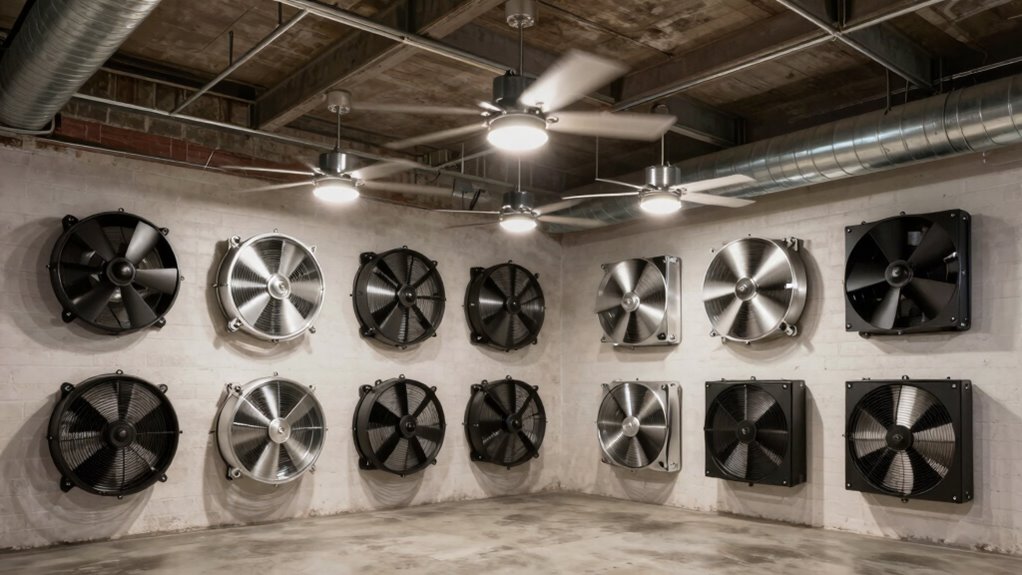

Choosing the right ventilation fan for basement use comes down to three things: how much air you need to move, whether the fan can run itself with a humidistat or thermostat, and how it physically mounts into your space. The AC Infinity AIRTITAN T8 stands out as my best overall pick because it pairs a capable airflow rating with an onboard temperature and humidity controller in a dual-fan design that fits standard vents. If raw moisture removal is your priority, the ALORAIR 780 CFM model moves far more air than anything else here, while budget-minded buyers get genuine automation from the CADPXS humidistat fan at a lower tier. The core tradeoff in this category is power versus noise and install complexity — the big CFM units demand more electrical planning and larger openings. Read on for the full breakdown of all nine options.

Get garden gear delivered free with Prime
- Fast, free delivery on millions of items
- Prime Video, Amazon Music and more included
- Member-only deals all year
Complete the kit



Key Takeaways
- Only four of the nine fans — the AIRTITAN T8, ALORAIR 780, VentirPro 540, and Abestorm 260 — combine both a humidistat and thermostat, which matters if your basement struggles with summer humidity and winter stuffiness rather than one alone.
- The 780 CFM ALORAIR is overkill for spaces under roughly 1,500 square feet; the 240–260 CFM tier (the generic 240 CFM fan and the Abestorm) handles typical basement footprints while drawing less power and running quieter.
- The hopper window fan is the only option that requires no wall cutting or existing vent opening, making it the clear choice for renters or finished basements where structural work is off the table.
- IP-55 weatherproofing (Abestorm) and sealed digital displays (ALORAIR) separated the durable picks from fans better suited to dry, conditioned basements — a real differentiator for damp crawl spaces.
- Dual-fan designs from AC Infinity and Tjernlund offer redundancy and adjustable coverage, but they cost more up front and need wider mounting openings than the single-impeller alternatives.


| ventilation fan for basement | Airflow | Noise Level |
|---|---|---|
| 240 CFM Crawlspace Vent Fan wi | 240 CFM | — |
| AC Infinity AIRTITAN T8-N Craw | 240 CFM | 32 dBA |
| ALORAIR 780 CFM Crawl Space Fa | 780 CFM | 55 dBA |
| Tjernlund V2D UnderAire Crawl | 220 CFM (dual fans) | 25 dB |
| CADPXS Crawlspace Ventilation | 220 CFM (dual fans) | — |
| AC Infinity AIRTITAN T8 Crawls | 240 CFM | 32 dBA |
| 16 x 8-Inch Hopper Window with | 220 CFM | — |
| ALORAIR VentirPro 540 CFM Craw | 540 CFM | <55 dB |
| Abestorm 260CFM Crawlspace Ven | 260 CFM | — |
More Details on Our Top Picks
240 CFM Crawlspace Vent Fan with Thermostat and Humidistat
This option stands out for the balance it strikes between automatic climate control and straightforward setup. Unlike the Tjernlund V2D, which relies on analog dials and a permanent installation, this fan pairs a dual humidity and temperature sensor with a slim body that slides into a standard foundation vent and plugs into a wall outlet. The low-temperature protection is a real advantage in colder climates — it stops the fan from pulling frigid air into your basement in January, something cheaper units often ignore. The tradeoff is simplicity: there is no adjustable fan speed, so it runs at full 240 CFM whenever your thresholds trigger. Compared with the ALORAIR VentirMax 780SD, airflow is modest, but for a typical basement or crawlspace under 800 square feet, that capacity is adequate and the 11-watt draw keeps running costs trivial.
Pros:- Automatic dual humidity and temperature control prevents mold and condensation without daily attention
- Low-temperature protection stops cold air backflow in winter
- Corrosion-resistant coated body holds up in chronically damp environments
- Plug-and-play design fits standard brick and concrete vents
- 11-watt power draw keeps long-term running costs minimal
Cons:- Single speed with no adjustable fan settings — runs all or nothing
- Humidity and temperature thresholds require manual presetting with no app or remote adjustment
Best for: Homeowners with a standard foundation vent who want set-and-forget humidity control without hiring an electrician
Not ideal for: Owners of large basements over 1,000 sq. ft. — 240 CFM single-speed airflow will cycle too often without fully clearing the space
- Airflow:240 CFM
- Dimensions:18.9″ x 9.4″ x 1.6″
- Wattage:11 watts
- Humidity Range:1%-100% RH
- Mounting:Wall mount
- Cord Length:6.6 ft grounded
- Warranty:3-year guarantee
Our verdict“The most sensible default pick for average-sized basements that need automatic moisture control with minimal installation effort.”
AC Infinity AIRTITAN T8-N Crawlspace Basement Ventilator Intake Fan
This model makes the most sense for buyers who want remote monitoring and real automation rather than a dial-and-forget fan. Where the CADPXS unit offers only a basic knob-controlled humidistat, the AIRTITAN T8-N adds WiFi and Bluetooth connectivity, letting you program temperature, humidity, and VPD triggers, set schedules and cycling timers, and receive alerts from anywhere. At 32 dBA, it is also far quieter than the ALORAIR VentirMax at 55 dBA — a genuine difference if the fan sits near a finished or frequently used basement area. The defining limitation is its intake-only design: it pulls fresh air in rather than exhausting stale air out. That works well paired with a passive exhaust vent or a second fan, but buyers needing to push damp air out should look at the exhaust versions in this lineup instead.
Pros:- Full app control via WiFi and Bluetooth with remote programming and alerts
- Dynamic climate programming including temperature, humidity, and VPD sensors with timers and schedules
- Very quiet at 32 dBA — suitable near living spaces
- Slim 1.6-inch backplate fits standard vent openings
Cons:- Intake-only design may not suit exhaust ventilation needs
- Full automation features require app setup, which adds friction for less technical users
Best for: Tech-comfortable homeowners who want app-based climate monitoring and positive-pressure fresh-air ventilation in a basement or crawlspace
Not ideal for: Buyers needing pure exhaust ventilation to expel radon or musty air — the intake-only design works against that goal
- Airflow:240 CFM
- Design:Intake
- Noise Level:32 dBA
- Connectivity:WiFi, Bluetooth
- Backplate Dimensions:18 x 9 x 1.6 in.
- Controls:Temperature, humidity, VPD, timers, scheduling
Our verdict“A strong pick for connected-home setups where fresh-air intake, quiet operation, and remote climate data matter more than raw exhaust power.”
ALORAIR 780 CFM Crawl Space Fan with Humidistat and Digital Display
When square footage is the problem, this is the answer. At 780 CFM across three speeds, the VentirMax 780SD moves more than three times the air of the 240 CFM Vent Fan and covers spaces up to 1,300 sq. ft., which makes it the clear choice for full-size basements rather than cramped crawlspaces. The programmable LCD panel with memory restart is more refined than the CADPXS knob controls, and IP55-rated stainless construction matches the Abestorm 260CFM for durability in wet environments. The compromises are real, though: at 55 dBA it is the loudest option here by a wide margin, and the casing runs warm — 40–50°C during operation — which is worth knowing if it will sit near storage or finished walls. This model is better suited to utility basements where air exchange capacity matters more than silence.
Pros:- High 780 CFM airflow with three speed settings for spaces up to 1,300 sq. ft.
- Built-in humidistat and freeze-protection thermostat for automatic operation
- IP55-rated stainless steel build for damp, dusty environments
- Programmable LCD panel with memory restart after power failures
Cons:- Casing generates noticeable heat (40–50°C) during operation
- 55 dBA noise level is clearly audible in quiet spaces
Best for: Owners of large basements or crawlspaces up to 1,300 sq. ft. who need serious air exchange and durable wet-rated construction
Not ideal for: Finished basements or areas near living space — 55 dBA noise and a warm-running casing make it intrusive
- Airflow:780 CFM
- Noise Level:55 dBA
- Speeds:3
- Coverage:Up to 1,300 sq. ft.
- Power:115V AC, 68 watts
- Material:Stainless steel, IP55-rated blades
- Cord Length:6 ft
Our verdict“The high-capacity choice for big, unfinished basements where moving serious air volume outweighs noise and heat concerns.”
Tjernlund V2D UnderAire Crawl Space Ventilator
Compared with the plug-and-play models in this roundup, the Tjernlund V2D is built for permanence — and that is both its strength and its burden. It mounts into existing passive vent openings, so you are converting a vent you already have rather than cutting new holes, and its brushless motor promises maintenance-free exhaust for years, something the CADPXS and budget dual-fan units cannot claim. At 25 dB, it is quieter than everything here except the AC Infinity, and the included thermostat and dehumidistat provide baseline automatic control. The tradeoffs: the 6-inch prewired cord is unusually short and expects a junction box nearby, and the whole unit assumes professional-style permanent installation. It also lacks the app programming of the AIRTITAN T8-N entirely — this is an analog workhorse, not a smart device.
Pros:- Fits and upgrades existing passive vent openings
- Very quiet operation at 25 dB
- Brushless motor for long-term, maintenance-free exhaust
- Includes thermostat and dehumidistat for automatic moisture control
Cons:- Requires permanent installation with electrical hookup
- Prewired 6-inch power cord is impractically short without a nearby junction box
- No programmable or smart controls compared with newer rivals
Best for: Homeowners doing a permanent ventilation upgrade who want a durable, maintenance-free exhaust fan wired into existing passive vents
Not ideal for: Renters or DIYers wanting a plug-in solution — the short cord and permanent mounting assume electrical work and long-term installation
- Airflow:220 CFM (dual fans)
- Noise Level:25 dB
- Power:120V AC, 40 watts
- Fan Speed:1200 RPM
- Motor:Brushless
- Controls:Thermostat and dehumidistat
- Installation:Permanent
Our verdict“A durable fixed-installation exhaust fan for buyers planning a long-term crawlspace ventilation upgrade rather than a quick plug-in fix.”
CADPXS Crawlspace Ventilation Fan with Humidistat
This pick makes the most sense for buyers who want the core feature set — automatic humidistat control, freeze protection, and dual-fan exhaust — at the lowest possible complexity and cost. It covers the same essentials as the 240 CFM Vent Fan: it exhausts humidity, odors, and radon gas, and its thermostat shuts off below 35°F to avoid winter backflow. The differences are in the details. Its humidistat range is narrower at 20%–80% RH, and its simple knob panel offers none of the scheduling or app control found on the AC Infinity AIRTITAN T8-N. For a small basement or crawlspace where you just want the fan to handle itself, that simplicity is fine. But at 220 CFM with no speed options, owners of larger spaces will find it underpowered compared with the ALORAIR 780 CFM model.
Pros:- Built-in humidistat automatically manages humidity levels
- Freeze-protection thermostat stops operation below 35°F
- Exhausts radon gas, odors, and treated wood gases
- Simple plug-and-play operation with grounded 6.56 ft cord
Cons:- Basic knob controls with no timers, scheduling, or speed adjustment
- 220 CFM is insufficient for large crawlspaces or full basements
Best for: Budget-minded owners of small crawlspaces or basements who want automatic humidity exhaust without extra features
Not ideal for: Large basements or anyone wanting programmable scheduling — 220 CFM and basic knob controls limit both coverage and flexibility
- Airflow:220 CFM (dual fans)
- Dimensions:18″ x 9″ x 2″
- Humidistat Range:20%-80% RH
- Freeze Protection:Shuts off below 35°F
- Controls:Knob control panel
- Cord Length:6.56 ft grounded
Our verdict“A no-frills value pick that delivers dependable automatic exhaust for small spaces where advanced controls would go unused.”
AC Infinity AIRTITAN T8 Crawlspace Basement Ventilator Exhaust Fan with Temperature & Humidity Controller
This option stands out for buyers who want precision climate control rather than simple on/off ventilation. The ten-speed controller with temperature, humidity, and VPD programming puts it well ahead of the ALORAIR VentirPro, which offers only a single fixed speed. Compared with the Abestorm 260 CFM fan, the AIRTITAN T8 trades raw airflow (240 vs. 260 CFM) for a far richer control layer: WiFi and Bluetooth app access, scheduling, cycle timers, and climate alerts. At 32 dBA, it also runs noticeably quieter than both ALORAIR and Abestorm units, which matter if your basement doubles as living space. The tradeoff is installation complexity — this is a permanent mount system, so renters or anyone wanting a plug-in solution like the hopper window fan should look elsewhere.
Pros:- Smart app control via WiFi and Bluetooth with climate data and alerts
- Ten-speed brushless DC motor with temperature, humidity, and VPD programming
- Very quiet at 32 dBA — quietest in this lineup
- Weather-resistant IP-55 rated stainless steel backplate
Cons:- Requires permanent mount installation with structural modification
- Rated for indoor use despite the IP-55 weather resistance, limiting placement flexibility
Best for: Homeowners who want app-based automation, remote monitoring, and quiet operation for a finished or frequently used basement
Not ideal for: Renters or DIYers who want plug-and-play ventilation without cutting a permanent mounting opening
- Airflow:240 CFM
- Noise Level:32 dBA
- Number of Speeds:10
- Motor Type:Brushless DC motor
- Material:Stainless steel backplate (18 x 9 x 1.6 in.)
- Control Method:App / Button
- Installation Type:Permanent mount
Our verdict“This pick makes the most sense for tech-minded homeowners who want granular, remote-controlled basement climate management and don’t mind a permanent install.”
16 x 8-Inch Hopper Window with 220 CFM Crawl Space Vent Fan
Most basement ventilation fans demand cutting into a wall or foundation — this one is different. By building a 220 CFM fan into an actual hopper window, it replaces an existing 16 x 8-inch basement window opening with powered ventilation and double-pane frosted glass for light and privacy. Installation is genuinely simple: plug it in, no hardwiring, no masonry work — a sharp contrast to the AC Infinity AIRTITAN T8’s permanent mount. The built-in humidistat and thermostat handle automatic operation, though the fixed 50°F start / 35°F stop thresholds give you far less tuning freedom than the AIRTITAN’s programmable controller. Airflow is also the lowest in this group at 220 CFM, so compared with the ALORAIR VentirPro’s 540 CFM, this suits smaller basements rather than large, damp spaces.
Pros:- Combines a real hopper window and powered fan in one unit
- Automatic humidity and temperature-based operation with no programming needed
- Plug-in installation avoids hardwiring and wall cutting
- Double-pane frosted glass maintains insulation and privacy
Cons:- Only fits standard 16 x 8-inch openings, limiting compatibility
- Fixed temperature thresholds (50°F start / 35°F stop) can’t be adjusted
- Lowest airflow of the group at 220 CFM
Best for: Homeowners with an existing 16 x 8-inch basement hopper window who want easy plug-in ventilation without construction
Not ideal for: Buyers with large or heavily damp basements, or non-standard window openings — the fixed size and modest 220 CFM won’t keep up
- Window Size:16 x 8 inches (insert 15.5 x 7.75 inches)
- Airflow:220 CFM
- Humidity Operating Range:20%–80%
- Temperature Thresholds:Starts at 50°F, stops at 35°F
- Frame Material:Aluminum alloy
- Glass:Double-pane frosted glass
- Installation:Plug-in
Our verdict“The easiest path to powered basement ventilation if you already have a matching hopper window opening — just don’t expect it to ventilate a large space.”
ALORAIR VentirPro 540 CFM Crawl Space Ventilator Fan with Humidistat & Thermostat
When basement moisture is a serious problem rather than a mild annoyance, this is the fan that moves the most air in this batch. At 540 CFM, the VentirPro more than doubles the output of the Abestorm 260 CFM unit and more than triples the hopper window fan, making it the right call for large basements or stubborn humidity. The adjustable humidistat (10%–80% RH) offers set-and-forget automation with a wider range than the hopper window’s fixed thresholds, and the IP-55 rated zinc-aluminum shell with isolation mesh is built to survive genuinely damp conditions. The compromises are real, though: one fixed speed means no gentle low-speed mode like the AIRTITAN T8’s ten-speed control, it runs louder at under 55 dB, and freeze protection shuts everything off below 35°F.
Pros:- Highest airflow in this group at 540 CFM for serious moisture problems
- Wide-range adjustable humidistat (10%–80% RH) for true set-and-forget operation
- IP-55 rating and zinc-aluminum shell built for damp environments
- Trimmable faceplate adapts to non-standard foundation openings
Cons:- Single speed with no variable control or quiet mode
- Freeze protection halts all operation below 35°F
- Exhaust-only design provides no fresh air intake
Best for: Owners of large basements or crawl spaces fighting persistent humidity who need maximum air extraction on autopilot
Not ideal for: Anyone with a small basement or a space used as living area — the single speed and under-55 dB noise level make it overpowered and audible
- Airflow:540 CFM
- Fan Size:8.7 inches (3 blades, 1200 rpm)
- Noise Level:<55 dB
- Humidity Control Range:10%–80% RH
- Freeze Protection:Shuts off below 35°F / 1.7°C
- Shell:IP-55 rated zinc-aluminum with isolation mesh
- Power Cord:6-foot grounded cord
- Certification:ETL
Our verdict“The heavy-duty choice for big, humid basements where raw airflow matters more than quiet operation or smart features.”
Abestorm 260CFM Crawlspace Ventilation Fan with Humidistat Thermostat, IP-55 Rated, 6.7 Inch
This model occupies the practical middle ground of the lineup. It delivers the same core automation as the pricier ALORAIR VentirPro — a built-in humidistat (5%–80% RH, an even wider range), freeze protection, and a weatherproof IP-55 shell — at roughly half the airflow, which is plenty for a typical residential basement. Compared with the AC Infinity AIRTITAN T8, you give up app control and multi-speed tuning, but you gain simple knob controls and straightforward wall mounting with a trimmable faceplate, so setup takes minutes rather than an afternoon. The 5.5mm isolation mesh is a thoughtful touch for crawl-space installs, blocking pests and reptiles. The tradeoffs mirror the ALORAIR: exhaust-only airflow and a hard stop below 35°F, so it’s not a year-round solution in cold climates.
Pros:- Built-in humidistat with a very wide 5%–80% RH control range
- IP-55 rated aluminum-zinc shell suited to damp environments
- Isolation mesh blocks pests and reptiles from entering
- Simple knob controls and trimmable faceplate for easy installation
Cons:- Exhaust-only design does not bring in fresh air
- Freeze protection stops operation below 35°F, limiting winter use
Best for: Budget-conscious homeowners with a standard-size basement who want automatic humidity control without smart-home complexity
Not ideal for: Buyers in cold-winter climates who need ventilation below 35°F, or those wanting fresh-air intake rather than exhaust-only airflow
- Airflow:260 CFM
- Fan Size:6.7 inches (5 aluminum blades)
- Overall Size:13.4 x 2.5 x 9.1 inches
- Operating Humidity:5%–80% RH
- Freeze Protection:Auto stop below 35°F / 3°C
- Shell Material:IP-55 rated aluminum zinc
- Power Cord:6-foot grounded
- Certification:ETL
Our verdict“A sensible, low-fuss pick that gets you automatic humidity-driven ventilation for a typical basement without paying for airflow or features you don’t need.”

How We Picked
I ranked these fans by matching each one to a realistic basement scenario rather than stacking spec sheets. The first filter was airflow adequacy: a fan must move enough cubic feet per minute to exchange the air in a typical basement or crawlspace several times per hour without being so oversized it wastes electricity and creates drafts. The second filter was control automation — models that sense humidity and temperature on their own ranked higher for set-and-forget use than manual or single-sensor units, because basement moisture problems happen when nobody is watching.
From there I weighed build quality and moisture resistance (sealed motors and IP ratings matter in the exact damp environments these fans serve), install complexity including mounting requirements and electrical demands, and value relative to the tier. That process produced a lineup where every fan earns a distinct role: high-CFM workhorses for large or heavily damp spaces, compact automated units for typical basements, and a window-mounted option for anyone who cannot cut into walls.
Factors to Consider When Choosing Ventilation Fan For Basement
Before you settle on a specific fan, it helps to understand how basement ventilation actually works and where buyers most often go wrong. These six factors shaped how I ranked the lineup above.Match CFM to Your Actual Space, Not the Biggest Number
The most common mistake is buying on peak CFM alone. A useful rule of thumb is that you want enough airflow to exchange the air in your basement three to six times per hour, which means multiplying your cubic footage (length × width × ceiling height) and dividing accordingly. A 1,000-square-foot basement with 8-foot ceilings needs roughly 240–480 CFM depending on how damp it runs — which puts the 780 CFM ALORAIR firmly in commercial or very large crawlspace territory. Oversizing brings real costs: more electricity, more noise, faster fan wear, and cold drafts in winter that can make the basement less comfortable rather than more. Undersizing wastes your money more quietly, since the fan runs constantly without ever pulling humidity down to a safe level.
Humidistat Control Is the Feature That Matters Most
Basement moisture problems are intermittent — they spike after rain, during humid summers, and when a sump pit or dryer is working. A fan with a built-in humidistat only runs when humidity crosses your set threshold, which cuts noise, saves electricity, and extends motor life by years. During my comparison, the presence and quality of humidistat control separated the serious basement fans from generic utility fans dressed up for the job. If a model offers both humidistat and thermostat, like the AIRTITAN T8 or VentirPro 540, you get year-round automation: moisture control in summer and heat dumping or air exchange in winter. Manual-only fans belong in spaces someone visits daily, not in a basement that sits unmonitored for weeks.
Know Where the Air Comes From and Goes
A ventilation fan only works if it has both an intake path and an exhaust path — many buyers install an exhaust fan and wonder why nothing improves. Some models here, like the AIRTITAN T8-N, are intake-only by design, meant to pair with an exhaust unit or an existing passive vent to create cross-flow. Others, like the standard AIRTITAN T8 and the Tjernlund V2D, are exhaust units that push stale air out and rely on a gap elsewhere for makeup air. Before buying, walk your basement and identify where air can enter and exit; a single fan in a sealed space just spins the same damp air around. Homes with radon concerns should also check whether added ventilation interacts with any mitigation system before installing.
Mounting Style Dictates Your Install Cost
These nine fans fall into three mounting families: through-wall or foundation vent units, window-mounted units, and units sized for existing crawlspace openings. Cutting a new opening in a foundation wall can easily cost more than the fan itself once you factor in a masonry bit, a contractor, or electrical work, so check what openings you already have. The hopper window fan eliminates cutting entirely, which is why it earns a spot despite mid-tier airflow — for finished basements and rentals, that install advantage outweighs raw performance. Foundation-vent-sized fans like the Tjernlund and the 240 CFM model drop into existing vents with minimal tools. Also confirm your power situation: high-CFM fans may want a dedicated circuit that a standard outlet chain can’t safely supply.
Moisture Resistance and Durability Ratings
Ironically, ventilation fans for damp spaces fail early when their own components aren’t moisture-protected. Look for sealed motors, IP ratings (the Abestorm’s IP-55 rating means it shrugs off direct water spray), and corrosion-resistant housings — especially if the fan sits in a crawlspace with standing water risk or near a sump pit. Digital displays are convenient but add a failure point in humid air, which is why the ALORAIR’s sealed display design deserves credit. Cheaper fans with open motor housings can seize within a couple of seasons in wet conditions. If your space floods occasionally or runs above 80% humidity, spend the extra on a sealed unit; if your basement is merely musty and mostly dry, standard construction will hold up fine.
Noise, Placement, and Living-Space Realities
A fan that runs constantly at an acceptable hum in a crawlspace can be genuinely disruptive under a finished basement family room. Check the sound rating and remember that noise travels through joists and ductwork more than through open air. Placement matters just as much as volume: mounting near the moisture source (sump pit, laundry area, earth floor) extracts humidity at the source, while a fan in a far corner mostly ventilates that corner. If the basement doubles as living space, prioritize quieter automated fans that only run when needed rather than constant-speed units. For pure storage or crawlspace use, noise is nearly irrelevant and you can put every dollar toward airflow.
Frequently Asked Questions
Do I need an intake fan, an exhaust fan, or both for my basement?
You need airflow in at least one deliberate direction, and ideally a matched pair. An exhaust fan like the AC Infinity AIRTITAN T8 or Tjernlund V2D pushes stale, humid air out while fresh air enters through gaps, vents, or an intake fan. The AIRTITAN T8-N exists specifically as an intake unit, designed to pair with an exhaust fan so the two create controlled cross-flow rather than relying on random leaks. If your basement has a single usable opening, an exhaust fan with a humidistat is usually the smarter buy. If you have two openings on opposite sides, a paired intake and exhaust setup ventilates far more evenly and prevents the negative pressure that can pull radon or soil gases upward.
How big a fan do I need for a typical basement?
For most residential basements, something in the 220–300 CFM range handles the job, which is why the 240 CFM thermostatic model and the Abestorm 260 sit at such a practical sweet spot. Calculate your space’s cubic footage and target three to six air exchanges per hour — more if the space runs very damp, less if you’re just fighting occasional stuffiness. The 540 and 780 CFM units make sense for large crawlspaces, long or L-shaped basements, or spaces with active water problems. Remember that fan ratings assume relatively unobstructed airflow; ducting, tight turns, and closed doors can cut effective output substantially. When in doubt, buy slightly more capacity than you need and let a humidistat modulate when it runs.
Can a ventilation fan actually fix a damp basement, or do I need a dehumidifier too?
They solve different problems, and knowing which one you have saves money. A ventilation fan works well when your basement dampness comes from trapped humid air and poor circulation — it exchanges that air with drier outside air, and it excels during seasons when outdoor humidity is low. A dehumidifier wins when outside air is consistently more humid than your basement air, which is common in humid summer climates where ventilating can actually make things worse. Many homeowners run both: the fan handles air exchange and odor, while the dehumidifier polishes the residual moisture. If you have active water intrusion — standing water, efflorescence, wall seepage — no fan fixes that; address drainage and waterproofing first, then ventilate.
Will running a basement fan all winter make my house cold?
It can, and this is where thermostat control earns its keep. A fan with a thermostat, like the AIRTITAN T8, ALORAIR 780, VentirPro 540, or Abestorm 260, can be set to stop pulling in air below a temperature threshold so you’re not pumping frigid outdoor air into your home’s envelope. Without that safeguard, a constantly running intake or exhaust fan in January can measurably increase your heating bill and create cold drafts through the floor above. Some owners simply shut fans down for winter and rely on a dehumidifier, since cold air holds little moisture anyway. If year-round operation matters to you, pick a model with dual temperature and humidity sensing rather than humidity control alone.
Is it worth paying more for a fan with a digital display and higher build quality?
It depends on how harsh your space is. In a finished or semi-finished basement that stays moderately dry, a basic humidistat fan will likely serve for years, and the money saved can go toward a backup dehumidifier. In a genuinely wet crawlspace — dirt floor, high humidity, occasional water — sealed electronics and corrosion-resistant build quality are what keep the fan alive past its warranty, and the ALORAIR and Abestorm designs target exactly that environment. Digital displays are genuinely useful for dialing in a precise humidity setpoint instead of guessing with a dial, but they’re a convenience, not a necessity. The better question is whether the fan’s motor and housing can survive your conditions; spend on sealing first, displays second.
Conclusion
The right pick depends almost entirely on your basement’s size and how much automation you want. For most homeowners, the AC Infinity AIRTITAN T8 is the best overall choice — its dual-fan design, combined temperature and humidity controller, and reasonable airflow fit the typical residential basement without overkill. For best value, the CADPXS humidistat fan and the 240 CFM thermostatic model deliver genuine moisture-triggered automation at the accessible end of the lineup, and the Abestorm 260 adds IP-55 durability for barely more.
Buyers facing serious moisture loads in large crawlspaces should look at the premium tier: the ALORAIR 780 CFM for maximum air movement or the VentirPro 540 as a more balanced high-output option with a sealed digital display. For beginners and renters, the hopper window fan removes every installation barrier — no cutting, no wiring beyond an outlet — making it the safest first step in basement ventilation. And if you’re building a deliberate cross-flow system, pair the intake-only AIRTITAN T8-N with a matched exhaust unit rather than doubling up on exhaust fans. Whatever you choose, size to your actual space and prioritize humidistat control; those two decisions matter more than any brand name on the box.