To build a low-dust cleaning routine that sticks, you should use microfiber cloths to dust surfaces and vacuum with a HEPA filter regularly. Choose dust-resistant materials for furniture and bedding, and keep clutter to a minimum. Maintain proper ventilation and air purifiers to improve airflow and reduce airborne dust. Establish habits like washing bedding often, sealing containers, and removing shoes. Keep consistent, and you’ll see a noticeable difference—learn more tips to maintain a dust-free home for good.
Key Takeaways
- Establish a consistent cleaning schedule focusing on dust-prone areas like surfaces, vents, and electronics.
- Use microfiber cloths and HEPA-filtered vacuums for effective dust removal during cleaning.
- Incorporate air purifiers and maintain HVAC filters to improve indoor air quality regularly.
- Minimize clutter and store items in sealed containers to reduce dust accumulation.
- Educate household members on dust control habits, such as removing shoes and washing bedding frequently.
Creating a low-dust cleaning routine is vital for maintaining a healthier indoor environment, especially if you or your loved ones have allergies or respiratory sensitivities. The key to success lies in reducing dust accumulation and improving air quality. One effective way to do this is by incorporating air purification devices into your routine. HEPA air purifiers can trap tiny dust particles, pollen, pet dander, and other airborne allergens, greatly improving the air you breathe. Place these purifiers in high-traffic areas or bedrooms to maximize their impact. Alongside air purification, switching to dust resistant materials can make a noticeable difference. Opt for furniture, curtains, and bedding made from tightly woven fabrics or synthetic materials designed to resist dust buildup. These materials are easier to clean and less likely to harbor allergens over time.
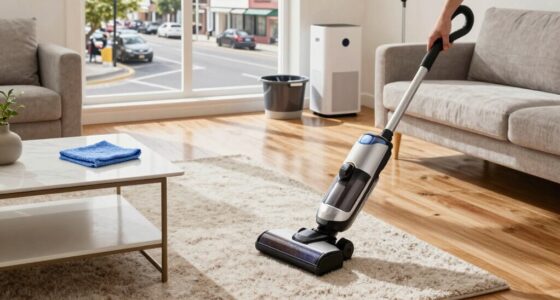
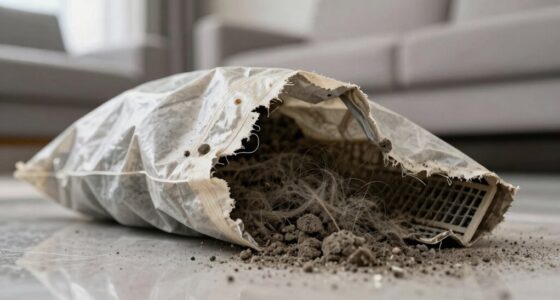
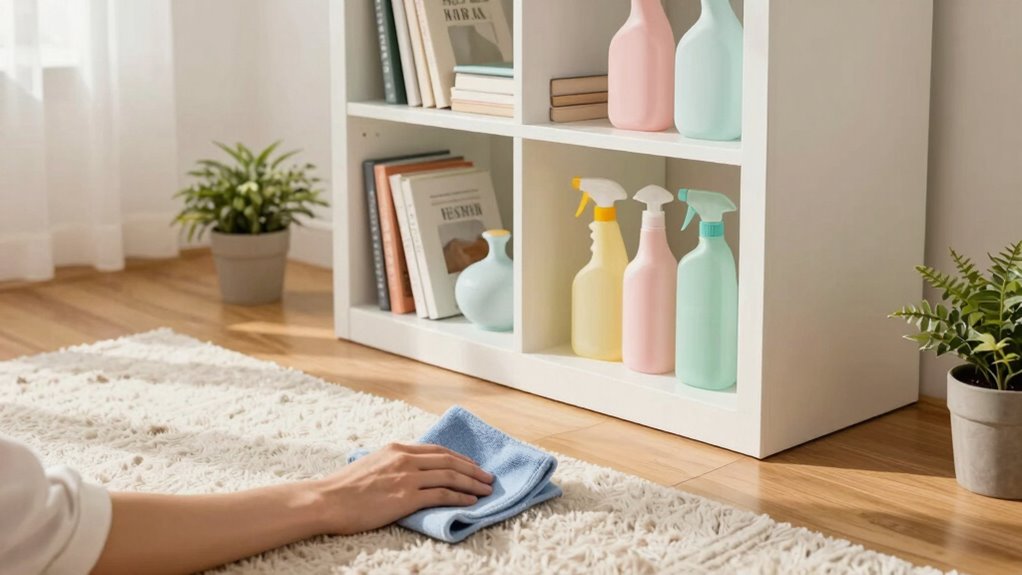
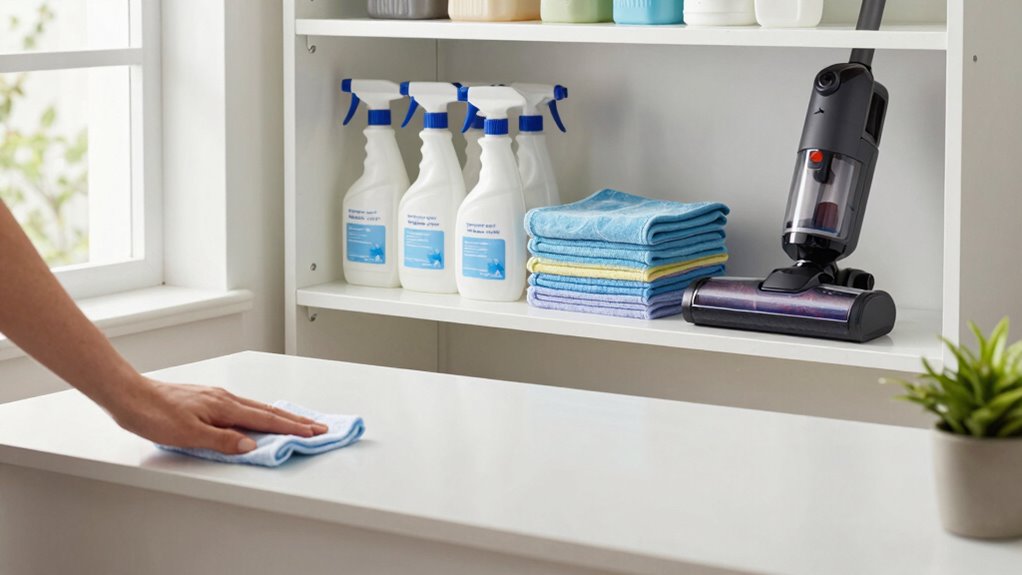
When you clean, focus on dusting surfaces thoroughly with microfiber cloths, which trap dust more effectively than traditional dusters or feather dusters. Regularly wipe down flat surfaces, shelves, and electronics to prevent dust from settling. Don’t forget to clean light fixtures, ceiling fans, and vents, which tend to gather dust quickly. Using a vacuum with a HEPA filter is also essential for deep cleaning carpets, rugs, and upholstery. Make sure to vacuum frequently—at least once a week—to prevent dust from becoming airborne again. When you do, consider wearing a mask to avoid inhaling dust particles during more thorough cleanings. Incorporating air filtration systems into your routine can further enhance indoor air quality by continuously removing airborne particles. Adding proper ventilation can also help to reduce indoor dust levels by promoting airflow and reducing stagnation. Additionally, maintaining HVAC filters and replacing them regularly can significantly reduce dust circulation throughout your home. Regularly cleaning or replacing filters is essential for ensuring your entire system functions efficiently and effectively.
In addition to routine cleaning, you can establish habits that make your low-dust routine stick. Keep clutter to a minimum, as it provides more surfaces for dust to settle on. Regularly wash bedding, curtains, and cushion covers in hot water to eliminate dust mites and allergens. When choosing storage, opt for sealed containers to contain dust and allergens, keeping them out of sight and minimizing dust circulation. Incorporate air purifiers into your daily routine by turning them on during cleaning and when you’re home for extended periods to continuously improve indoor air quality. Educating everyone in your household about dust control can help foster consistent habits that support a cleaner environment. Encourage habits like removing shoes at the door, avoiding smoking indoors, and keeping windows closed during high pollen seasons. When you combine air purification, dust resistant materials, and consistent cleaning habits, you create a sustainable routine that not only reduces dust but also enhances your overall indoor air quality. This approach guarantees your home stays healthier and more comfortable for everyone, especially those with sensitivities.

Purivortex Air Purifiers for Bedroom, Quiet Air Purifier with HEPA Filter for Pollen, Smoke, Dust, Pet Dander, Odor, Hair, Ozone Free, Covers Up to 880 Sq Ft, PX500 Black
Cleaner Air In Minutes: Purivortex is proven to filter common pollutants from your home’s air. This air purifier…
As an affiliate, we earn on qualifying purchases.
As an affiliate, we earn on qualifying purchases.
Frequently Asked Questions
How Long Does It Typically Take to Establish a New Cleaning Routine?
It usually takes about 21 to 30 days to establish a new cleaning routine, but habit formation varies by person. To build routine consistency, stay committed and set small, achievable goals each day. As you consistently follow your routine, it will become automatic. Keep track of your progress, celebrate small wins, and be patient—over time, your low-dust cleaning habits will feel natural and effortless.
Can Low-Dust Cleaning Methods Remove Stubborn Stains Effectively?
Yes, low-dust cleaning methods using eco-friendly techniques and chemical-free solutions can effectively remove stubborn stains. You should focus on natural options like baking soda, vinegar, and lemon, which penetrate stains and lift them away without added chemicals. Regular scrubbing combined with these eco-friendly solutions helps tackle tough stains while maintaining a low-dust environment. Over time, this approach keeps your space cleaner and healthier without compromising your eco-conscious goals.
What Are the Best Tools for Minimizing Dust During Cleaning?
To minimize dust during cleaning, choose tools that trap particles efficiently. Use vacuum filters with high-efficiency particulate air (HEPA) filters to catch fine dust and allergens. Pair that with microfiber cloths; they pick up dust without spreading it around. While traditional cloths or vacuums may stir dust, these tools work together to keep surfaces cleaner and air quality better, making your routine more effective and less dusty.
How Often Should I Replace My Cleaning Supplies for Optimal Dust Control?
You should replace your cleaning supplies regularly, ideally every 1-3 months, to maintain ideal dust control. Sticking to a consistent cleaning schedule helps guarantee supplies stay effective. Pay attention to supplies like microfiber cloths, dust mops, and vacuums—replace or wash them frequently. Proper supply replacements prevent dust buildup and make your routine more efficient, keeping your environment cleaner and healthier over time.
Are There Specific Allergens That Low-Dust Routines Help Reduce?
Did you know that a significant portion of airborne allergens come from pet dander and dust mites? A low-dust cleaning routine can greatly reduce these allergens, helping you breathe easier. By regularly dusting, vacuuming with HEPA filters, and washing bedding, you minimize pet dander and other airborne allergens. This keeps your indoor air cleaner and reduces allergy symptoms, making your home a healthier, more comfortable space for everyone.
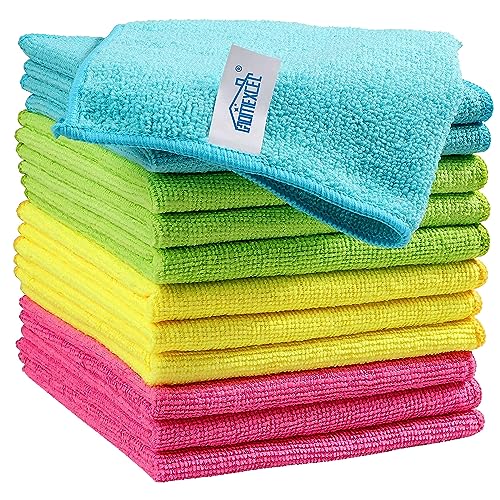
HOMEXCEL Microfiber Cleaning Cloth 210GSM, Pack of 12, Size:11.5" x 11.5", Ultra-Soft, High-Density Non-Abrasive Cleaning Towels for Cars, Glass, Kitchen, Reusable Rags, Blue/Green/Yellow/Pink
Effective Streak-Free Cleaning: Clean kitchen countertops, windows, mirrors, bathroom surfaces, stainless steel, car interiors, glass, and other delicate…
As an affiliate, we earn on qualifying purchases.
As an affiliate, we earn on qualifying purchases.
Conclusion
Building a low-dust cleaning routine isn’t just about cleaner air — it’s about creating a healthier space for yourself. Remember, using HEPA filters can reduce airborne dust by up to 99%, markedly improving indoor air quality. Stick with your routine consistently, and you’ll notice less dust buildup over time. With just a few simple habits, you can enjoy a fresher, cleaner home that truly supports your well-being every day.

Shark Upright Vacuum Cleaner | Navigator Lift-Away | Pet Hair, Carpet & Hard Floor Cleaning | Upholstery & Crevice Tools | HEPA Filter | Swivel Steering | Large Dust Cup Capacity | Lavender | NV352
POWERFUL SUCTION FOR CARPET & HARD FLOORS: Clean carpets and hard floors with strong multi-surface suction. This lightweight…
As an affiliate, we earn on qualifying purchases.
As an affiliate, we earn on qualifying purchases.
dust-resistant furniture covers
As an affiliate, we earn on qualifying purchases.
As an affiliate, we earn on qualifying purchases.