

Static electricity isn’t just an annoying shock; it’s a sign of your indoor air quality. When the air is dry, static charges build up more easily on surfaces and your skin. This often means your home has low humidity, which can cause dry skin and respiratory issues. By paying attention to static shocks, you can gauge when to boost indoor moisture. Keep exploring to discover how static clues can help you improve your environment.

Get garden gear delivered free with Prime
- Fast, free delivery on millions of items
- Prime Video, Amazon Music and more included
- Member-only deals all year
Key Takeaways
- Static electricity indicates low indoor humidity, which can affect air quality and comfort.
- It serves as a warning sign of dry conditions that may cause respiratory issues and dry skin.
- Changes in static levels reflect airflow and environmental balance within indoor spaces.
- Monitoring static shocks helps identify when humidity adjustments or air quality improvements are needed.
- Recognizing static as a clue aids in maintaining healthier, more comfortable indoor air environments.
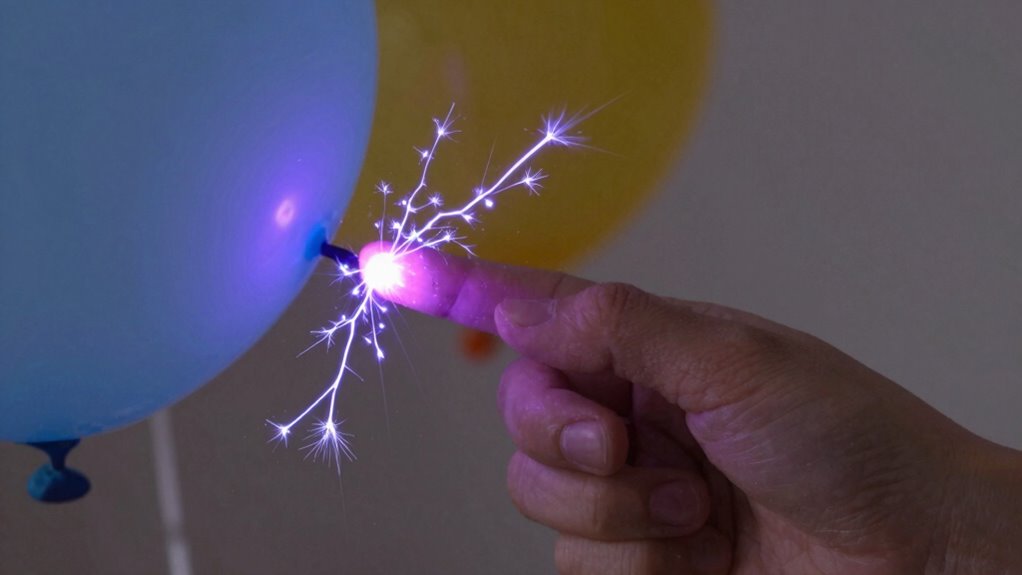
Static electricity might seem like just an annoying shock or a fleeting spark, but it actually serves as a valuable clue about what’s happening in the air around you. When you experience those small sparks after touching a doorknob or see a sudden discharge when removing your sweater, you’re witnessing electrostatic phenomena in action. These electrical charges build up on surfaces and objects, often influenced by the humidity, materials in your home, and airflow. By paying attention to these static events, you can gain insight into your indoor air quality and the environmental factors affecting it.
Electrostatic phenomena are closely tied to the moisture levels in your environment. In dry conditions, static charges are more likely to accumulate because moisture in the air helps dissipate electrical buildup. When the air is low in humidity, your skin and household items can act as reservoirs for static electricity, creating those sudden shocks and sparks. These phenomena aren’t just nuisances—they reflect the state of your indoor air quality. Low humidity levels, often caused by heating systems or winter weather, can lead to increased static electricity, indicating that your indoor air might be too dry. This dryness can also promote dust accumulation, dry skin, and respiratory discomfort, making static electricity a subtle warning sign.
Understanding electrostatic phenomena can help you assess the health of your indoor environment. If you notice frequent static shocks, it might be time to increase humidity through humidifiers or by placing water basins around your living space. Improving indoor air quality not only reduces static issues but also benefits your overall health, as balanced humidity levels help keep your respiratory system functioning optimally and prevent dry skin. Moreover, static electricity can influence dust and allergen spread within your home, impacting air quality further. Recognizing these electrical cues enables you to take targeted actions—like adjusting your ventilation, cleaning more regularly, or using air purifiers—to create a healthier living space.
In essence, static electricity isn’t just an occasional annoyance; it’s a natural indicator of the conditions in your environment. Paying attention to when and how static shocks occur can give you valuable insights into your indoor air quality. Indoor air quality can be affected by various environmental factors, and static electricity is just one of the subtle signs that can help you monitor it. The presence of static electricity can also be influenced by airborne particles, which attach to surfaces and contribute to electrical buildup. Additionally, humidity levels play a crucial role in either exacerbating or alleviating static issues. By understanding the electrostatic phenomena at play, you empower yourself to make smarter choices about humidity control and air cleanliness. These small electrical signs act as subtle but meaningful clues, guiding you toward a more comfortable, healthier home environment. Recognizing electrostatic phenomena can help you better understand the environmental factors affecting your indoor air.
humidifier for indoor air quality
As an affiliate, we earn on qualifying purchases.
As an affiliate, we earn on qualifying purchases.
Frequently Asked Questions
How Does Static Electricity Form in the Atmosphere?
You’re curious about how static electricity forms in the atmosphere. It happens through electrostatic interactions, where charge transfer occurs between particles like water droplets, ice, and dust. When these particles collide, electrons transfer, creating areas of positive and negative charge. This buildup of static electricity can lead to phenomena like lightning, as the charges eventually discharge to balance out, revealing static electricity’s essential role in atmospheric processes.
Can Static Electricity Influence Weather Patterns?
Like Icarus reaching for the sun, static electricity can influence weather patterns through electrostatic interactions, especially in storm clouds. These interactions help initiate lightning, which releases energy and affects atmospheric dynamics. When charge builds up, it can steer the development and intensity of storms, subtly shaping weather. So, static electricity isn’t just an annoyance—it plays a vital role in the complex dance of our climate system.
What Materials Generate the Most Static Charge?
Materials with low conductivity, like rubber, wool, and plastic, generate the most static charge due to their electrostatic properties. When you rub these materials against each other, electrons transfer easily, creating a buildup of static electricity. In contrast, metals with high conductivity allow electrons to flow freely, preventing charge buildup. So, your best static electricity sources are insulating materials that resist charge dissipation, making them perfect for static cling or shocks.
How Can We Prevent Static Buildup Outdoors?
Static buildup outdoors can be tamed with simple grounding techniques and smart clothing choices. You should regularly touch grounded metal objects, like a fence or car door, to discharge static safely. Wear natural fibers like cotton, avoiding synthetics that trap charges. Staying hydrated and avoiding overly dry environments also helps. These steps can prevent static shocks, making your outdoor experience less like an electrifying roller coaster and more like a peaceful walk.
Is Static Electricity Dangerous During Thunderstorms?
Yes, static electricity can be dangerous during thunderstorms because it can cause electric shocks if you’re in contact with metal objects or conductors. You might experience a static shock similar to the small shocks from static gloves, but during thunderstorms, the risk escalates. To stay safe, avoid touching metal or electrical appliances, and stay indoors. Remember, static electricity is a warning sign of nearby lightning, so take precautions.
Conclusion
So, next time static electricity sparks at just the wrong moment, don’t brush it off as mere annoyance. It’s actually a clever air-clue, whispering secrets about the invisible forces around you. You might think it’s just a petty shock, but in reality, it’s nature’s way of reminding you how intimately connected you are to the environment. Ironically, what seems like a tiny nuisance is actually a sign of the powerful, unseen world at play.
Fall yard work Picks
leaf blowers
As an affiliate, we earn on qualifying purchases.