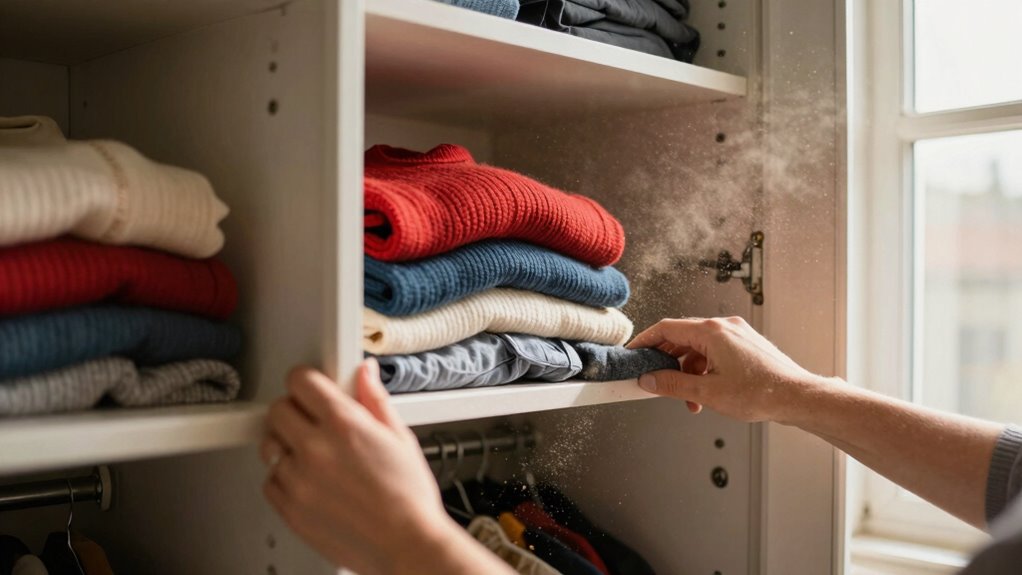

When you swap out clothes seasonally, you disturb layers of dust, skin flakes, fabric fibers, and debris accumulated over months. Moving, handling, and displacing stored garments tend to release these tiny particles into the air, turning them into airborne allergens. This can cause allergy flare-ups or respiratory discomfort, especially if your storage isn’t sealed or cleaned regularly. Want to discover simple ways to reduce dust during closet swaps? Keep going to find useful tips that make a difference.
Key Takeaways
- Moving clothes during seasonal swaps dislodges accumulated dust and debris from fabrics and storage containers.
- Disrupting stored garments releases airborne dust particles, increasing indoor allergen levels.
- Seasonal changes often involve opening sealed containers, allowing dust to escape into the air.
- Handling and shifting stored clothing can stir up settled dust, impacting air quality.
- Seasonal storage activities typically lack thorough cleaning, leading to higher dust buildup over time.
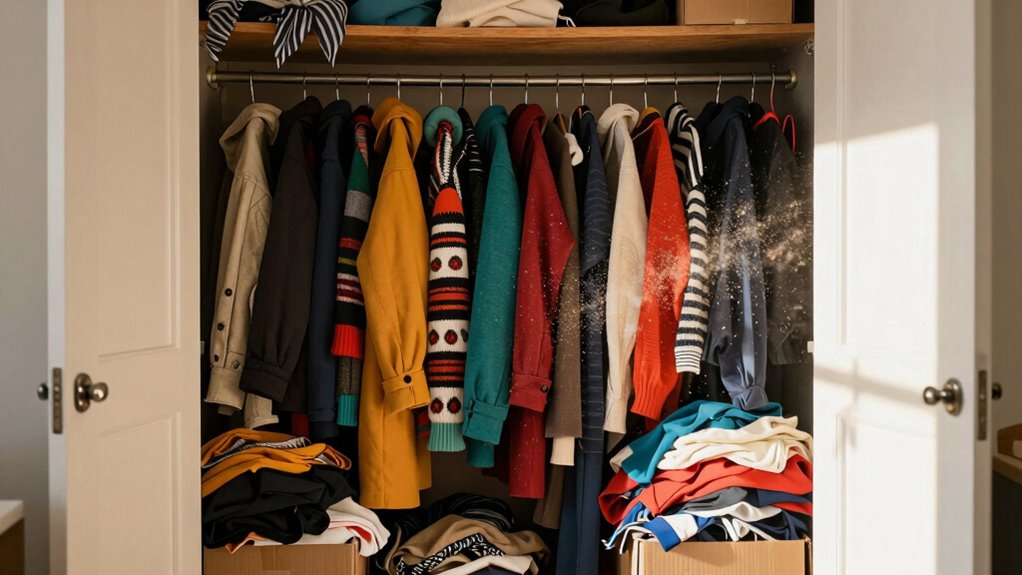
As the seasons change, it’s time to swap out your wardrobe, but few realize that this routine task can also stir up indoor dust and allergens. When you pull out your clothing storage, you disturb layers of dust that have settled over time. This dust isn’t just dirt; it includes tiny particles of skin flakes, fabric fibers, and other debris that accumulate silently. These particles can become airborne allergens, floating into the air you breathe, especially if you’re not careful during the process. The act of moving clothes from storage and arranging them in your closet creates a perfect storm for dust to become airborne. The movement dislodges dust particles from fabric surfaces and storage containers, sending them into the air where they linger for a while before settling again.
Your clothing storage, whether in boxes, drawers, or hanging racks, can harbor dust that’s been building up over months. When you reach in to remove winter coats or summer dresses, you’re fundamentally stirring this dust loose. For allergy sufferers, this can lead to sneezing, itchy eyes, or even respiratory discomfort. The problem worsens if your storage isn’t regularly cleaned or sealed properly, allowing dust and airborne allergens to accumulate unnoticed. If you’re sensitive, even a small disturbance can trigger allergic reactions or asthma symptoms. Additionally, proper storage techniques can greatly reduce dust buildup and improve indoor air quality during seasonal swaps. Regularly inspecting and maintaining your storage solutions can further prevent dust accumulation and enhance overall cleanliness. Using airtight containers and sealing off stored clothing can be an effective way to limit dust exposure. Incorporating dust-resistant storage options made with smooth surfaces and fewer crevices can also help minimize dust collection.
To minimize this, you should always take care when handling stored clothes. Use a damp cloth to wipe down shelves and storage containers before removing clothes, reducing the amount of dust that becomes airborne. Wearing a mask can also help prevent inhaling airborne allergens during this process. When possible, air out clothes outside for a few hours before bringing them inside, especially if they’ve been stored for a long time. This helps disperse any lingering dust and allergens that may have settled on fabrics. Additionally, air filtration systems with HEPA filters can capture airborne particles, further reducing dust and allergens stirred during seasonal changes. Incorporating air circulation methods during this process can also help keep dust levels down and improve indoor air quality.
Proper clothing storage also plays a role in reducing indoor dust. Use airtight containers or garment bags to contain dust and prevent it from escaping into your living space. Regularly vacuum and dust your closet area, focusing on corners and shelves, to keep dust levels low. Incorporating air purifiers with HEPA filters to trap airborne allergens that inevitably get stirred up during seasonal swaps can further enhance indoor air quality. By taking these precautions, you reduce the likelihood of indoor dust and allergens disturbing your indoor environment, making your seasonal wardrobe change smoother and healthier for everyone in your home.
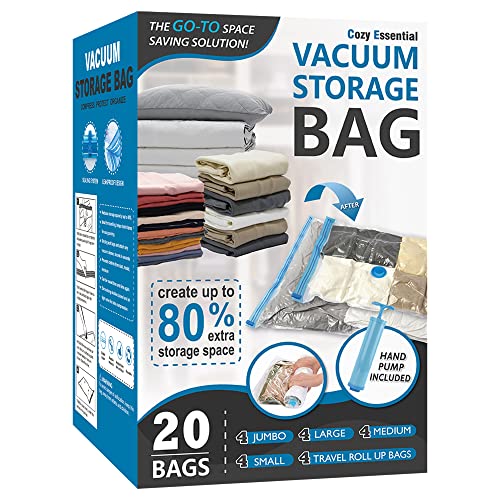
Cozy Essential Vacuum Storage Bags, 80% Compression Vacuum Seal Space Saver Plastic Packaging Bags for Clothes, Blankets, Pillow, Bedding, Comforters, Sealer Clothing Storage,20 Combo
- Maximize Storage Space: Compresses items up to 80%
- Durable Material: Made of thick, premium plastic
- Secure Seal System: Triple-seal turbo valve and double-zip
As an affiliate, we earn on qualifying purchases.
As an affiliate, we earn on qualifying purchases.
Frequently Asked Questions
How Often Should I Swap Out My Seasonal Wardrobe?
You should swap out your seasonal wardrobe twice a year, ideally during spring and fall. Regular closet organization helps you stay on top of wardrobe maintenance, making the process easier. When you switch clothes, take time to clean and inspect garments, and consider dust-proof storage options. This routine minimizes dust buildup and keeps your wardrobe fresh, healthy, and ready for the new season, ensuring your clothing remains in good condition year-round.
Does Storing Clothes in Plastic Containers Increase Dust?
In the age of the airship, storing clothes in plastic containers can increase dust. Plastic traps moisture, which promotes mold growth and accelerates fabric deterioration. Dust particles settle more easily on sealed containers, especially if ventilation is poor. To keep your wardrobe fresh, consider breathable storage options like fabric bins or boxes with vents. This way, you reduce dust buildup and protect your clothes from mold and damage.
Can Seasonal Closet Swaps Trigger Allergies or Asthma?
Yes, seasonal closet swaps can trigger allergies or asthma symptoms. When you move clothing and textiles, dust and allergen buildup are disturbed, releasing allergy triggers into the air. This can worsen symptoms if you’re sensitive. To minimize risks, consider washing clothes before storing or wearing, and keep your closet well-ventilated. Regular cleaning helps reduce dust accumulation, making it safer for allergy sufferers and those with asthma.
How Can I Reduce Dust When Packing Away Clothes?
To reduce dust when packing away clothes, use air purifiers in your closet to trap airborne particles. Cover your seasonal clothing with dust-resistant covers to protect them from settling dust. Regularly clean your closet shelves and floors, and avoid overstuffing storage containers. These steps help keep dust at bay, making your seasonal switch healthier and more comfortable, especially if you or your family have allergies or asthma.
Are There Hypoallergenic Options for Storing Seasonal Clothing?
You can opt for hypoallergenic storage options, like dust-resistant containers with tight-fitting lids, to keep seasonal clothes safe. For example, Sarah used these containers to store her allergy-prone daughter’s winter wear, noticing less dust and fewer allergy flare-ups. These containers prevent dust from settling, making your closet safer for sensitive skin. Switch to hypoallergenic storage for peace of mind and cleaner, healthier seasonal closet swaps.
Conclusion
As you swap out your seasonal wardrobe, imagine you’re stirring up a hidden storm of dust that settles quietly in every nook. With each move, you’re unearthing tiny particles lurking in the shadows, like whispers of seasons past. But knowing this, you can be the diligent captain of your indoor air quality, sweeping away dust and breathing easier. Embrace the shift, and let your home become a fresh, clean sanctuary beneath the swirling dust of progression.