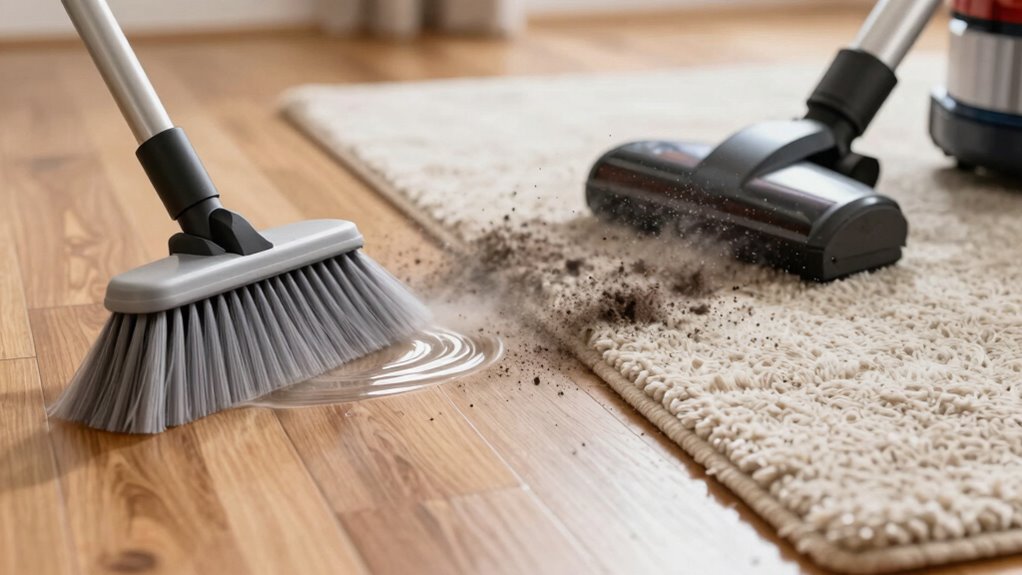
When you clean hard floors, larger dust particles are dislodged easily and settle quickly, reducing airborne dust. On carpets, finer dust gets trapped and remains suspended longer, increasing inhalation risk. Sweeping and mopping handle hard floors well, but vacuuming stirs up more microscopic particles in carpets. Surface type greatly influences dust dispersal, and using the right techniques can help minimize airborne contaminants. If you keep going, you’ll discover how to manage dust more effectively.
Key Takeaways
- Hard floors release larger dust particles that settle quickly, while carpets trap finer particles that remain airborne longer.
- Cleaning hard floors dislodges bigger dust particles easily, reducing airborne dust faster.
- Carpet cleaning releases finer dust particles, increasing airborne dust and impacting air quality.
- Proper cleaning methods, like vacuuming and ventilation, help minimize dust dispersal in both surfaces.
- Surface type influences dust dispersal, with hard floors causing less airborne dust compared to carpets.
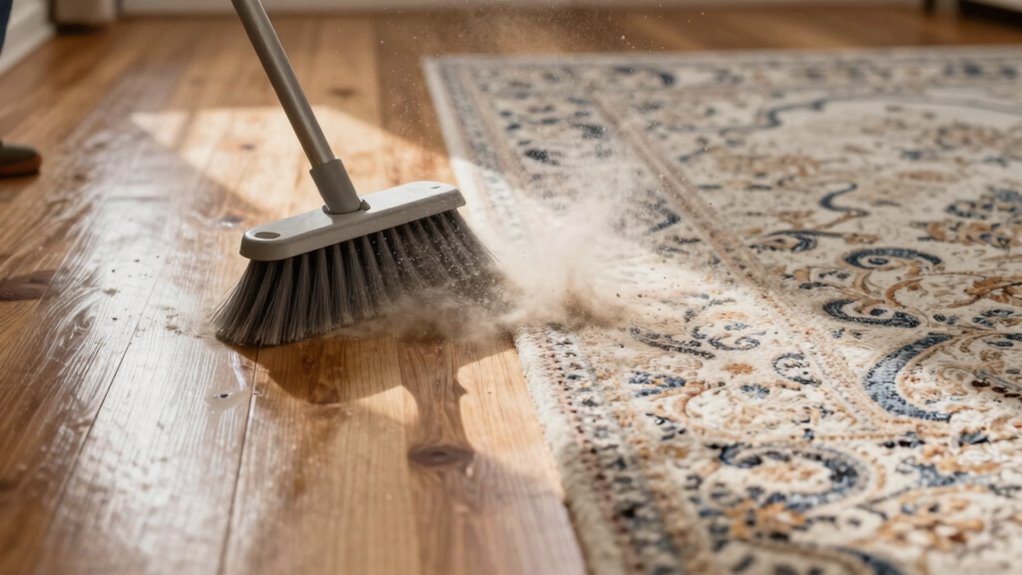
When you clean hard floors and carpets, dust often becomes airborne, which can affect your indoor air quality. The way dust is released during cleaning depends heavily on the type of surface you’re working with. Hard floors tend to release larger dust particles, which settle quickly after cleaning, while carpets trap finer dust particles that become more easily airborne. Understanding this difference helps you choose the right cleaning methods to minimize dust exposure and improve air quality inside your home.
Dust particle size plays a crucial role in how dust disperses when you clean. Larger particles, often found on hard floors, are more likely to be dislodged and stirred up into the air with sweeping or mopping. Because these particles are heavier, they tend to settle faster, meaning they don’t linger in the air for long periods. In contrast, carpets hold onto smaller, finer dust particles, which can become airborne more easily during vacuuming or deep cleaning. These tiny particles stay suspended longer, increasing the risk of inhalation if not properly managed. Additionally, dust particle size influences how quickly dust settles after cleaning, affecting indoor air quality over time. Proper cleaning techniques can help reduce the amount of airborne dust particles released into your indoor environment. Regular maintenance can also prevent dust from becoming deeply embedded in carpets, making cleaning more effective and less dusty. Using appropriate cleaning tools designed for your flooring type further minimizes dust dispersal during cleaning. Additionally, maintaining good ventilation during cleaning can help clear out airborne dust more efficiently.
HEPA filter vacuum cleaner for dust removal
As an affiliate, we earn on qualifying purchases.
As an affiliate, we earn on qualifying purchases.
Frequently Asked Questions
How Often Should Hard Floors and Carpets Be Cleaned to Reduce Dust?
You should clean your hard floors and carpets at least once a week to reduce dust buildup effectively. Regular cleaning prevents dust from accumulating and becoming airborne, which can trigger allergies or respiratory issues. For high-traffic areas, increase cleaning frequency to twice a week. Using proper cleaning tools and methods guarantees dust is removed thoroughly, helping maintain a healthier indoor environment and minimizing the amount of dust released during cleaning.
Are Certain Cleaning Tools Better for Minimizing Dust Release?
You should choose cleaning tools with high vacuum efficiency, like HEPA filters, to minimize dust release. For hard floors, use effective mop techniques—such as damp mopping rather than soaking—to trap dust rather than disperse it into the air. Avoid dry sweeping or old, ineffective tools, as they can stir up dust. Properly maintained, efficient vacuums and careful mop techniques help keep dust levels low and improve indoor air quality.
What Are the Health Impacts of Dust Released During Cleaning?
The dust released during cleaning can negatively impact your indoor air quality, especially if it contains allergens or irritants. Breathing in this dust may worsen allergies or trigger asthma symptoms, making your environment less healthy. To protect yourself, use effective vacuum cleaners with HEPA filters, clean regularly, and guarantee good ventilation. These steps help reduce airborne dust, minimizing health risks linked to allergens and asthma.
Can Air Purifiers Help Reduce Dust After Cleaning?
Think of air purifiers as your home’s invigorating gust. They can indeed help reduce dust particles, improving air quality after cleaning. As dust settles into the air, purifiers trap these particles, preventing them from circulating. This reduces airborne dust, making your environment healthier. Regular use guarantees cleaner air and less dust lingering, especially after deep cleaning sessions. So, yes, air purifiers are a smart choice for maintaining a cleaner, healthier home.
Does the Type of Flooring Affect Dust Accumulation Over Time?
Yes, the type of flooring affects dust accumulation over time. Different flooring materials have varying dust retention properties; carpets tend to trap more dust deep within fibers, leading to higher buildup, while hard floors usually hold less dust on their surface. You should regularly clean both types, but carpets require more frequent deep cleaning to manage dust effectively and maintain a healthier environment.
Conclusion
So, next time you’re at the cleaning store, decide wisely: whether to wrestle with your carpets or sweep your hard floors. Remember, carpets love to trap dust — only to release it in a dusty revenge. Hard floors, on the other hand, are more like the sneaky villains, hiding dust until you clean them. Choose your cleaning battlefield carefully, or risk turning your home into a dust tornado. Happy dust hunting!