
TL;DR

Get garden gear delivered free with Prime
- Fast, free delivery on millions of items
- Prime Video, Amazon Music and more included
- Member-only deals all year
An Ideal Home report lists spider plants, Kentia palms, calatheas, Chinese money plants, Boston ferns and polka dot plants as pet-friendly choices for homes with cats and dogs. The report also cautions that no plant is entirely pet-proof: eating a large amount can cause stomach upset or irritation.
Ideal Home has published a list of six houseplants it describes as pet-friendly for homes with cats and dogs, including spider plants, Kentia palms and Boston ferns. The guide stresses that “pet-friendly” does not mean pet-proof: eating a large amount of any plant may cause physical irritation or an upset stomach.
The six plants in the report are the spider plant, Kentia palm, calathea, Chinese money plant, Boston fern and polka dot plant. The selections offer different shapes and care needs, from the spider plant’s arching leaves and readily propagated offshoots to the Kentia palm’s tall fronds and the polka dot plant’s patterned foliage.
The report attributes its plant-safety descriptions to Jo Lambell, founder of Beards & Daisies, and Nick Wood, a plant expert at GardeningExpress.co.uk. Lambell calls the spider plant non-toxic and says it is easy to care for, while warning that cats may chew it. She also identifies the Kentia palm as a pet-safe option that can cope with lower light, and recommends the Boston fern for humid places such as bathrooms.
Wood describes the calathea and Chinese money plant as safe for cats and dogs. The guide says calatheas suit rooms with indirect light, while Chinese money plants prefer bright, indirect light and soil that dries slightly between watering. For polka dot plants, Wood recommends bright, indirect light and lightly moist soil. These are attributed care suggestions, not a guarantee that every plant or growing condition will suit every home.
Safer Greenery Still Needs Care
The list gives pet owners six named options to research rather than suggesting that indoor plants must be avoided altogether. It also makes a practical distinction: a plant described as non-toxic or pet-friendly may still be chewed, damaged or cause discomfort if a pet eats a lot of it.
That caveat matters because the report does not say that the plants are safe to eat in unlimited quantities. Lambell advises owners to watch pets that repeatedly chew plants. Choosing a listed plant can inform a household’s decision, but it does not replace checking a plant’s identity, monitoring an animal’s behavior or contacting a veterinarian if a pet becomes unwell.
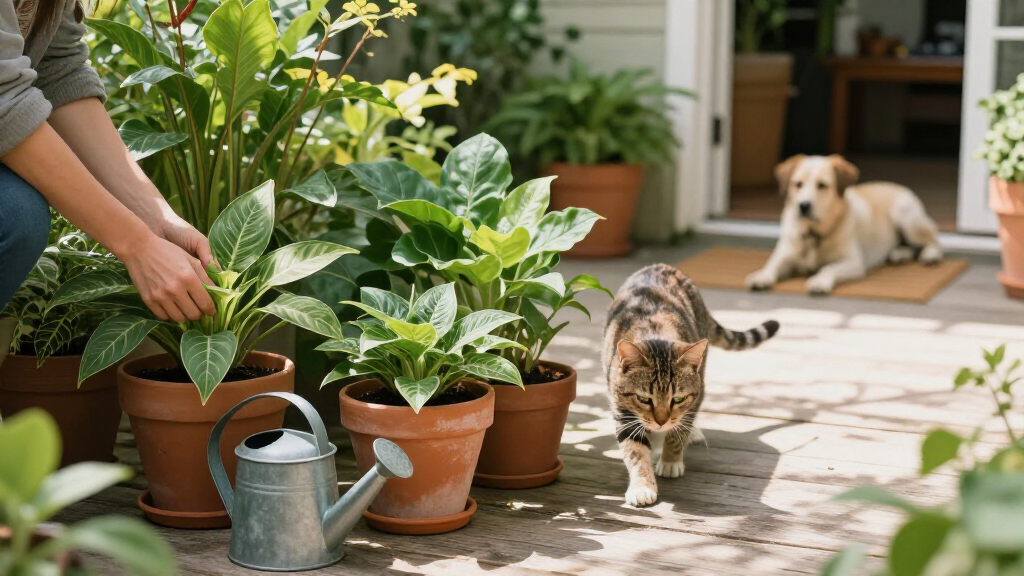
pet safe houseplants for cats and dogs
As an affiliate, we earn on qualifying purchases.
As an affiliate, we earn on qualifying purchases.
What the Plant Guide Covers
The Ideal Home report is a consumer gardening guide, not a veterinary assessment or a report of new testing. It combines plant-care notes with safety descriptions attributed to the two named experts. The supplied material does not provide details of laboratory testing, a review of veterinary evidence or the method used to classify each plant.
Its advice is specific to the plants and care points described. Spider plants are presented as easy to maintain and propagate; Kentia palms as larger choices for lower-light corners; and calatheas as foliage-focused plants suited to indirect light. Chinese money plants are described as preferring a slight drying period between waterings, while Boston ferns are associated with humid rooms. Polka dot plants are noted for their spotted leaves and need for bright, indirect light.
“Even pet-safe plants can upset a tummy if they’re eaten in bulk, so it’s worth keeping an eye on any serial chewers.”
— Jo Lambell, founder of Beards & Daisies
Limits of the Safety Advice
The report does not establish that every individual pet will tolerate these plants, or that eating them cannot cause symptoms. Its own caveat is that any plant may cause irritation if too much is eaten. It gives no dose thresholds, symptom-specific guidance or veterinary treatment advice.
The supplied material also does not document the evidence behind the safety classifications or explain whether they were checked against a particular veterinary database. Readers should not treat the article’s descriptions as a guarantee. If a pet has eaten a plant and appears unwell, the appropriate response depends on the plant and animal; the guide does not provide case-specific medical advice.
Check Plants and Watch Pets
The report offers care guidance and examples of retailers, but it does not announce a follow-up study or testing programme. For readers considering one of the six plants, the immediate next step is to confirm the plant’s identity and check its care needs before bringing it home. Owners can also keep plants out of reach where practical and watch for chewing, especially from pets known to eat foliage.
The report’s central advice remains qualified: these six are presented as pet-friendly choices, but no plant should be treated as a food source or as guaranteed harmless in every circumstance. The source provides no further update on veterinary review or additional plant-safety research.
Key Questions
Which six houseplants does the report list?
It lists the spider plant, Kentia palm, calathea, Chinese money plant, Boston fern and polka dot plant as pet-friendly options for homes with cats and dogs.
Does pet-friendly mean a plant is safe to eat?
No. The report warns that eating a large amount of any plant may cause irritation or an upset stomach. Its recommendations do not mean pets should be allowed to eat the plants.
Which plants are suggested for lower-light or humid rooms?
Jo Lambell describes the Kentia palm as able to cope with lower light and recommends the Boston fern for a humid room such as a bathroom. Actual results can depend on the conditions in a particular home.
What should I do if my pet chews a houseplant?
The report advises watching pets that repeatedly chew plants but does not give treatment guidance. If your pet eats a plant and seems unwell, contact a veterinarian and identify the plant if possible.
Source: rss
Fall Picks
fall essentials
As an affiliate, we earn on qualifying purchases.