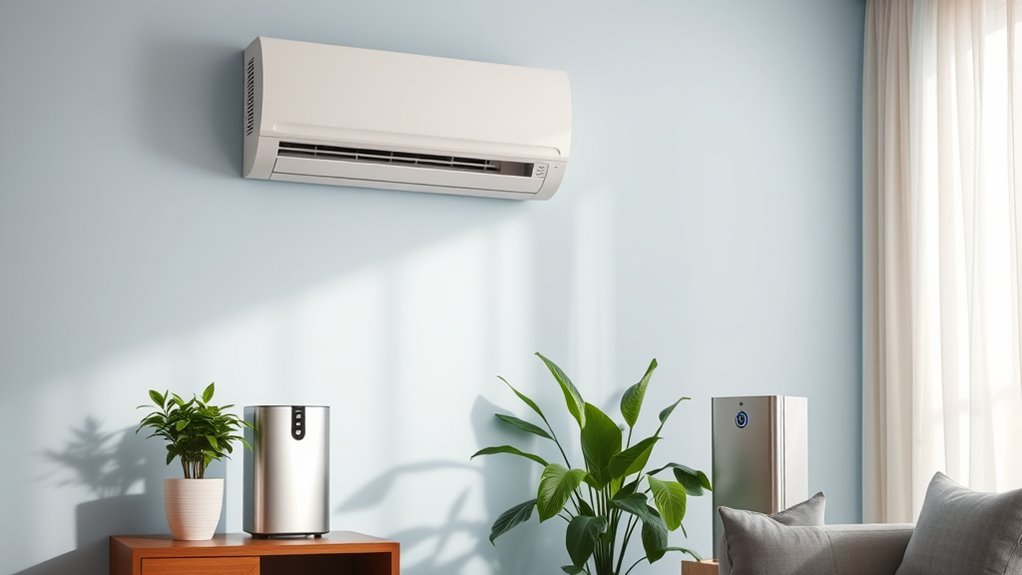

If you want to stay comfortable and improve air quality, both devices can help but serve different needs. An air conditioner cools your space, especially during hot days, but doesn’t do much for air pollutants. An air purifier improves air quality but doesn’t cool your room. You might need both, depending on your climate and health concerns. Keep exploring to find the best solution for your indoor environment.
Key Takeaways
- Air conditioners cool indoor air and improve comfort, while air purifiers focus solely on enhancing air quality.
- Energy costs are higher for air conditioners due to cooling; air purifiers consume less energy and are cheaper long-term.
- Maintenance for air conditioners is more complex and costly compared to the simple filter replacements for air purifiers.
- Using both devices together provides optimal indoor comfort and air quality but increases overall expenses.
- Choose an air conditioner for temperature control and an air purifier if air quality is a primary concern.
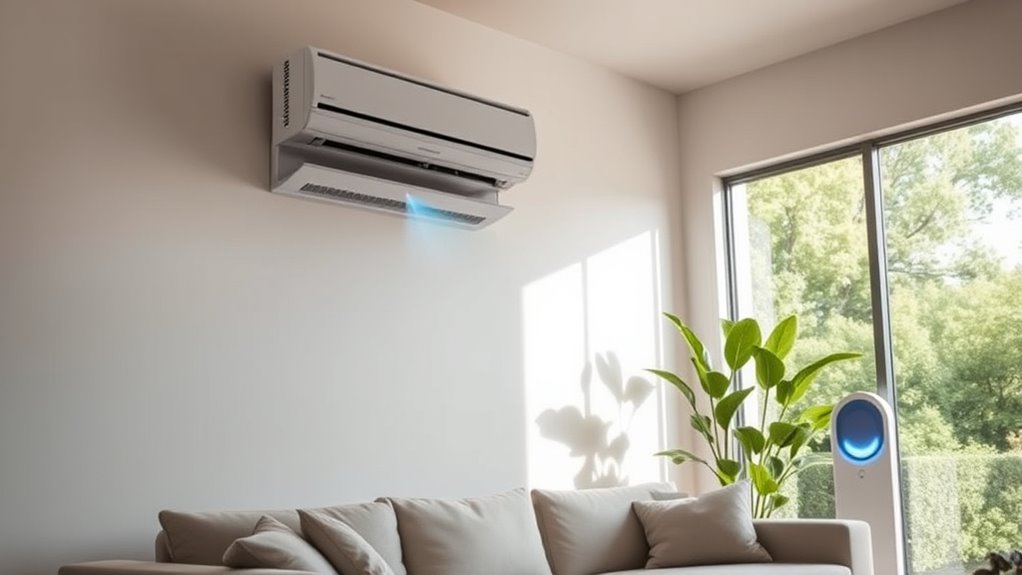
When choosing between air conditioners and air purifiers, it’s important to understand their distinct functions and benefits. Air conditioners are designed to cool indoor spaces, providing relief during hot weather, while air purifiers focus on cleaning the air by removing pollutants, allergens, and odors. Knowing which device suits your needs depends on your primary concerns—whether it’s temperature regulation or air quality. One key factor to contemplate is energy efficiency. Modern air conditioners often come with energy-saving features, helping you reduce electricity bills, especially if you run them frequently. However, they tend to consume more power than air purifiers, which generally operate with lower energy usage since they don’t generate cold air but only filter the air. Maintenance costs also vary considerably. Air conditioners require regular upkeep such as filter replacements, refrigerant checks, and occasional professional servicing to keep them running efficiently. Neglecting maintenance can lead to higher energy consumption and costly repairs over time. On the other hand, air purifiers are typically simpler to sustain. Most rely on replaceable filters or HEPA filters that need periodic changing, but they don’t have complex components like compressors or refrigerants, making their maintenance less expensive and less involved. If you’re concerned about long-term costs, an air purifier might be the more economical choice, especially if your main goal is to improve indoor air quality without cooling your entire space. However, keep in mind that air purifiers won’t lower indoor temperatures, so during hot seasons, you might still need an air conditioner to stay comfortable. It’s also worth weighing the impact on energy bills; running an air conditioner constantly can considerably increase your electricity costs, whereas an air purifier’s energy consumption is relatively minimal. If your living environment has high humidity or frequent heat waves, an air conditioner can provide both comfort and air quality benefits—some models even include air purification features, though they tend to be less specialized than dedicated air purifiers. Additionally, understanding the role of advanced technology in these devices can help you select models with better efficiency and features. Ultimately, if you want a thorough solution, combining both devices can be effective: use the air conditioner for temperature control and the air purifier to ensure your indoor air remains clean. This way, you can enjoy a cool, healthy living space without overburdening your energy budget or facing high maintenance costs. In essence, understanding the differences in energy efficiency and maintenance costs helps you make an informed decision, whether you’re seeking relief from heat, cleaner air, or both.
Frequently Asked Questions
Can Air Purifiers Replace Air Conditioners Entirely?
No, air purifiers can’t replace air conditioners entirely. While air purification improves indoor air quality and helps remove allergens, it doesn’t provide cooling efficiency like an air conditioner does. If you’re seeking relief from heat, an air purifier alone won’t cool your space. For both air quality and temperature control, using an air conditioner alongside an air purifier offers the best comfort and health benefits.
Do Air Purifiers Help Reduce Humidity Levels?
Ever wonder if air purifiers help with humidity control? They don’t directly reduce humidity levels, so they won’t lower moisture in the air like an air conditioner or dehumidifier. However, some models have features for mold prevention and improving air quality. To effectively manage humidity and prevent mold, you’ll need a dedicated dehumidifier or air conditioning. Air purifiers are great for filtering out pollutants, but they aren’t a humidity solution.
Are There Energy-Efficient Options for Both Devices?
Yes, there are energy-saving models for both air conditioners and air purifiers. Look for units with eco-friendly features like low wattage, programmable timers, and energy-efficient compressors. These options help reduce your energy consumption and lower utility bills. Choose devices with high energy efficiency ratings, such as ENERGY STAR certification, to guarantee you’re getting the most eco-friendly and cost-effective performance. This way, you stay comfortable while saving energy.
How Often Should Filters Be Replaced in Each Device?
You should check your filters regularly and follow the manufacturer’s replacement schedules. For air conditioners, replace filters every 1-3 months, especially if you use them frequently. Air purifiers typically need filter replacements every 3-6 months, depending on usage and air quality. Regular filter maintenance guarantees peak performance and air quality. Keep an eye on your filters and replace them promptly to maintain efficiency and healthy indoor air.
Can Using Both Devices Improve Overall Indoor Air Quality?
Using both devices can greatly enhance your indoor air quality. For example, a family in a city apartment noticed fewer allergy symptoms after installing an air purifier alongside their air conditioner. This combo reduces pollutants and manages humidity. Regular device maintenance guarantees peak performance, helping you breathe easier. Combining air purifiers with air conditioners offers thorough air quality benefits, especially in polluted environments, making your home healthier and more comfortable.
Conclusion
So, do you need both? If you want cool, comfortable air, go for an air conditioner. If you crave fresh, clean air, opt for an air purifier. If you want comfort and cleanliness, consider using both. Because when you prioritize comfort, enhance air quality, and protect your health, you create a space that feels just right. Remember, your home is your sanctuary—choose what works best and enjoy the best of both worlds.