To think about air in multi-level family homes, focus on improving airflow and reducing pollutants. Use natural methods like opening doors, windows, and vents to promote circulation, and install exhaust fans in key areas to remove humidity and odors. Consider whole-house ventilation systems like ERVs or HRVs for more consistent air exchange. Regularly control pollution sources and monitor air quality to keep your home fresh and healthy. Keep exploring how you can optimize your home’s airflow for better comfort.
Key Takeaways
- Assess and plan airflow pathways across all levels to ensure even ventilation and prevent stagnation zones.
- Use targeted exhaust fans and natural ventilation to remove moisture, odors, and pollutants effectively.
- Balance air exchange with controlled intake of filtered outdoor air to maintain healthy humidity and air quality.
- Regularly monitor indoor air quality and adjust ventilation strategies accordingly.
- Manage pollution sources and maintain HVAC systems to support consistent, clean airflow throughout the home.
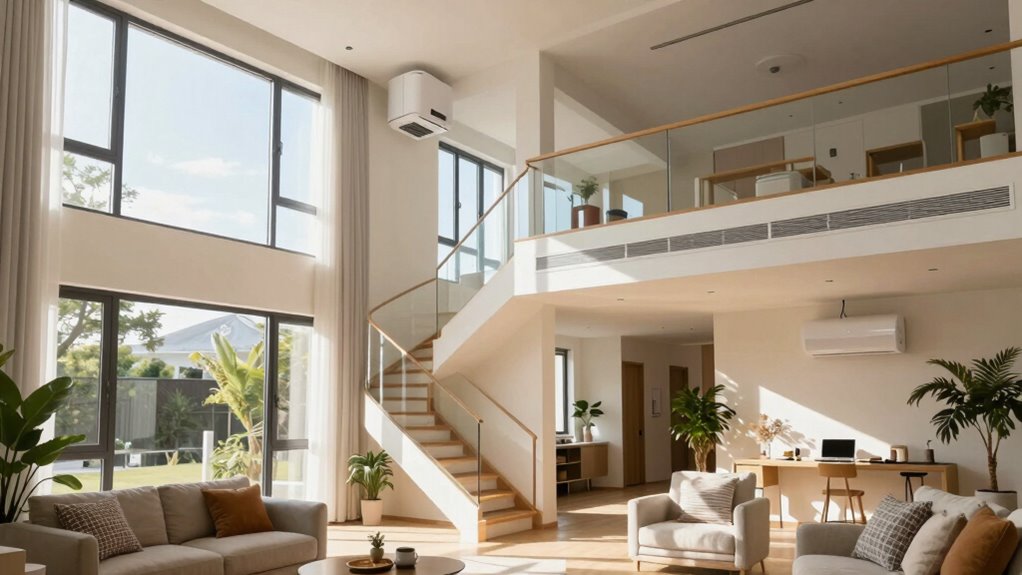
In multi-level family homes, managing indoor air quality can be a challenge, but understanding how air moves between floors is key to creating a healthier living environment. The way air circulates affects everything from comfort to health, so it’s vital to consider ventilation strategies that promote good airflow throughout your house. When you think about air quality, you need to recognize that pollutants, allergens, and moisture can accumulate in different areas, especially if airflow isn’t properly managed. Without proper ventilation, stale air can linger, leading to increased respiratory issues, mold growth, and general discomfort.
To improve air quality across all levels, start by establishing effective ventilation strategies. These might include exhaust fans in kitchens and bathrooms, which help remove excess humidity and odors. Installing whole-house ventilation systems, like energy recovery ventilators (ERVs) or heat recovery ventilators (HRVs), can also markedly boost air exchange rates, guaranteeing fresh air reaches every corner of your home. These systems work by bringing in filtered outdoor air and exhausting stale indoor air, balancing humidity levels and reducing airborne contaminants.
It’s equally important to think about airflow paths. Doors, windows, and vents create natural channels for air movement, but they must be used thoughtfully. For example, leaving doors open between rooms can promote better air circulation, preventing pockets of stale air from forming. On the other hand, blocked vents or closed doors can trap pollutants and moisture, leading to poor air quality in specific areas. You should also pay attention to the placement of air purifiers and fans, positioning them in spaces where air tends to stagnate.
Another vital aspect is controlling sources of indoor pollution. Smoking indoors, using certain cleaning products, and maintaining pets can all negatively impact air quality. Regular cleaning and choosing low-emission products help reduce these sources. Additionally, maintaining your HVAC system and changing filters regularly ensures that the air circulating through your home remains clean and free of dust, pollen, and other allergens. Proper airflow management practices, including the strategic placement of vents and fans, can significantly enhance the overall quality of indoor air. Recognizing that air circulation plays a crucial role in preventing pollutant buildup is essential for long-term indoor air health. Being aware of pollutant sources and actively addressing them can lead to noticeable improvements in your home’s air quality.
Incorporating air quality monitoring devices can also provide real-time insights into pollutant levels, enabling you to respond quickly to any issues. Understanding how air flows between floors helps identify areas where pollutants might accumulate and allows you to target improvements more effectively. Ultimately, thinking about air in a multi-level home means adopting an all-encompassing approach that combines good ventilation strategies with source control and proper airflow management. When you prioritize these elements, you create a living space where fresh air flows freely, pollutants are minimized, and everyone can breathe easier. This not only enhances comfort but also contributes to better health for everyone in your home.
whole house ventilation system ERV HRV
As an affiliate, we earn on qualifying purchases.
As an affiliate, we earn on qualifying purchases.
Frequently Asked Questions
How Does Air Quality Vary Between Different Levels of a Home?
Air quality varies between levels because of differences in air circulation and humidity regulation. You might notice upstairs rooms feel stuffier or more humid if air isn’t circulating well, while lower levels could have fresher air. To improve this, guarantee good ventilation and use fans or air purifiers. Proper humidity regulation helps reduce mold and dust buildup, maintaining healthier air quality throughout your home.
What Are the Best Ventilation Options for Multi-Level Homes?
You should install effective ventilation systems, like exhaust fans and whole-house fans, to guarantee proper airflow across all levels. Incorporate air filtration to trap pollutants and improve indoor air quality. Consider energy recovery ventilators (ERVs) or heat recovery ventilators (HRVs) for continuous fresh air exchange without losing energy. Regular maintenance of these systems, combined with strategic placement, keeps the air healthy and balanced throughout your multi-level home.
How Can I Prevent Air From Leaking Between Floors?
Think of your home as a fortress, where air leaks are like tiny invaders slipping through cracks. To block them, you need to use air sealing and insulation barriers, creating a solid wall that keeps unwanted air from moving between floors. Seal gaps around doors, windows, and vents, and add insulation to shared walls. This keeps your home comfortable and energy-efficient, preventing air from sneaking where it shouldn’t go.
What Are Common Sources of Indoor Air Pollution in Multi-Level Homes?
You often face indoor air pollution from sources like cooking fumes, cleaning products, and pet dander. To improve air quality, use air filtration systems that trap pollutants and odors. Regularly ventilate your home to remove stale air, and consider air purifiers with HEPA filters for odor control. Minimizing the use of strong chemicals and maintaining good hygiene also helps reduce indoor pollutants across multiple levels.
How Do Temperature Differences Affect Air Movement Between Floors?
Imagine your upstairs bedroom being warmer than the lower level during winter; this creates thermal stratification. The temperature difference causes air pressure variations, prompting warm air to rise and cooler air to sink. This movement influences airflow between floors, potentially trapping pollutants or spreading odors. Recognizing these effects helps you manage indoor air quality better by balancing temperatures and ensuring proper ventilation across all levels.
Conclusion
So, next time you’re thinking about your home’s air, remember—you’re not just breathing in air; you’re inhaling the secret potion that keeps your entire family alive and thriving. Neglect it, and it’s like inviting chaos to your doorstep, turning your beautiful home into a battleground of dust, mold, and stale air. Prioritize proper ventilation and air quality, or risk turning your multi-level haven into a toxic wasteland. Keep the air fresh, and your home will thank you forever!