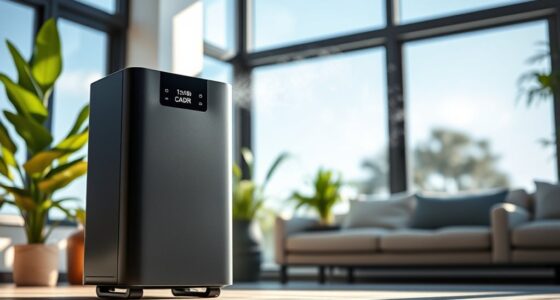
Air purifiers generally don’t create noticeable drafts when used correctly, as their fans provide gentle airflow that’s usually unobtrusive. Factors like fan speed, placement, and size can influence how much air movement you feel. Placing the unit away from open windows or walls helps minimize any breeze effects. If you’re concerned about drafts, understanding these aspects can help you enjoy cleaner air without disruptions—keep going to discover more tips and insights.
Key Takeaways
- Air purifiers can create gentle airflow, but usually do not produce strong drafts.
- Placement near open doorways or walls can amplify airflow effects and cause perceived drafts.
- Higher fan settings with powerful fans increase airflow, potentially leading to noticeable drafts.
- Proper positioning—centrally and away from open windows—helps minimize draft sensations.
- Modern air purifiers are designed to operate quietly with minimal airflow, reducing the likelihood of drafts.
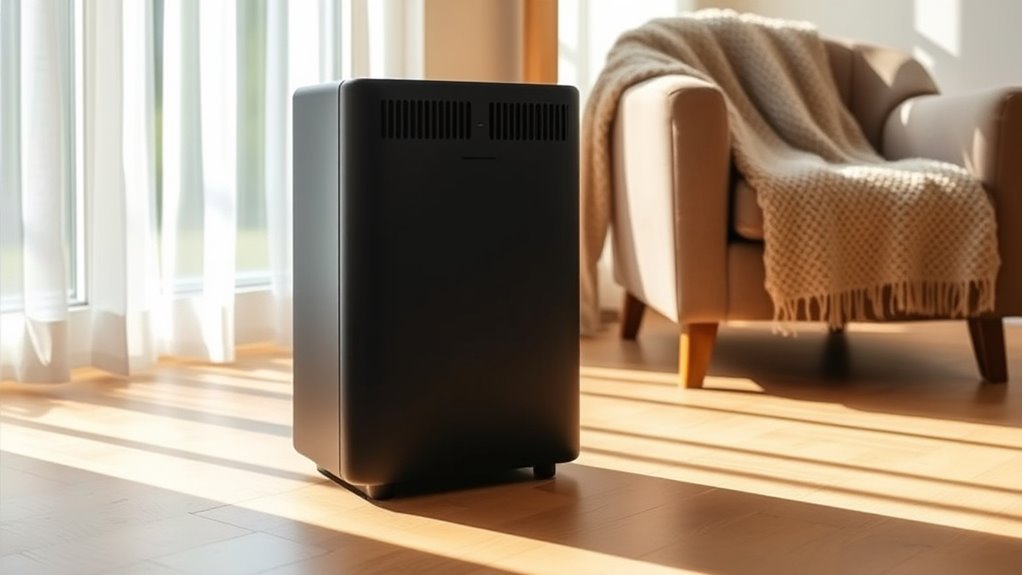
Ever wondered if air purifiers can create a draft in your home? It’s a common concern, especially when you notice a sudden gust of air near the device. The truth is, air purifiers can influence airflow patterns, but whether they produce a noticeable draft depends on several factors. Airflow patterns refer to how air moves through your space when the purifier is running. Some models have strong fans that draw in air from the surrounding area and push it back out, which can create a gentle circulation or, in certain cases, a slight breeze. If your purifier’s fan is particularly powerful or positioned near an open doorway or window, it might cause a gust that feels like a draft. However, most modern units are designed to circulate air quietly and efficiently, minimizing any disruptive airflow.
When considering noise levels, it’s important to recognize that the sound a purifier makes isn’t just about noise; it’s also an indicator of how forcefully the device moves air. Higher noise levels often mean a more powerful fan, which could lead to more noticeable airflow and, potentially, a draft. On the other hand, many air purifiers operate quietly on lower settings, generating minimal airflow that’s unlikely to create any draft at all. It’s a good idea to check the specifications for noise levels before purchasing, especially if you’re sensitive to sound or want to avoid any disturbance during sleep or work. Positioning the purifier correctly can also influence whether you experience a draft. For instance, placing it near walls or corners can direct airflow in specific ways, sometimes amplifying the sensation of a breeze. Conversely, positioning it centrally in a room can promote more uniform airflow, reducing the chances of feeling a draft.
In most cases, the airflow generated by an air purifier isn’t strong enough to cause any significant drafts. Instead, what you might notice is a gentle movement of air that’s part of the device’s natural circulation process. If you do feel a draft, it’s probably due to the placement or the model’s fan settings rather than a defect or a design flaw. To minimize this, try positioning your air purifier away from open windows or doorways and at a height that promotes even airflow. Adjusting filter maintenance can also impact airflow strength, as clogged filters may restrict or unevenly direct the airflow, affecting how drafts are perceived. Remember, the primary goal of an air purifier is to improve indoor air quality, not to cool or ventilate your space. Adjusting your expectations and understanding how airflow patterns and noise levels interact can help you enjoy cleaner air without worrying about unwanted drafts.
Frequently Asked Questions
Can Air Purifiers Be Used Outdoors?
You can use air purifiers outdoors, but they’re not ideal for enhancing outdoor air quality. Portable purifiers are handy for small outdoor areas, while fixed units can cover larger spaces. However, outdoor environments have more dust, pollen, and pollutants, which can overwhelm purifiers. They’re designed mainly for indoor use, so using them outside might not be effective. Consider outdoor-specific air filtration options for better results.
Do Air Purifiers Remove All Types of Odors?
Air purifiers do not remove all types of odors, but they are quite effective at odor removal, especially with models that include activated carbon filters. The efficiency of your air purifier depends on its design and filter quality. You might notice it works well on pet smells or cooking odors, but some strong or persistent odors may require additional ventilation or specialized filters for complete elimination.
How Often Should Filters Be Replaced?
Think of your air purifier filters as the heart of your device—keeping everything running smoothly depends on their health. You should replace filters based on their filter lifespan and recommended replacement frequency, usually every 3 to 6 months. Regularly checking and changing them guarantees peak air quality. Neglecting this can clog the system and reduce effectiveness, so stay attentive to your purifier’s needs for fresh, clean air.
Are Air Purifiers Safe for Pets and Children?
Air purifiers are generally safe for pets and children when used properly. They help improve indoor air quality, supporting pet safety and child safety by reducing allergens and airborne pollutants. Make sure to choose a purifier with a HEPA filter, keep it well-maintained, and place it away from direct contact with children and pets. Always follow manufacturer instructions to guarantee safe and effective operation for everyone in your home.
Do Air Purifiers Generate Noise During Operation?
You’ll find that most air purifiers do generate some noise during operation, but it’s usually minimal. The noise levels depend on the fan sounds and settings you choose; higher speeds tend to be louder. Luckily, many models operate quietly enough to blend into background noise, so you won’t feel like you’re living next to a jet engine. It’s all about finding that happy medium between effective purification and peaceful living.
Conclusion
So, no, air purifiers don’t create a draft that chills you to the bone. Instead, they quietly dance in the background, like gentle whispers of fresh air, filling your space with comfort and clarity. Think of them as silent guardians, clearing the air so you can breathe easy and feel at home. Trust in their steady hum—here to nurture your sanctuary, not disrupt it. Your perfect indoor breeze is just a purifier away.