Even in cities with good outdoor air quality, indoor pollutants from activities like cooking, smoking, and using household chemicals can still harm your health. Modern airtight homes trap these pollutants inside, making air purifiers a helpful addition. HEPA filters can remove tiny particles that ventilation can’t catch alone, reducing allergy and asthma symptoms and improving sleep. To discover how these devices can benefit your home environment, explore more about their role and maintenance.
Key Takeaways
- Indoor pollutants like allergens and VOCs can accumulate regardless of outdoor air quality.
- Modern airtight homes limit natural ventilation, trapping indoor pollutants without air purifiers.
- Standard ventilation often can’t filter out microscopic particles and allergens effectively.
- Air purifiers reduce indoor irritants, improving health, sleep, and allergy symptoms even in clean outdoor environments.
- Proper maintenance ensures consistent air purifier performance, maximizing indoor air quality benefits.

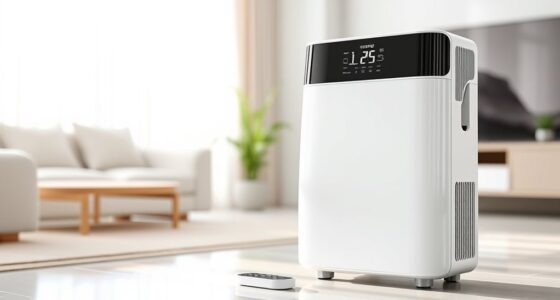
Even in cities with good outdoor air quality, many people wonder if air purifiers are still worth it. The truth is, while the air outside might be clean, indoor air can still harbor a variety of pollutants that affect your health. Indoor allergens like dust mites, pet dander, pollen, and mold spores often accumulate in enclosed spaces, making air purifiers a helpful tool for maintaining a healthier environment. These devices are designed to filter out tiny particles that standard ventilation or open windows simply can’t remove. If you suffer from allergies or asthma, an air purifier can considerably reduce your symptoms by capturing these irritants before they reach your lungs.
However, it’s essential to understand that an air purifier isn’t a set-it-and-forget-it solution. Regular air purifier maintenance is vital for ensuring that the device functions effectively. Over time, filters become clogged with collected particles, which can diminish their ability to trap pollutants. Most units require filter replacements or cleaning at intervals specified by the manufacturer, often every few months. Neglecting this maintenance can lead to reduced air quality and even cause the purifier to circulate trapped pollutants back into your indoor air. Keeping your purifier in good shape maximizes its benefits and helps justify the investment.
Even if the outdoor air is clean, your indoor environment can still be compromised by other factors. Indoor smoking, cooking fumes, cleaning products, and building materials release volatile organic compounds (VOCs) and other pollutants that linger in the air. Plus, modern homes tend to be more airtight for energy efficiency, reducing natural ventilation and allowing indoor pollutants to accumulate. In such environments, an air purifier acts as an additional layer of defense, continuously filtering out harmful particles and improving overall air quality.
You might also consider that air purifiers can improve sleep quality and boost general well-being. Cleaner indoor air can reduce respiratory discomfort and allergy symptoms, allowing you to breathe more easily and rest better at night. For families with young children, elderly members, or individuals with respiratory conditions, the benefits can be even more pronounced. Even in cities with good outdoor air, indoor pollutants remain a concern, so investing in a quality air purifier and maintaining it properly can make a noticeable difference in your daily health.
Furthermore, some air purifiers include HEPA filters that are capable of capturing particles as small as 0.3 microns, effectively removing many common indoor pollutants and allergens. In short, while outdoor air quality might be high, indoor air can still contain pollutants that impact your health. An air purifier helps mitigate these risks, but only if you stay diligent with air purifier maintenance. When used correctly, these devices become a powerful tool for ensuring a cleaner, healthier indoor environment—regardless of what’s happening outside.
Frequently Asked Questions
Can Air Purifiers Remove Allergens Like Pollen Effectively Indoors?
Yes, air purifiers can effectively remove allergens like pollen indoors. They use pollen filtration to trap tiny particles, improving allergen removal. When you choose a purifier with a HEPA filter, it captures 99.97% of airborne particles, including pollen, dust, and pet dander. This helps reduce allergy symptoms and creates a cleaner indoor environment, especially during high pollen seasons or if you’re sensitive to outdoor allergens.
Do Air Purifiers Help Reduce Indoor Odors in Cities With Clean Outdoor Air?
Ever wondered if an air purifier can tackle indoor odors even in cities with clean outdoor air? Yes, it can help reduce indoor fragrance and lingering smells, especially if your purifier has activated carbon filters. Keep in mind, noise levels vary, so choose a quiet model for undisturbed sleep or work. Using an air purifier enhances indoor air quality, making your environment fresher and more comfortable.
Are There Health Benefits to Using Air Purifiers in Cities With Good Air Quality?
Using air purifiers in cities with good air quality can still offer health benefits. They enhance indoor air quality by removing allergens, dust, and pollutants, which supports respiratory health. Even in clean outdoor environments, indoor air can contain irritants from household sources. By investing in an air purifier, you actively promote better air quality enhancement, helping reduce potential respiratory issues and creating a healthier indoor space for you and your family.
How Often Should Air Filters Be Replaced in Urban Environments?
You should replace your air filters every 3 to 6 months, depending on your filter’s lifespan and your indoor environment. Regular maintenance frequency helps make certain your air purifier works efficiently, especially in urban settings where indoor pollutants can accumulate. Check your filter regularly for dirt buildup, and follow the manufacturer’s recommendations. This routine helps maintain good air quality and prolongs the lifespan of your device.
Can Air Purifiers Help Prevent Respiratory Illnesses in Well-Maintained Cities?
Yes, air purifiers can help prevent respiratory illnesses even in well-maintained cities by reducing indoor pollution. Modern air purifier technology targets allergens, dust, and airborne pathogens, creating a healthier indoor environment. You benefit from cleaner air, especially if indoor pollution sources exist or if outdoor air quality fluctuates. Using an air purifier regularly guarantees you breathe cleaner air, lowering the risk of respiratory issues regardless of your city’s outdoor air quality.
Conclusion
Even in cities with good outdoor air, air purifiers are like a safety net, catching invisible pollutants that sneak inside. They give you peace of mind, ensuring your indoor air stays fresh and healthy. Think of them as your home’s silent guardians, working tirelessly behind the scenes. So, while the air outside looks clean, adding an air purifier can be the cherry on top, making your indoor environment as pure as a mountain spring.