
If you live near busy roads, using an air purifier with a HEPA filter is one of the best ways to cut down on harmful traffic-related particulate pollution indoors. HEPA filters effectively trap tiny particles like PM2.5 and PM10 from vehicle emissions, improving your indoor air quality and reducing health risks. To get the most benefit, choose a model with a high CADR, run it consistently, and keep windows closed during peak traffic times. Keep exploring to find out how to maximize your indoor air protection.

Get garden gear delivered free with Prime
- Fast, free delivery on millions of items
- Prime Video, Amazon Music and more included
- Member-only deals all year
Key Takeaways
- HEPA filters effectively capture traffic-related PM2.5 and PM10 particles, improving indoor air quality.
- Choose air purifiers with high CADR ratings for faster removal of traffic pollutants.
- Keep windows closed during peak traffic hours to prevent additional pollution entry.
- Use purifiers continuously or during high traffic periods for optimal indoor air protection.
- Regular maintenance and real-time air quality monitoring enhance purifier efficiency and pollutant reduction.

Traffic pollution poses a considerable health risk, especially for those living in busy urban areas. If you spend much of your day in a city environment, you’re likely exposed to high levels of vehicle emissions that contribute to poor urban air quality. These emissions release tiny particulate matter into the air, which can penetrate deep into your lungs and even enter your bloodstream. Over time, this exposure increases your risk of respiratory problems, cardiovascular disease, and other health issues. To protect yourself, investing in an air purifier designed to combat traffic-related particulate pollution can make a noticeable difference.
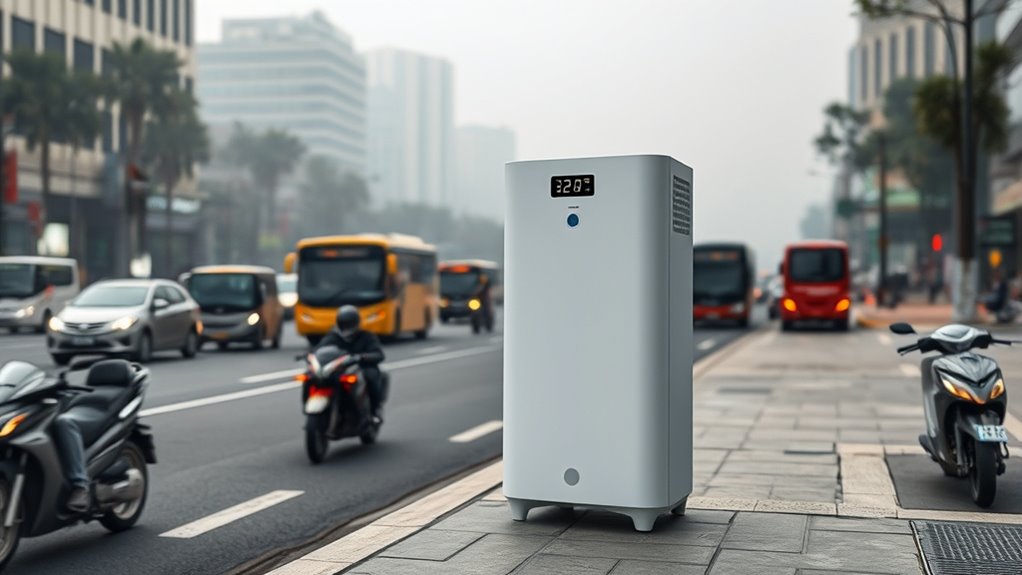
Many air purifiers feature HEPA filters, which are highly effective at capturing small particles emitted by vehicles. These filters trap pollutants such as PM2.5 and PM10—tiny particles that are among the most harmful in traffic pollution. When you run a purifier equipped with a HEPA filter in your home or office, it actively pulls in contaminated air and traps these dangerous particles, markedly improving your indoor air quality. This can be especially beneficial if you live near busy roads or highways, where vehicle emissions are consistently high.
HEPA filters effectively trap traffic-related PM2.5 and PM10 particles, improving indoor air quality near busy roads.
The key to maximizing your air purifier’s effectiveness lies in choosing a model suited for your space and making sure it runs regularly. A purifier with a high Clean Air Delivery Rate (CADR) will filter larger volumes of air faster, which is vital in environments with persistent traffic pollution. Keep windows closed during peak traffic hours to prevent additional pollutants from entering, and set your purifier to run continuously or during times when traffic emissions are at their worst. By doing so, you create a cleaner, healthier indoor environment that reduces your daily exposure to harmful particulate matter.
It’s also important to understand that urban air quality can fluctuate throughout the day, often peaking during rush hours. Having a reliable purifier running during these times can help you breathe easier. Some advanced models even come with air quality sensors that automatically adjust filtration levels based on real-time pollution levels. This smart technology ensures you’re always protected without wasting energy or filter life. Additionally, filter replacement indicators can help you maintain optimal performance, ensuring your device continues to effectively reduce traffic-related pollution. Remember, no device can eliminate all pollution, but a good-quality air purifier can markedly cut down the amount of traffic-related particles circulating indoors, giving you peace of mind and better health.
HEPA air purifier for traffic pollution
As an affiliate, we earn on qualifying purchases.
As an affiliate, we earn on qualifying purchases.
Frequently Asked Questions
Do Air Purifiers Remove Gases and Fumes From Traffic Pollution?
Air purifiers typically don’t remove gases and fumes from traffic pollution effectively. While some models offer gas removal and fume filtration, most focus on capturing particulate matter. To reduce exposure to traffic fumes, look for purifiers with activated carbon filters, as they absorb harmful gases and fumes. Keep in mind, combining air purifiers with good ventilation is your best strategy to improve indoor air quality from traffic-related pollution.
How Often Should Filters Be Replaced in Traffic Pollution Purifiers?
Replacing filters is like changing the tires on your car—you need to do it regularly to keep things running smoothly. For traffic pollution purifiers, the filter lifespan varies, but generally, you should replace filters every 6 to 12 months. This replacement frequency guarantees maximum air quality, as clogged filters lose efficiency. Check your purifier’s manual for specific guidance, and don’t wait until you notice a decline in performance.
Are Portable Air Purifiers Effective for Outdoor Traffic Pollution?
Portable air purifiers can be somewhat effective for outdoor traffic pollution, but their outdoor effectiveness varies. Unlike stationary units designed for specific spaces, portable models are limited by size and airflow, making them less ideal for large outdoor areas. You’ll get better results with stationary purifiers for outdoor use, while portable ones are best suited for personal spaces or enclosed environments where you need targeted air cleaning.
Can Air Purifiers Eliminate All Types of Particulate Matter?
You’ll find that air purifiers with HEPA filters can remove over 99.97% of particles as small as 0.3 microns, but they can’t eliminate all types of particulate matter. Particles smaller than 0.1 microns, like some viruses or ultrafine pollutants, often slip through. While HEPA filters are highly effective for many pollutants, understanding particle size helps you choose the right purifier for your needs.
What Maintenance Is Required for Air Purifiers Used Near Busy Roads?
You need to regularly replace the filters and clean your air purifier to keep it effective near busy roads. Check the filter replacement schedule, usually every 3 to 6 months, and clean the device’s exterior and pre-filters weekly. This maintenance guarantees the purifier continues to trap particulate pollution effectively, improving air quality in your space. Staying on top of filter replacement and device cleaning is crucial for maximum performance.
Conclusion
Using an air purifier can considerably reduce your exposure to traffic-related particles, helping you breathe easier. Did you know that outdoor traffic pollution can contain over 60% fine particles that penetrate indoor spaces? By choosing the right purifier, you can cut down these harmful particles and improve your indoor air quality. Keep in mind, a small device can filter thousands of particles daily, making a big difference in your health and comfort.
Halloween Picks
halloween
As an affiliate, we earn on qualifying purchases.