When choosing an air scrubber for remodels, you need to match its CFM (cubic feet per minute) to your room size. Calculate the room volume in cubic feet and select a unit that provides at least 4-6 air exchanges per hour to meet safety standards. Proper sizing guarantees effective dust and mold removal, creating a safer environment. Keep these guidelines in mind, and you’ll better understand how to pick the right equipment as you explore further.
Key Takeaways
- The CFM-to-room formula calculates the needed airflow (CFM) based on room volume to maintain proper ventilation.
- To determine the correct air scrubber size, multiply the room’s cubic footage by the recommended air exchange rate.
- Proper sizing ensures effective dust, mold, and pollutant removal, complying with ventilation standards during remodeling.
- Matching CFM to room size prevents under- or over-sizing equipment, optimizing air quality and energy efficiency.
- Planning with the CFM-to-room formula supports safety, regulatory compliance, and a healthier environment for workers and occupants.
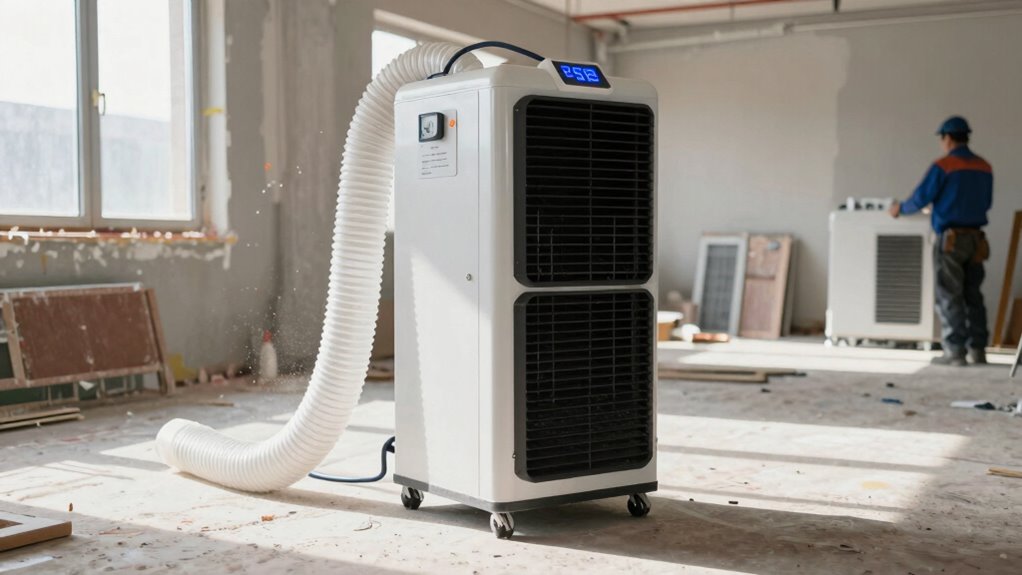
Remodeling projects can generate a lot of dust, mold spores, and airborne contaminants that affect your indoor air quality. As a homeowner or contractor, you know that maintaining good air quality during renovations isn’t just about comfort — it’s about safety and health. One key factor in controlling airborne pollutants is proper ventilation. Ventilation standards guide how much fresh air needs to be introduced and contaminated air removed to ensure a safe environment. Without adequate ventilation, dust and mold spores can linger, posing health risks long after the work is done. That’s where air scrubbers come into play, helping you meet these ventilation standards during your remodel.
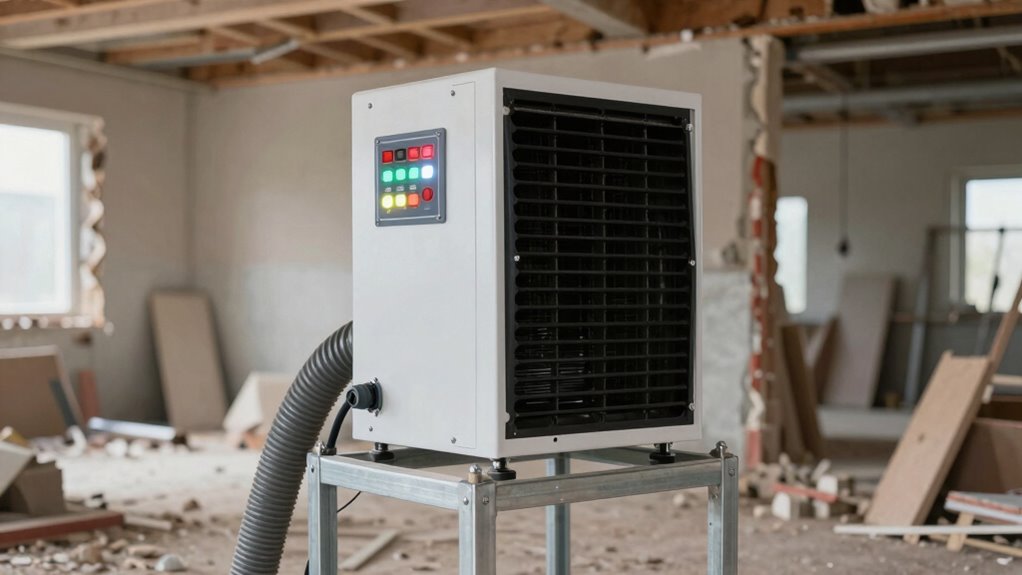
Air scrubbers are powerful tools that filter out particles, VOCs, and biological contaminants from the air. But to be effective, you need to choose the right unit with enough capacity to handle the size of your space. This is where the CFM-to-room formula becomes essential. CFM, or cubic feet per minute, measures an air scrubber’s airflow rate. When you know your room’s volume, you can calculate the necessary CFM to ensure the air is cleaned efficiently. For example, a room of 1,000 cubic feet should ideally have its air replaced multiple times per hour, meaning you’ll want an air scrubber with a CFM rating that supports that rate. This calculation helps you avoid under- or over-sizing equipment, ensuring ideal air quality without wasting energy.
Choose an air scrubber with the right CFM to match your room size for effective air cleaning.
Using the right CFM-to-room ratio not only improves air quality but also helps you adhere to ventilation standards. These standards specify how often air must be exchanged to prevent pollutant buildup. By selecting an air scrubber with an appropriate airflow rate, you guarantee that dust, mold spores, and other contaminants are consistently removed. This is especially critical during remodeling projects that involve cutting, sanding, or demolition, which can produce significant amounts of airborne debris. When you prioritize matching your air scrubber’s capacity to your space, you’re actively working towards a healthier environment for everyone involved.
In addition to choosing the right equipment, understanding the importance of airflow and ventilation standards allows you to plan your project more effectively. It ensures you’re not just moving air around but actively filtering it to meet safety guidelines. Proper air exchange rates are essential for maintaining a safe indoor environment and preventing health issues related to poor air quality. This proactive approach minimizes health risks, accelerates project timelines, and ensures a cleaner, safer indoor environment. So, if you want to keep your remodel on track and your indoor air quality high, pay close attention to the CFM-to-room formula, select the right air scrubber, and stay aligned with ventilation standards every step of the way.
Frequently Asked Questions
How Often Should Air Scrubbers Be Replaced During a Remodel?
You should replace your air scrubber’s filters every 4 to 6 weeks during a remodel, depending on usage and air quality. Regularly check the air filter lifespan, as dirty filters reduce efficiency. Equipment replacement frequency also matters; if the scrubber shows signs of wear or decreased performance, consider replacing it sooner. Keeping up with these schedules guarantees maximum air purification and maintains a healthy environment throughout your remodel.
Are There Specific Brands Recommended for Remodeling Projects?
When it comes to remodeling air quality, trusted air scrubber brands like BlueDri, Enerzen, and Austin Air stand out. While high-end models offer advanced filtration and durability, budget-friendly options still deliver effective results. You should choose a brand based on your project’s size and specific needs. Prioritize quality to guarantee your renovation environment stays safe and clean. Remember, investing in a reputable brand pays off in long-term performance and cleaner air.
Can Air Scrubbers Remove All Types of Airborne Contaminants?
Air scrubbers can effectively remove most airborne contaminants, but they don’t eliminate everything. With HEPA filters, they trap dust, mold spores, and allergens, while activated carbon filters target VOC removal from paints and adhesives. However, some chemicals or gases might require specialized filtration. You should choose an air scrubber suited to your specific needs, ensuring it has HEPA and carbon filters for all-encompassing air cleaning during your remodel.
What Maintenance Is Required for Air Scrubbers Post-Remodel?
After your remodel, you should regularly check your air scrubber’s filters and replace them as needed to guarantee peak performance. Additionally, you’ll want to perform unit calibration periodically to maintain effectiveness. Keep an eye on the system’s airflow and replace filters when dirty or clogged. Proper maintenance helps extend the lifespan of your air scrubber, keeps the air clean, and guarantees it continues to work efficiently in your space.
How Do Noise Levels of Air Scrubbers Affect Project Workflow?
Noise levels of air scrubbers can surprisingly be your biggest workflow distraction, turning what should be a smooth project into chaos. When the noise gets loud, it’s like trying to work in a rock concert—hard to concentrate and prone to miscommunication. This disruption hampers your efficiency, forcing you to pause or work around the noise, ultimately delaying project timelines and adding stress to an already busy remodel.
Conclusion
Think of your remodel as a fresh canvas, where clean air is the brushstroke that sets the tone. By understanding the CFM-to-room formula, you’re wielding a powerful tool, much like an artist choosing the right brush for perfect detail. With proper air scrubber sizing, you’ll create a space as pristine as a clear sky after a storm—ready for the next chapter. Trust the math, and breathe easy through every step of your renovation.