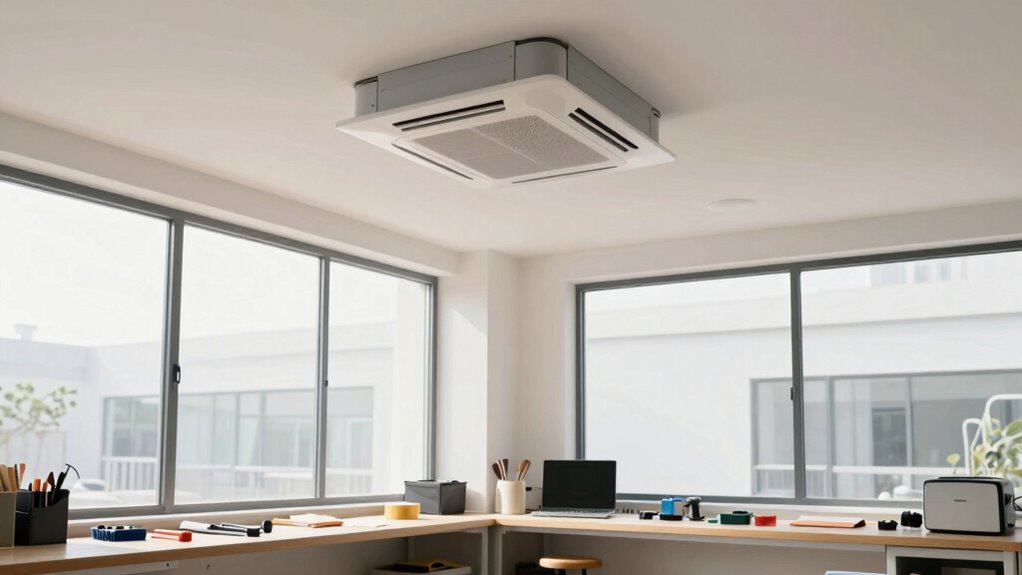
To maximize your ceiling-mounted air filtration units, position them near dust sources or workstations where airflow naturally stalls. Place units high enough to cover the entire workspace, avoiding corners or behind large equipment that block airflow. Keep filters clean and guarantee unobstructed air paths to improve efficiency. Proper placement, combined with regular maintenance, helps capture airborne contaminants effectively. Stay with us to discover more tips for creating a safer, healthier workshop environment.

Get garden gear delivered free with Prime
- Fast, free delivery on millions of items
- Prime Video, Amazon Music and more included
- Member-only deals all year
Key Takeaways
- Position ceiling units near dust sources or high-traffic areas to capture contaminants before they disperse.
- Place units where airflow tends to stagnate to promote even air distribution throughout the workshop.
- Avoid obstructing units to ensure unobstructed airflow and maximize filtration efficiency.
- Use multiple units or higher-capacity models for high ceilings or large workspaces.
- Regularly maintain and clean filters to sustain optimal airflow and filtration performance.

Good air quality is vital for a safe and efficient workshop, especially when working with dust, fumes, and airborne particles. Your ability to maintain a healthy environment depends heavily on effective air filtration systems. Many workshop owners overlook the importance of proper placement, but the right positioning of ceiling units can make a notable difference in how well your filtration system performs. When you strategically install ceiling-mounted filtration units, you enhance air circulation and guarantee that airborne contaminants are quickly captured and removed from the workspace. This setup minimizes dust and fumes settling onto surfaces and reduces the risk of inhalation hazards for you and your team.
Strategic ceiling placement of filtration units ensures better air circulation and cleaner, safer workshop environments.
The key to maximizing the effectiveness of your filtration systems lies in understanding air movement patterns within your workshop. Ceiling units are most efficient when placed in areas where air tends to stagnate or where dust and fumes are most concentrated. Instead of random placement, you should position these units near dust-generating tools or workstations, ensuring that contaminated air flows directly into the filtration system. By doing so, you prevent dust from lingering in the air longer than necessary, which is vital for maintaining good air quality. When the filtration systems work at their best, they continuously draw in contaminated air, filter out harmful particles, and release cleaner air back into the workspace, creating a healthier environment.
Another benefit of ceiling unit placement is that it helps distribute air evenly throughout your workshop. Proper circulation prevents pockets of polluted air from forming in corners or behind machinery. This balanced airflow keeps your entire workspace safer and more comfortable. It’s also important to consider ceiling height and airflow capacity when choosing units. Larger or higher ceilings may require more powerful units or multiple units to guarantee comprehensive coverage. Additionally, understanding the principles of airflow dynamics can help you optimize your setup for maximum efficiency. If you neglect proper placement, you risk creating dead zones where air quality suffers, defeating the purpose of your filtration system altogether.
To get the most out of your air filtration setup, regularly inspect and maintain your ceiling units. Clean filters and check for obstructions that could impair airflow. When you combine proper placement with routine upkeep, your filtration systems will perform at their best, consistently improving air quality. This proactive approach not only protects your health but also extends the lifespan of your equipment by preventing dust buildup. In the end, the secret lies in understanding airflow dynamics and strategically positioning your ceiling units—it’s a simple trick that greatly enhances the efficiency of your workshop’s air filtration efforts.
ceiling mounted air filtration unit for workshop
As an affiliate, we earn on qualifying purchases.
As an affiliate, we earn on qualifying purchases.
Frequently Asked Questions
How Often Should Ceiling Unit Filters Be Replaced?
You should replace ceiling unit filters every 3 to 6 months, depending on the filter’s lifespan and your usage. Regularly check for dirt buildup and reduced airflow, which indicate it’s time for a change. Following a consistent replacement schedule guarantees your air filtration system works efficiently, maintains good air quality, and prevents strain on the unit. Adjust the schedule if you notice increased dust or allergies.
Can Ceiling Units Improve Air Quality in Large Workshops?
Yes, ceiling units can considerably improve air quality in large workshops. By optimizing airflow, these units distribute clean air evenly, reducing dust and airborne contaminants. Advanced filtration technology captures particles efficiently, ensuring healthier working conditions. Proper placement, especially near high-activity zones, enhances these benefits. Regularly maintaining and replacing filters will maximize performance, helping you maintain ideal air quality and a safer workspace.
Are Ceiling Units Energy-Efficient for Continuous Operation?
Are ceiling units energy-efficient for continuous operation? They can be, especially if you choose models with energy-saving features, which help reduce electricity costs over time. While the installation costs might be higher upfront, the long-term energy savings often offset this expense. Proper placement and regular maintenance guarantee ideal performance, making ceiling units a practical choice for ongoing air quality and energy efficiency in your workshop.
What Maintenance Is Required for Ceiling-Mounted Air Filters?
You should regularly check your ceiling-mounted air filters to guarantee optimal performance. Follow a maintenance checklist that includes inspecting the filter’s condition, replacing filters when the lifespan is reached, and cleaning surrounding areas to prevent dust buildup. Routine maintenance keeps your filters working efficiently, extends their lifespan, and maintains good air quality. Don’t forget to log maintenance dates to stay on top of filter replacements and ensure continuous, effective filtration.
Do Ceiling Units Reduce Airborne Dust Effectively?
Imagine a woodworking shop where ceiling units ensure improve dust containment. Yes, ceiling units reduce airborne dust effectively by optimizing airflow, drawing dust upward and away from workers. Proper placement ensures airflow is directed efficiently, preventing dust from settling on surfaces. When installed correctly, these units enhance air quality, making your workspace safer. Regular maintenance keeps airflow optimized, maintaining the system’s dust control capabilities over time.
Conclusion
By placing your ceiling unit correctly, you can reduce airborne dust by up to 60%, making your workshop cleaner and safer. Remember, the right placement isn’t just about convenience—it’s about efficiency. When you optimize your air filtration setup, you create a healthier workspace and improve air quality markedly. So, try that ceiling unit trick today—you’ll notice a cleaner environment almost instantly, and your efforts will pay off in the long run.
Fall yard work Picks
leaf blowers
As an affiliate, we earn on qualifying purchases.