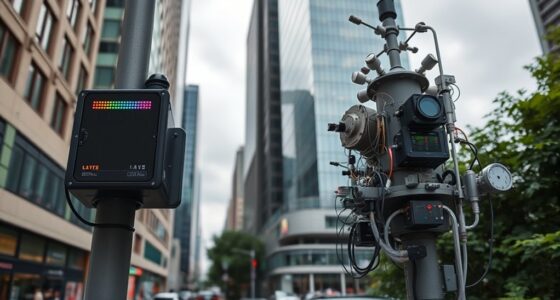
Airborne microplastics come from sources like urban pollution, tire wear, industrial emissions, and synthetic textiles. To measure these tiny particles, you’ll use high-volume air samplers with specialized filters that trap fibers and fragments effectively. Proper sample collection and analysis—using chemical digestion, microscopy, and spectroscopy—are key to identifying and quantifying microplastics. Learning about these techniques and sources can help you understand their dispersal, so keep exploring for more insights.
Key Takeaways
- Major sources include urban pollution, industrial emissions, tire wear, synthetic textiles, and waste degradation.
- Airborne microplastics are captured using high-volume air samplers with filters like quartz or glass fibers.
- Proper sampling strategies consider dispersal patterns, environmental variables, and optimal sampler placement for accurate data.
- Post-sampling analysis involves chemical digestion, microscopy, and spectroscopic methods (FTIR, Raman) to identify particles.
- Identifying and quantifying microplastic sources informs targeted mitigation and understanding dispersal pathways.

Microplastics are not just a problem on land or in the oceans—they’re also floating in the air around us. You might not see them, but these tiny particles are everywhere, riding on the wind and dispersing into the atmosphere. Understanding where these airborne microplastics come from starts with a thorough sources analysis. This process involves identifying and quantifying the various origins of microplastics in the air, such as urban pollution, industrial emissions, tire wear, synthetic textiles, and waste degradation. By analyzing these sources, you can better grasp how microplastics are released into the environment and how they travel through the air. This step is essential because it helps you target the main contributors and develop strategies to reduce emissions.
Once you know the sources, the next step is to develop effective sampling methods. Sampling techniques are essential for capturing airborne microplastics accurately, ensuring that your data reflects real-world conditions. You might use high-volume air samplers equipped with filters that trap particles as air passes through. These filters need to be carefully chosen to capture tiny microplastic fibers and fragments without contamination. For example, some methods involve using quartz or glass fiber filters, which are less likely to introduce foreign particles. You can also employ portable or stationary samplers depending on the scale of your study and the environment you’re examining. When collecting samples, it’s important to follow strict protocols to prevent contamination from external sources, like clothing or equipment, which could skew your results. Additionally, understanding airborne microplastic transport helps in designing sampling strategies that accurately reflect particle dispersal patterns.
After collection, analyzing the samples is equally important. You’ll need to process the filters to isolate the microplastics, often through chemical digestion or density separation. Once isolated, microscopy techniques help you identify and count the particles, while spectroscopic methods like FTIR or Raman spectroscopy confirm their plastic composition. This detailed analysis allows you to determine the size, shape, and polymer type of the microplastics, providing insights into their likely sources. The combination of robust sampling methods and meticulous sources analysis helps you build a full picture of airborne microplastic pollution, revealing not just how many particles are present, but where they originate and how they move through the environment.
Frequently Asked Questions
How Do Microplastics Affect Indoor Air Quality?
Microplastics can substantially impact your indoor air quality by becoming airborne through indoor sources like synthetic textiles and cleaning activities. These tiny particles can be inhaled, potentially causing respiratory issues or irritation. Using air filtration systems helps capture microplastics before you breathe them in. Regularly cleaning and reducing synthetic materials in your home also minimizes microplastic presence, making your indoor environment healthier and safer for you.
What Are the Health Risks of Inhaling Airborne Microplastics?
Inhaling airborne microplastics poses significant health implications, including respiratory risks like inflammation, irritation, and potential long-term lung damage. You might experience coughing, wheezing, or shortness of breath as your body reacts to these tiny particles. Over time, inhaling microplastics could contribute to more serious conditions such as asthma or other respiratory diseases. Protecting yourself by minimizing exposure is essential to reduce these health risks.
Are Certain Environments More Prone to Airborne Microplastic Pollution?
You might think only urban areas face high airborne microplastic pollution, but natural landscapes aren’t immune. Urban environments often have more sources like traffic, industry, and waste, making them more prone to airborne microplastics. However, natural landscapes can also have microplastics, especially near human activity or through long-distance transport. So, both environments can be affected, but urban areas generally experience higher concentrations due to dense human activities.
How Can Individuals Reduce Their Exposure to Airborne Microplastics?
To reduce your exposure to airborne microplastics, focus on personal habits and home filtration. Wear masks in high-pollution areas, keep windows closed during windy days, and avoid using plastic items that shed fibers. Install HEPA filters in your home to trap microplastics, and regularly clean with a damp cloth to prevent dust buildup. These steps help minimize your inhalation of airborne microplastics effectively.
What Future Technologies Might Improve Microplastic Detection Accuracy?
Thinking outside the box, future technologies like advanced sensor technologies could revolutionize microplastic detection accuracy. These innovations may enable real-time detection, giving you instant insights into airborne microplastics around you. As sensors become more sensitive and specific, you’ll be able to identify even tiny particles more reliably. This progress will help researchers and policymakers act swiftly, ultimately protecting your health and the environment from microplastic pollution.
Conclusion
So, next time you marvel at a clear sky, remember it’s probably just hiding tiny plastic bits. While scientists chase particles under microscopes, you can marvel at the irony: we breathe in what we’ve thrown out. Airborne microplastics aren’t just a science problem—they’re a reminder that our waste travels farther than we think. So, breathe easy—if you can find the air without a sprinkle of plastic, that is.