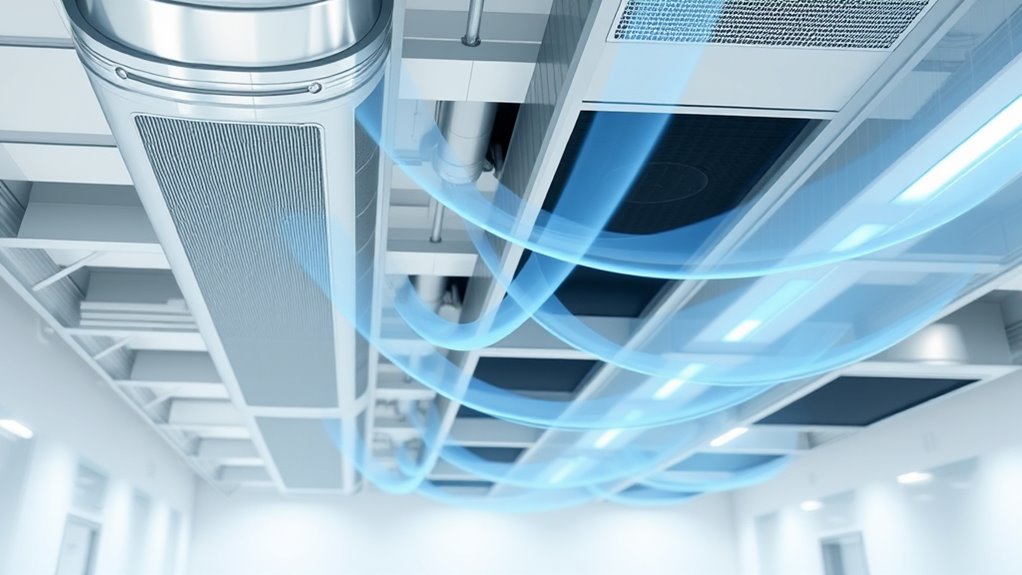
To prevent cross-contamination through airflow balancing, you need to monitor airflow rates with sensors in each zone and adjust vents, dampers, or fans accordingly. Proper balancing guarantees contaminated air stays contained within designated areas, reducing the risk of spread. Managing pressure differences between zones helps maintain a safe environment. Continually optimizing airflow based on sensor data keeps your system efficient and effective—more details on how specific strategies work are just ahead.
Key Takeaways
- Proper airflow balancing maintains pressure differentials to contain contaminants within designated zones.
- Sensor-driven adjustments optimize airflow, preventing contaminated air from spreading to clean areas.
- Implementing negative or positive pressure zones isolates hazardous materials effectively.
- Regular calibration of airflow sensors ensures accurate monitoring for contamination control.
- Strategic placement of vents and dampers directs airflow away from sensitive zones, reducing cross-contamination risk.

Airflow balancing is essential for ensuring your heating, ventilation, and air conditioning (HVAC) system works efficiently. When your system is correctly balanced, it maintains ideal airflow throughout your building, which is fundamental for preventing cross-contamination. One key component in achieving this balance is the use of airflow sensors. These sensors monitor the airflow rates in different parts of your system, providing real-time data that helps you identify areas where airflow is either too high or too low. By accurately measuring airflow in each ventilation zone, you can make precise adjustments to guarantee that air is evenly distributed and that contaminants don’t spread from one zone to another.
Ventilation zones are designated sections within your building that require specific airflow controls to prevent the transfer of airborne contaminants. When these zones are properly managed, the risk of cross-contamination decreases markedly. For instance, in healthcare settings or laboratories, maintaining negative or positive pressure in designated zones helps contain potentially harmful particles. Proper airflow balancing ensures that these zones don’t inadvertently allow contaminated air to drift into clean areas. You can achieve this by adjusting dampers, fans, or vents based on feedback from airflow sensors, guaranteeing each ventilation zone maintains the correct pressure and airflow levels.
Properly managing ventilation zones prevents airborne contaminant transfer and maintains safe, controlled airflow levels.
To effectively prevent cross-contamination, you need to pay close attention to how your system responds to changes in demand. If airflow sensors detect that a ventilation zone is receiving insufficient air, it might indicate a blockage, leak, or improperly set damper. Conversely, too much airflow can cause turbulence, which might push contaminants into adjacent zones. By continuously monitoring these sensors, you can make timely modifications, such as adjusting fan speeds or sealing leaks, to maintain a steady, controlled airflow. This proactive approach not only improves air quality but also enhances the overall efficiency of your HVAC system, reducing energy waste and operational costs.
Furthermore, balancing airflow across ventilation zones requires a thorough understanding of your building’s layout and usage patterns. Regularly inspecting and calibrating airflow sensors guarantees they provide accurate data. When combined with strategic placement of vents and dampers, these sensors allow you to fine-tune airflow paths, ensuring each zone receives the appropriate amount of fresh, filtered air. This level of control is essential for health-sensitive environments, helping to limit the spread of airborne pathogens and allergens. In essence, by leveraging airflow sensors and managing ventilation zones effectively, you create a safer, healthier indoor environment while optimizing your HVAC system’s performance. Additionally, understanding the expiration of vape juice and proper storage conditions can prevent spoilage and maintain product quality.
Frequently Asked Questions
How Often Should Airflow Balancing Be Performed?
You should perform airflow balancing every 6 to 12 months, depending on your facility’s needs. Regular airflow testing guarantees your ventilation meets standards and prevents cross-contamination. By maintaining proper airflow, you help protect occupants and keep your system efficient. Follow ventilation standards to determine the right schedule, especially if there are changes in your space or occupancy levels. Consistent testing and balancing are key for ideal indoor air quality.
What Are the Signs of Improper Airflow in a Facility?
You’ll notice signs of improper airflow if you see inconsistent ventilation standards, such as areas with stagnant air or drafts. You might also observe unusual odors, temperature fluctuations, or increased dust buildup. Using airflow diagnostics can help identify these issues early. When airflow isn’t balanced, it can compromise air quality and safety, so regularly checking for these signs guarantees your facility maintains proper ventilation standards and prevents cross-contamination effectively.
Can DIY Airflow Balancing Effectively Prevent Cross-Contamination?
While DIY airflow balancing might seem like a helpful step, it’s unlikely to fully meet ventilation standards or effectively control contamination. You could inadvertently create uneven airflow, risking cross-contamination. Proper airflow balancing requires precise measurements and professional expertise to guarantee ideal environmental conditions. For best contamination control, it’s wise to consult specialists who can fine-tune your system, reducing risks and maintaining a safe, compliant facility.
What Equipment Is Necessary for Accurate Airflow Balancing?
To accurately balance airflow, you’ll need essential equipment like airflow sensors and ventilation dampers. Airflow sensors measure the precise volume of air moving through ducts, helping you identify imbalances. Ventilation dampers allow you to adjust airflow to different zones. Using these tools together guarantees you can fine-tune your system effectively, preventing cross-contamination by maintaining proper airflow direction and volume throughout your space.
How Does Airflow Balancing Impact Energy Efficiency?
Ironically, airflow balancing boosts energy efficiency by forcing you to focus on ventilation optimization and airflow uniformity. When you guarantee balanced airflow, your system runs smoothly, reducing wasted energy from over-ventilation or dead zones. This means less strain on your HVAC, lower utility bills, and a more sustainable environment. So, while it seems like extra effort, balancing airflow actually saves you energy and money in the long run.
Conclusion
Now, picture the clean, crisp air gently flowing like a clear stream, seamlessly guiding contaminants away from sensitive areas. When you balance airflow properly, it’s like setting up invisible barriers that keep bacteria and particles at bay, creating a safe haven. By maintaining this delicate flow, you guarantee the space feels fresh and secure, with each breath you take free from worry. Keep the airflow steady, and let your environment breathe easy and stay protected.