
To assess indoor carbon monoxide exposure, you should guarantee detectors are properly installed near sleeping areas and appliances, and test them regularly. Watch for symptoms like headaches, dizziness, or nausea, which improve when you leave the area. If alarms sound or symptoms appear, turn off fuel appliances immediately, ventilate the space, and seek medical help. Staying vigilant about detector maintenance and recognizing signs of poisoning helps keep you safe—learn more to protect your home.
Key Takeaways
- Install CO detectors on every home level, especially near bedrooms and fuel-burning appliances, at least five feet above ground.
- Regularly test detectors monthly and replace batteries annually to ensure accurate detection of CO presence.
- Recognize symptoms of CO poisoning, such as headaches, dizziness, and nausea, which improve when leaving the affected area.
- Maintain and properly vent fuel-burning appliances to prevent dangerous CO buildup indoors.
- If symptoms or detector alarms occur, evacuate immediately, ventilate the space, and seek emergency medical assistance.
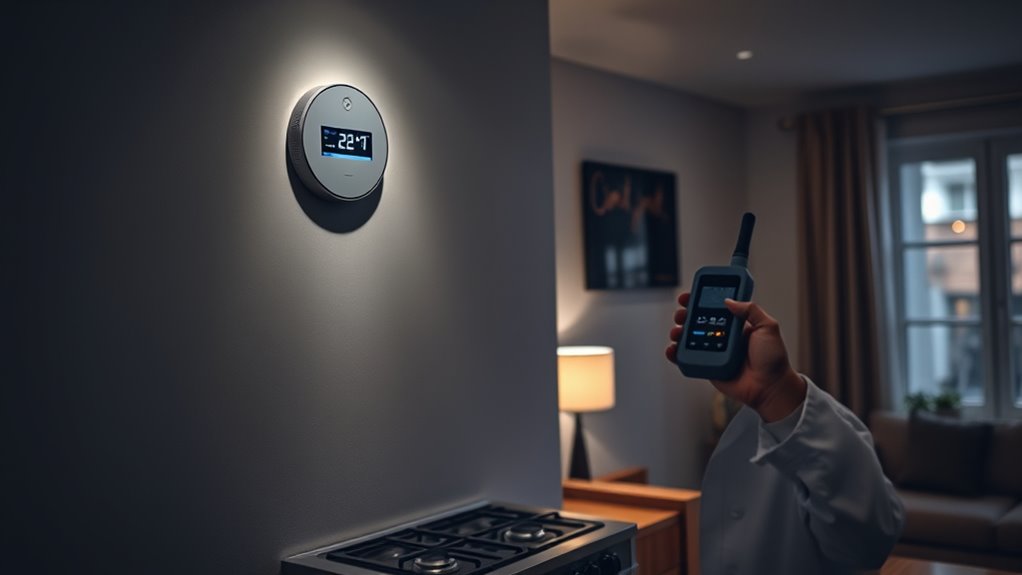
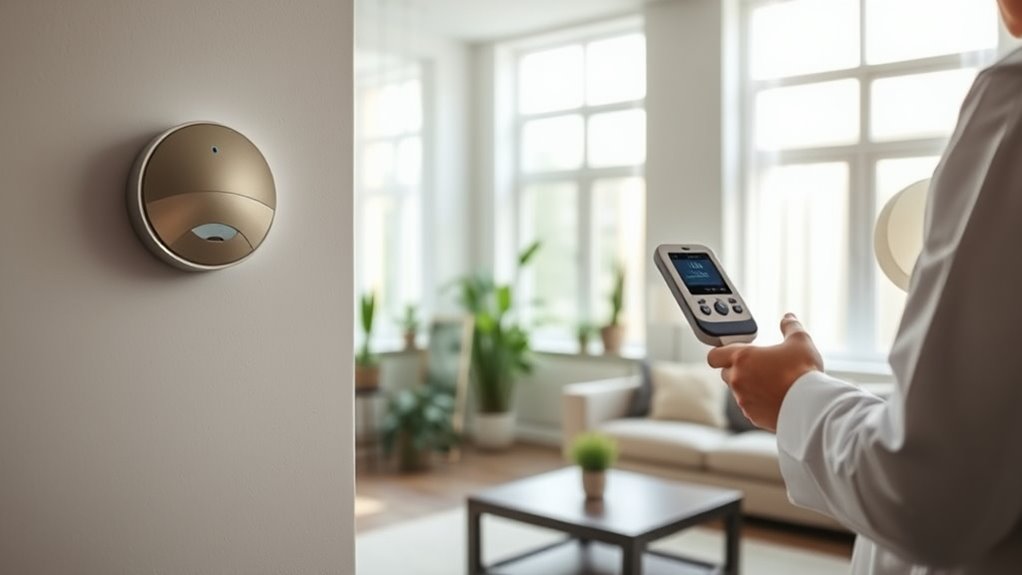
Have you ever wondered how to determine if you’re exposed to dangerous levels of carbon monoxide? Recognizing the signs and understanding how to properly set up detection devices are essential steps in protecting yourself and your family. Proper detector placement plays a critical role in ensuring early warning, so you’ll want to install carbon monoxide detectors on every level of your home, especially near bedrooms and fuel-burning appliances. Place detectors at least five feet above the ground, as carbon monoxide is slightly lighter than air, and avoid installing them too close to vents, windows, or doors where drafts could interfere with readings. Regularly testing these detectors is necessary—press the test button monthly and replace batteries at least once a year to keep them functioning correctly. Remember, a detector’s placement and maintenance are your first line of defense against silent, deadly CO buildup. Additionally, understanding the difference between detector types, such as electrochemical sensors and metal oxide sensors, can help you choose the most reliable device for your home.
While detectors are essential, being able to recognize the symptoms of carbon monoxide poisoning can save lives, especially if your detectors fail or aren’t present. Symptoms often mimic those of the flu—headaches, dizziness, nausea, confusion, and weakness—but they typically improve when you leave the affected area. If you notice these signs while indoors, especially if multiple people experience them simultaneously, it’s a warning sign. Don’t ignore these warning signs; your body is giving you clues that something’s wrong. Turn off any fuel-burning appliances and ventilate the space immediately. Get fresh air and seek medical attention—prompt treatment is critical, as CO poisoning can escalate rapidly and cause serious health issues or death. Recognizing these symptoms quickly can be life-saving, especially in environments where detector placement might not be ideal or during power outages when alarms might not sound.
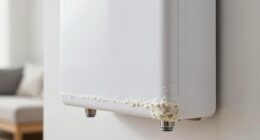
In addition to detector placement and symptom recognition, it’s important to understand your home’s potential sources of carbon monoxide. Gas furnaces, water heaters, fireplaces, and even portable generators can produce dangerous levels if they malfunction or are improperly vented. Regular maintenance of these appliances and ensuring proper ventilation can reduce risks. Keep in mind that even with well-placed detectors and awareness of symptoms, sometimes the best defense is proactive prevention. Install detectors in key areas, keep them maintained, and stay alert to how you feel when inside. If at any point you suspect CO exposure, don’t wait—leave the premises, seek fresh air, and contact emergency services immediately. By staying vigilant about detector placement and symptom recognition, you’re taking essential steps to safeguard yourself and your loved ones from the dangers of carbon monoxide.
Frequently Asked Questions
How Often Should I Check My Home for Carbon Monoxide Leaks?
You should check your home for carbon monoxide leaks regularly, ideally once a month, by testing your detectors. Make sure to perform seasonal testing, especially when changing weather or after any home repairs. Don’t forget to maintain your detectors by replacing batteries yearly and replacing the units every five to seven years. Staying vigilant helps guarantee your detectors work properly and keeps you safe from dangerous CO buildup.
Can Pets Be Affected by Indoor Carbon Monoxide Exposure?
Yes, pets can be affected by indoor carbon monoxide exposure. For pet safety, watch for animal symptoms like lethargy, difficulty breathing, or disorientation. If you notice these signs, move your pets outdoors immediately and seek veterinary help. Regularly checking your home’s carbon monoxide levels helps prevent exposure, ensuring both your safety and your pets’ well-being. Stay vigilant and maintain proper ventilation to keep everyone safe.
What Are the Long-Term Health Effects of Low-Level CO Exposure?
Like a slow, invisible fog, low-level CO exposure can cause long-term health issues you might not notice at first. You may experience chronic health problems, such as fatigue, headaches, or dizziness, gradually impacting your daily life. Neurological effects can develop over time, leading to memory problems or difficulty concentrating. Even at low levels, prolonged exposure silently affects your well-being, so it’s essential to monitor and minimize indoor CO risks.
Are There Specific Brands of Detectors Recommended for Accuracy?
You should look for detector brands that meet accuracy standards set by organizations like UL or CSA. Popular, reliable options include First Alert and Kidde, which are known for their precision and durability. Always check reviews and verify the detector has a proper calibration. Investing in certified detectors ensures you get accurate readings, providing peace of mind and early warning in case of carbon monoxide buildup.
How Does Ventilation Impact Indoor Carbon Monoxide Levels?
Ventilation acts like a breath of fresh air, clearing out carbon monoxide and improving indoor air quality. When you increase air exchange, you dilute the concentration of CO, reducing exposure risk. Proper ventilation, such as opening windows or using exhaust fans, helps prevent dangerous buildup. You should guarantee good airflow, especially near appliances that produce CO, to maintain a safer indoor environment and protect your health effectively.
Conclusion
To protect yourself from carbon monoxide, stay vigilant and regularly check your indoor appliances. Think of it like a silent thief sneaking in unnoticed—its danger is invisible but real. By ensuring proper ventilation and installing detectors, you create a safety net around your home. Don’t wait for symptoms to appear; take action now. Staying informed and cautious keeps you one step ahead, turning your home into a fortress against this unseen threat.