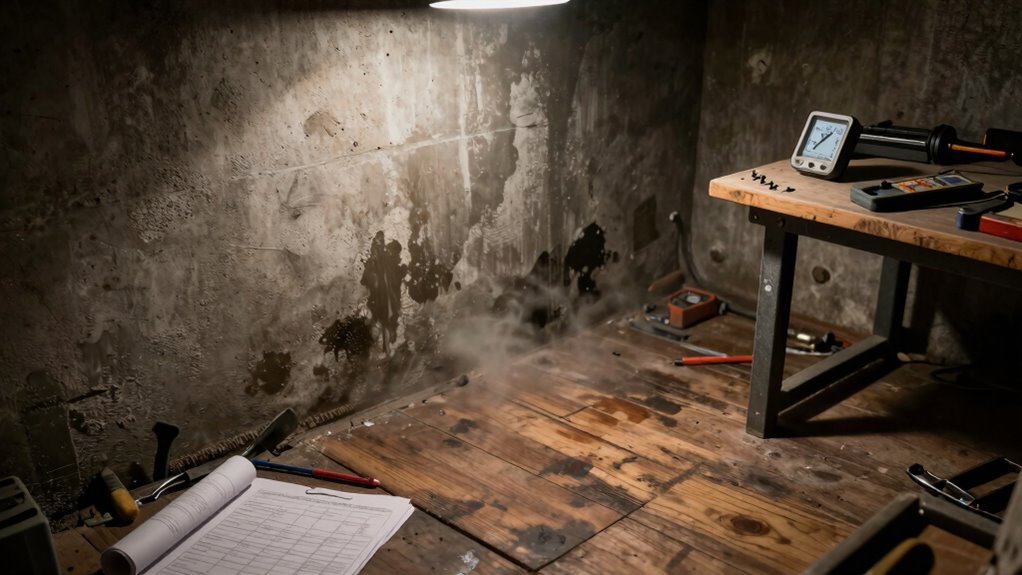

To quickly find moisture that causes basement odors, start by inspecting for condensation on walls, floors, and windows. Look for water stains, peeling paint, or warped surfaces, and check for leaks around plumbing and foundation cracks. Use a moisture meter to identify high humidity spots and remove standing water. Enhance ventilation with fans and open windows; consider dehumidifiers for persistent issues. Keep searching—you’ll uncover even more tips to stop dampness and foul smells effectively.

Get garden gear delivered free — and shop member deals
- Fast, free delivery on millions of items
- Access to Prime Big Deal Days deals on October 6–7
- Prime Video, Amazon Music and more included
Key Takeaways
- Conduct a visual inspection for water stains, mold, and condensation on walls, floors, and ceilings.
- Use moisture meters to quickly identify high humidity areas indicating hidden moisture.
- Check for leaks, drips, and standing water around plumbing fixtures and foundation cracks.
- Ensure proper ventilation by opening windows or installing exhaust fans to reduce damp air.
- Monitor moisture levels regularly and address any sources of excess moisture immediately.
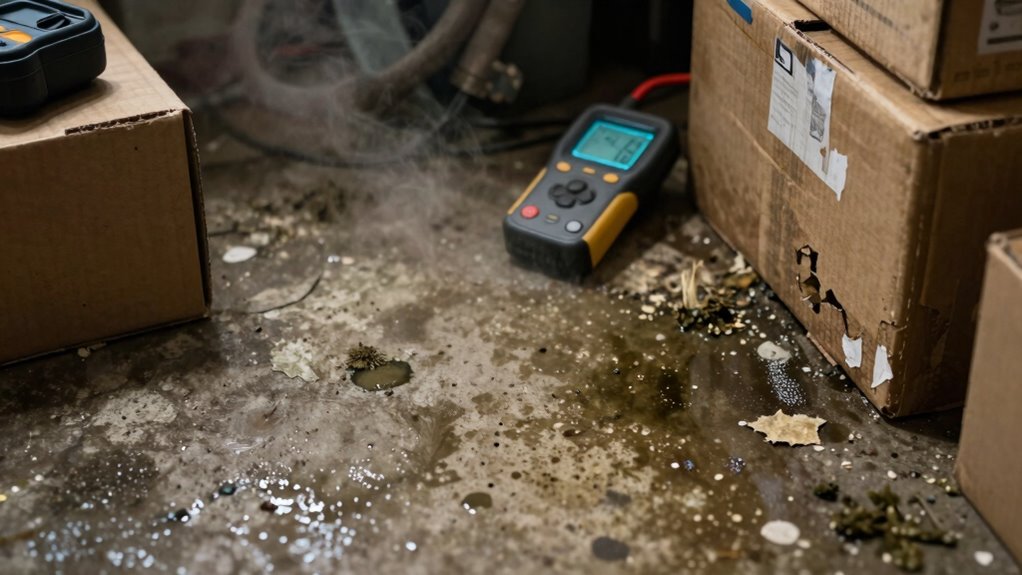
Ever noticed a musty smell lingering in your basement? That odor is often a sign of excess moisture, which can lead to mold growth and structural damage if left unchecked. To tackle this issue, you need a straightforward plan that quickly identifies and reduces moisture sources. One of the most effective steps is to focus on ventilation improvements. Improving airflow helps remove damp air and replaces it with drier, fresher air, making your basement less hospitable for mold and mildew. You might consider installing exhaust fans, improving existing vents, or adding windows that can be opened to increase natural airflow. These simple upgrades can considerably reduce humidity levels and prevent moisture buildup, which is essential for mold prevention.
Next, you’ll want to perform a quick visual inspection. Look for any signs of condensation on walls, floors, or windows. Water stains, peeling paint, or warped surfaces are clues that moisture is present. Check for leaks in pipes or plumbing fixtures, as even small drips can contribute to persistent dampness. If you find any standing water or puddles, address the source immediately. Remember, stagnant water is a breeding ground for mold and bacteria, so quick removal is key. Also, pay attention to areas where the foundation might be cracked or compromised; these spots can allow groundwater to seep in, increasing moisture levels. Understanding moisture management techniques can significantly help prevent ongoing issues. Incorporating proper drainage strategies around your home can further reduce moisture intrusion from outside sources. Additionally, understanding the role of indoor humidity control can help you maintain optimal moisture levels. Regularly monitoring moisture levels with a moisture meter can provide early warnings of developing problems. Using moisture barriers on floors and walls can also help prevent moisture seepage from the ground.
To find moisture fast, bring in a moisture meter if you have one, or simply feel for dampness along walls and floors. A high moisture reading indicates a problem that needs urgent attention. If you notice any musty smells, test for mold spores using a basic mold test kit, which can help you determine if mold is present and in need of professional removal. At the same time, ensure that your basement’s drainage system is functioning properly, directing water away from your foundation. Proper grading around your home can prevent rainwater from pooling near the basement walls.
Once you identify the moisture source, take immediate action to dry out the space. Use dehumidifiers to extract excess humidity, and run fans to circulate air. If you’ve discovered mold, clean affected surfaces with a mold-killing solution, or hire professionals if the infestation is extensive. Regularly maintaining ventilation and checking for leaks will help keep moisture at bay, ensuring your basement stays dry and odor-free. This proactive approach not only eliminates odors but also safeguards your home’s foundation and air quality, giving you peace of mind.
As an affiliate, we earn on qualifying purchases.
Frequently Asked Questions
How Often Should I Perform the Basement Odor Checklist?
You should perform the basement odor checklist monthly to effectively monitor mold prevention and maintain good air quality. Regular inspections help catch moisture issues early, preventing mold growth and musty smells. By staying consistent, you guarantee your basement stays dry and odor-free, improving overall air quality. Make it a habit to check for signs of dampness, leaks, or mold, so you can address problems promptly and keep your space safe and healthy.
Can These Methods Prevent Future Basement Odors?
Imagine your basement as a modern-day fortress—these methods do prevent future odors. By focusing on mold prevention and ensuring good air circulation, you keep moisture at bay, which is the main culprit behind bad smells. Regularly inspecting for leaks, using dehumidifiers, and ventilating properly help maintain fresh air. Staying proactive with these steps wards off odors, making your basement a cleaner, healthier space over time.
Are There Eco-Friendly Options for Moisture Detection?
Yes, there are eco-friendly options for moisture detection. You can use eco-friendly sensors made from sustainable materials that detect humidity levels without harmful chemicals. Natural remedies like charcoal or silica gel also absorb excess moisture effectively. These options help you maintain a dry basement while staying environmentally conscious. Using eco-friendly sensors and natural remedies guarantees you protect your home and the planet simultaneously.
What Are the Health Risks of Persistent Basement Moisture?
Persistent basement moisture can seriously impact your indoor air quality, leading to health risks like allergies, asthma, and respiratory issues. Mold growth thrives in damp environments, releasing spores that you breathe in daily. If moisture isn’t addressed promptly, these mold spores can cause long-term health problems, especially for sensitive individuals. Regularly checking for excess moisture helps protect your indoor air and keeps mold growth at bay, safeguarding your health.
How Long Does It Typically Take to Eliminate Basement Odors?
It typically takes a few days to a week to eliminate basement odors, depending on the severity. To speed up the process, improve air circulation by opening windows and using fans. Additionally, place a dehumidifier in the right spot—preferably in the center of the basement—to effectively reduce moisture. Consistent air flow and moisture control are key to freshening up your basement quickly.
Conclusion
Don’t let basement odors get the best of you. With this quick checklist, you can spot moisture problems early and keep your space fresh. Even if it seems like a small issue, addressing it now prevents bigger, costlier problems later. Remember, staying proactive is key—so don’t hesitate to check regularly. You’ve got the tools to keep your basement dry and odor-free, making it a more enjoyable, healthier space for everyone.
Fall yard work Picks
leaf blowers
As an affiliate, we earn on qualifying purchases.