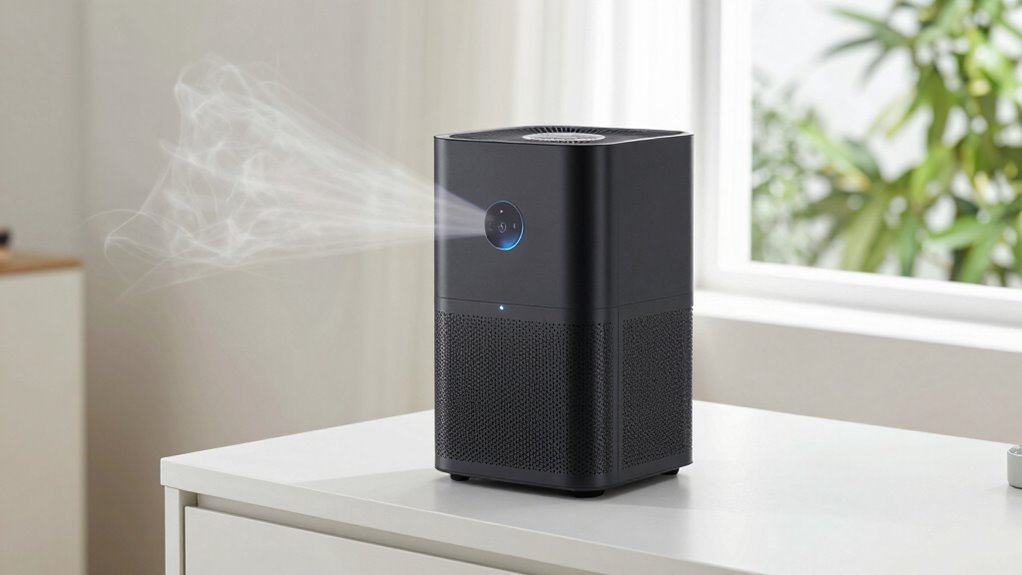
An air purifier with auto mode sensor takes the guesswork out of clean air: a built-in particle sensor reads your room’s air quality in real time and adjusts fan speed on its own, ramping up when someone cooks or a pet sheds and settling back down when the air is clear. In this category, the Coway Mighty AP-1512HH earns my best overall spot for pairing one of the most responsive auto modes with quiet operation and modest filter costs. The WINIX 5520 stands out for very large rooms where a single smaller unit would struggle, and the DREO 338 adds a real-time PM2.5 display plus app control for buyers who want visibility into what the sensor is actually detecting. The main tradeoff you’ll face is sensor quality versus coverage claims: some budget models advertise enormous square footage but have sluggish sensors that barely react, while premium picks read the air accurately but cost more to run year after year. Keep reading for the full breakdown of all 12 models.

Get garden gear delivered free with Prime
- Fast, free delivery on millions of items
- Prime Video, Amazon Music and more included
- Member-only deals all year
Complete the kit

Key Takeaways
- The Coway Mighty’s auto mode reacts faster to real air quality changes than any other compact unit here, which is why it beat larger-coverage rivals for best overall despite its modest size.
- Square-footage claims like 2,590 or 3,000 ft² on the DBFIT and WESTHEY models reflect single-air-exchange math in ideal conditions, not real-world performance in a typical open-plan home — cut those numbers roughly in half for continuous purification.
- A visible PM2.5 readout (DREO 338, DBFIT, Ecoself HAP602) makes auto mode trustworthy; units without a display force you to trust a fan-speed change you may not hear on low settings.
- Washable pre-filters and filters (DBFIT AP300, WESTHEY) lower long-term costs but add a maintenance chore most buyers underestimate — expect to rinse and fully dry them every few weeks.
- Budget picks under the AROEVE and MEGAWISE level deliver the auto-mode feature on paper, but their sensors are slower and less granular, making them better for bedrooms than living rooms with fluctuating air quality.
| WINIX 5520 Air Purifier for Large Rooms |  | Best Overall | Brand: WINIX | Coverage: 1882 sq ft in 1 hour (AHAM Verified: 392 sq ft) | Filtration: 4-stage: Washable Fine Mesh Pre-Filter, Odor Control Carbon Filter, True HEPA, PlasmaWave | VIEW ON AMAZON | See Our Full Breakdown |
| AROEVE Air Purifier with Air Quality Sensor, Auto Mode (AP04, White) |  | Best Budget Pick | Model: AP04 | Filtration: High-efficiency filter, 0.3 microns | Coverage Area: 219 ft² / 20 m² | VIEW ON AMAZON | See Our Full Breakdown |
| Levoit Core 200S-P Smart Air Purifier |  | Best Smart Home Integration | Brand: Levoit | Coverage Area: 140 ft² | Air Changes Per Hour: 4.8 | VIEW ON AMAZON | See Our Full Breakdown |
| MEGAWISE H13 HEPA Air Purifier with Smart Sensor and Sleep Mode |  | Best Lightweight Option | Filter Type: H13 HEPA four-stage filter | Particle Capture: 99.97% of particles as small as 0.3 microns | Sensor: Smart PM2.5 sensor | VIEW ON AMAZON | See Our Full Breakdown |
| DBFIT H13 True HEPA Air Purifier for Large Rooms |  | Best for Large Spaces | Model: AP-M1419 | Coverage Area: Up to 2590 ft² | Room Refresh: 210 ft² in 8 minutes | VIEW ON AMAZON | See Our Full Breakdown |
| DREO Air Purifier for Home, AHAM Verified, PM2.5 Monitor, Auto & Turbo Modes (Dreo 338) |  | Best for Small Rooms and Bedside Use | Certification: AHAM Verified, ENERGY STAR | CADR: 115 CFM | Coverage (4.8 ACH): 178 sq ft | VIEW ON AMAZON | See Our Full Breakdown |
| DBFIT AP300 Double-Sided HEPA Air Purifier with Washable Pre-Filter, 3000 sq ft Coverage |  | Best for Whole-Floor Airflow | Coverage Area: Up to 3000 sq ft (1 ACH) | Rapid Cleaning: 533 sq ft in 10 minutes | Filtration: Dual H13 HEPA, activated carbon, washable pre-filter | VIEW ON AMAZON | See Our Full Breakdown |
| Winix 5510 Smart True HEPA Air Purifier with App Support |  | Best Smart-Home Pick | AHAM Verified Coverage: 392 sq ft | Maximum Coverage: 1,882 sq ft in 1 hour | Filtration: True HEPA, Advanced Odor Control carbon, washable mesh pre-filter | VIEW ON AMAZON | See Our Full Breakdown |
| WESTHEY Air Purifier for Large Rooms with Washable HEPA Filter and Auto Mode |  | Best Low-Maintenance Value | Coverage Area: Up to 1,650 sq ft | Air Changes per Hour: 6 in 275 sq ft | Filter Type: Washable H13 HEPA | VIEW ON AMAZON | See Our Full Breakdown |
| MOOKA PR1 HEPA Air Purifier for Large Rooms up to 2200 sq ft |  | Best for Pet Households | Coverage Area: Up to 2200 sq ft | Filtration: 4-stage with washable pre-filter | Air Quality Sensor: PM2.5 with real-time display | VIEW ON AMAZON | See Our Full Breakdown |
| COWAY Mighty AP-1512HH(W) HEPA Air Purifier, White |  | Best Trusted All-Rounder | Model: Mighty AP-1512HH(W) | Color: White | Coverage: Up to 1,748 sq ft in 60 minutes | VIEW ON AMAZON | See Our Full Breakdown |
| Ecoself HAP602 Air Purifier for Large Rooms, 2,400 ft² Coverage, 3-Stage True HEPA Filter, PM2.5 Real-Time Air Quality Display, White |  | Best for Light Sleepers | Model: HAP602 | Coverage Area: 2,400 sq ft / 223 m² | Filtration: 3-Stage True HEPA | VIEW ON AMAZON | See Our Full Breakdown |
| air purifier with auto mode sensor | Noise Level | Coverage Area | Filtration | Particle Capture |
|---|---|---|---|---|
| WINIX 5520 Air Purifier for La | 23.5 dB on lowest speed | — | 4-stage: Washable Fine Mesh Pre-Filter, Odor Control Carbon Filter, True HEPA, PlasmaWave | 99.99% of particles as small as 0.01 microns |
| AROEVE Air Purifier with Air Q | — | 219 ft² / 20 m² | High-efficiency filter, 0.3 microns | — |
| Levoit Core 200S-P Smart Air P | As low as 27 dB | 140 ft² | — | 99.97% of particles 0.1-0.3 microns |
| MEGAWISE H13 HEPA Air Purifier | 24 dB | — | — | 99.97% of particles as small as 0.3 microns |
| DBFIT H13 True HEPA Air Purifi | As low as 15 dB in sleep mode | Up to 2590 ft² | — | 99.97% of airborne particles as small as 0.3 microns |
| DREO Air Purifier for Home | — | — | — | — |
| DBFIT AP300 Double-Sided HEPA | As low as 15 dB (sleep mode) | Up to 3000 sq ft (1 ACH) | Dual H13 HEPA, activated carbon, washable pre-filter | 99.97% down to 0.3 microns |
| Winix 5510 Smart True HEPA Air | 23.5 dB on slowest speed | — | True HEPA, Advanced Odor Control carbon, washable mesh pre-filter | 99.99% down to 0.01 microns |
| WESTHEY Air Purifier for Large | As low as 15 dB | Up to 1,650 sq ft | — | — |
| MOOKA PR1 HEPA Air Purifier fo | As low as 26 dB | Up to 2200 sq ft | 4-stage with washable pre-filter | — |
| COWAY Mighty AP-1512HH(W) HEPA | — | — | — | — |
| Ecoself HAP602 Air Purifier fo | — | 2,400 sq ft / 223 m² | 3-Stage True HEPA | — |
More Details on Our Top Picks
WINIX 5520 Air Purifier for Large Rooms
This option stands out for pairing a real-time air quality sensor with a genuinely sophisticated auto mode — the machine doesn’t just react, it escalates fan speed as conditions change and drops into a 23.5 dB Sleep Mode the moment the room darkens. The four-stage system, including washable pre-filter and carbon layer, keeps long-term costs lower than the Levoit Core 200S-P, which locks you into proprietary filters for a much smaller room. Compared with the DBFIT AP-M1419, the Winix trades raw coverage claims for stronger certifications: AHAM Verified and UL listings that back up its numbers. The honest tradeoff is that its AHAM verified coverage is 392 sq ft, not the headline 1882 sq ft, which assumes a full hour of air exchange.
Pros:- True HEPA filtration captures 99.99% of particles as small as 0.01 microns
- Smart sensors and Auto Mode adjust fan speed automatically in real time
- Ultra-quiet 23.5 dB Sleep Mode that activates when the room darkens
- Washable pre-filter and carbon filter extend HEPA life and cut replacement costs
Cons:- AHAM verified coverage is only 392 sq ft despite the 1882 sq ft headline
- Full 1882 sq ft coverage requires a full hour of operation
- Replacement filters represent an ongoing expense
Best for: Pet owners and allergy sufferers in medium rooms who want certified performance and hands-off automation
Not ideal for: Buyers with genuinely huge open-plan spaces — verified coverage stops at 392 sq ft, so the DBFIT AP300 makes more sense there
- Brand:WINIX
- Coverage:1882 sq ft in 1 hour (AHAM Verified: 392 sq ft)
- Filtration:4-stage: Washable Fine Mesh Pre-Filter, Odor Control Carbon Filter, True HEPA, PlasmaWave
- Particle Capture:99.99% of particles as small as 0.01 microns
- Noise Level:23.5 dB on lowest speed
- Smart Features:Air Quality Indicator, Auto Mode, Sleep Mode, Winix Smart App
- Certifications:AHAM Verified, UL Certified
Our verdict“The most complete auto-mode package here for medium rooms, provided you buy it for 400 sq ft spaces rather than the headline coverage figure.”
AROEVE Air Purifier with Air Quality Sensor, Auto Mode (AP04, White)
For anyone who wants a working auto mode with a dust sensor without paying smart-home prices, this model makes the most sense. Its color-changing indicator — blue, yellow, red — gives you the same at-a-glance air quality readout as pricier units like the MEGAWISE, but in a simpler package aimed at rooms around 219 ft². It refreshes air five times per hour, which actually beats the Levoit Core 200S-P’s 4.8 changes in a slightly larger space. The tradeoff is straightforward: there’s no app, no voice control, and filtration stops at 0.3 microns rather than the ultra-fine capture the WINIX 5520 offers. The tool-free filter replacement keeps maintenance painless, though the 3-5 month filter cycle is a cost to budget for.
Pros:- Built-in air quality sensor with an easy-to-read blue/yellow/red indicator
- Quiet sleep mode dims all lights for undisturbed nights
- Five air changes per hour in rooms up to 219 ft²
- Simple, tool-free filter replacement
Cons:- Filters need replacement every 3-5 months, adding ongoing cost
- No app, remote, or voice control options
- Filtration rated only to 0.3 microns, coarser than premium picks
Best for: First-time buyers furnishing a bedroom or small apartment who want sensor-driven automation on a budget
Not ideal for: Tech-minded buyers wanting app or voice control — the Levoit Core 200S-P covers that better
- Model:AP04
- Filtration:High-efficiency filter, 0.3 microns
- Coverage Area:219 ft² / 20 m²
- Air Changes Per Hour:5x
- Timer Options:8H / 12H / 24H
- Fan Speeds:1 / 2 / Auto
- Air Quality Indicator:Blue / Yellow / Red
- Filter Replacement Interval:Every 3-5 months
Our verdict“A sensible, no-frills entry into auto-mode purification for small rooms where the sensor does the thinking for you.”
Levoit Core 200S-P Smart Air Purifier
This pick makes the most sense for buyers whose priority is app and voice control rather than raw sensor sophistication. Unlike the AROEVE AP04 or MEGAWISE, which rely entirely on onboard controls, the Core 200S-P slots into an existing smart home — schedule it, adjust it from the couch, or run it by voice. The 360° air intake is a genuine design advantage for tight spaces like nurseries and dorm rooms, pulling air from every side instead of one direction. Its 27 dB floor is slightly louder than the MEGAWISE’s 24 dB, so it’s quiet but not the quietest here. The tradeoff: 140 ft² of coverage limits it to genuinely small rooms, and the AHAM Verifide certification covers a compact footprint that larger units like the WINIX 5520 easily exceed.
Pros:- Captures 99.97% of dust, pollen, and pet dander at 0.1-0.3 microns
- Smart and voice control for scheduling and remote operation
- 360° air intake suits cramped placements like nightstands and desks
- AHAM Verifide certification
Cons:- Best suited only to rooms up to 140 ft²
- Requires genuine Levoit replacement filters
- Needs regular filter changes to maintain rated performance
Best for: Smart-home owners who want voice and app control of air quality in a bedroom, nursery, or dorm room
Not ideal for: Living rooms or open-plan spaces — the 140 ft² coverage ceiling is a real limitation
- Brand:Levoit
- Coverage Area:140 ft²
- Air Changes Per Hour:4.8
- Noise Level:As low as 27 dB
- Air Intake:360°
- Filtration System:Nylon Pre-Filter, High-Efficiency Activated Carbon Filter, Main Filter
- Particle Capture:99.97% of particles 0.1-0.3 microns
- Control Type:Smart and Voice Control
- Certification:AHAM Verifide
Our verdict“The clear choice if automation through your phone or voice assistant matters more than coverage area.”
MEGAWISE H13 HEPA Air Purifier with Smart Sensor and Sleep Mode
At 2.6 pounds, this is the unit you can move from bedroom to home office without a second thought — something no other pick here can claim. Its PM2.5 sensor with green/yellow/red indicators drives an Auto mode comparable to the AROEVE AP04’s, but it pairs that with a true H13-grade filter and a slightly quieter 24 dB sleep floor that dims the lights. Compared with the Levoit Core 200S-P, it gives up all smart connectivity, which is the honest tradeoff for the portability and lighter price. What it can’t do is fill a big room — unlike the DBFIT AP-M1419, it’s built for the space it’s sitting in, not the whole floor. Filter replacement details are also vaguer than I’d like, which makes long-term cost harder to predict.
Pros:- H13 HEPA four-stage filtration captures 99.97% of particles down to 0.3 microns
- Smart PM2.5 sensor with automatic fan adjustment
- Quiet 24 dB sleep mode with dimmed indicator lights
- Featherweight 2.6 lb design for easy room-to-room use
Cons:- Not powerful enough for larger spaces
- No app or remote control features
- Filter replacement details are not clearly specified
Best for: Renters and multi-room users who want to carry one purifier wherever they spend time
Not ideal for: Large or open-plan spaces — the compact design can’t move enough air
- Filter Type:H13 HEPA four-stage filter
- Particle Capture:99.97% of particles as small as 0.3 microns
- Sensor:Smart PM2.5 sensor
- Air Quality Indicators:Green, yellow, red
- Modes:Auto, Sleep
- Noise Level:24 dB
- Weight:2.6 lbs
Our verdict“The grab-and-go choice for people who want sensor-driven purification that travels with them between rooms.”
DBFIT H13 True HEPA Air Purifier for Large Rooms
When the job is a big living area or open floor plan, this model’s 2590 ft² coverage claim and quick 210 ft² refresh in eight minutes put it ahead of everything else in this batch — even the WINIX 5520’s one-hour, 1882 sq ft figure. The PM2.5 display is a step up from the AROEVE’s simple color lights, showing actual numbers you can watch respond in real time. Five fan speeds plus a 15 dB sleep mode give it the widest operating range here, and the washable pre-filter helps stretch main filter life. The tradeoffs are real: auto mode will ramp the fan audibly when air quality dips, the pre-filter needs regular cleaning, and filters still run 3-6 months. Unlike the WINIX, it lacks third-party AHAM verification of its coverage numbers.
Pros:- Covers large spaces up to 2590 ft² with rapid 8-minute room refresh
- H13 True HEPA filtration captures dust, pollen, pet dander, and smoke
- Very quiet 15 dB sleep mode with lights off
- Washable pre-filter extends main filter life
Cons:- Auto mode can raise fan speed and noise when air quality drops
- Replacement filters needed every 3-6 months
- Pre-filter requires regular cleaning to stay effective
Best for: Owners of large homes or open-plan living areas who need whole-room air changes and want a numeric PM2.5 readout
Not ideal for: Light sleepers in studios — auto mode’s fan ramp-ups when air quality drops can be disruptive at night
- Model:AP-M1419
- Coverage Area:Up to 2590 ft²
- Room Refresh:210 ft² in 8 minutes
- Filtration System:3-stage H13 True HEPA with activated carbon
- Particle Capture:99.97% of airborne particles as small as 0.3 microns
- Fan Speeds:5 modes: Auto, Low, Med, High, Sleep
- Display:PM2.5 air quality display
- Noise Level:As low as 15 dB in sleep mode
- Timer:1-12 hours
Our verdict“The strongest large-room performer in this lineup, best for buyers who value coverage and data over certified small-room refinement.”
DREO Air Purifier for Home, AHAM Verified, PM2.5 Monitor, Auto & Turbo Modes (Dreo 338)
This DREO model stands out for its verified, honest coverage numbers: AHAM certification means the 178 sq ft rating at 4.8 air changes per hour is independently checked, not marketing math. That makes it more trustworthy than the DBFIT AP300’s headline 3000 sq ft figure, which is based on a single air change per hour. The real-time PM2.5 display with a four-color indicator gives at-a-glance feedback in auto mode, and the HyperSilent sleep mode with lights-off operation makes it a strong bedside option. Compared with the MOOKA PR1, the DREO trades raw square footage for tighter, verified performance in a compact footprint. The built-in scent diffuser divides opinion — anyone sensitive to fragrance should note it’s baked into the design, unlike the Levoit Core 200S-P which skips aromatherapy entirely.
Pros:- AHAM Verified 115 CFM CADR with independently confirmed coverage
- Real-time PM2.5 monitoring with clear AQI display and 4-color indicator
- Quiet HyperSilent sleep mode with display lights off
- ENERGY STAR certified at just 125 kWh annual energy use
Cons:- Fast air refresh coverage is limited to rooms up to 178 sq ft
- Large-room coverage of 856 sq ft is based on only one air change per hour
- Scent diffuser may bother fragrance-sensitive users
Best for: Apartment dwellers and bedroom users who want certified performance in spaces under 200 sq ft
Not ideal for: Owners of large open-plan living areas — the 4.8 ACH coverage tops out at 178 sq ft
- Certification:AHAM Verified, ENERGY STAR
- CADR:115 CFM
- Coverage (4.8 ACH):178 sq ft
- Filter:3-in-1 pre-filter, high-efficiency filter, activated carbon
- Air Quality Sensor:PM2.5 with AQI display (1-999)
- Modes:Auto, Turbo, Sleep, Normal with 4 fan speeds
- Annual Energy Use:125 kWh
Our verdict“This pick makes the most sense for buyers who value certified small-room performance and honest specs over inflated square-footage claims.”
DBFIT AP300 Double-Sided HEPA Air Purifier with Washable Pre-Filter, 3000 sq ft Coverage
What separates the AP300 from everything else in this lineup is its double-sided intake architecture. Instead of pulling air from one face like the WESTHEY’s 360° design or the Winix 5510’s front intake, it draws from two sides, which moves meaningfully more air in open floor plans — a 533 sq ft room cycles in roughly 10 minutes. The washable pre-filter is a genuine cost saver, catching pet hair and dust before it clogs the H13 HEPA layer, and the 15 dB sleep mode undercuts the MOOKA PR1’s 26 dB floor. The tradeoff is size and placement: dual intake means it needs clearance on two sides, so it won’t tuck against a wall like slimmer tower units. The PM2.5 display and auto mode respond well, but the 3000 sq ft figure assumes a single air change per hour, so temper expectations in genuinely huge spaces.
Pros:- Double-sided intake refreshes a 533 sq ft room in about 10 minutes
- Washable pre-filter extends the life of dual H13 HEPA and carbon layers
- Extremely quiet 15 dB sleep mode with display lights off
- Full feature set including timer, child lock, and filter reminder
Cons:- Filters still need replacement every 3-6 months despite the washable pre-filter
- Requires placement clearance on two sides for the intake design to work
- 3000 sq ft claim reflects one air change per hour, not rapid cleaning
Best for: Pet owners in open-concept homes who need maximum airflow and can place a unit away from walls
Not ideal for: Small or crowded rooms — dual-side intake needs clearance, and the coverage is wasted on bedrooms
- Coverage Area:Up to 3000 sq ft (1 ACH)
- Rapid Cleaning:533 sq ft in 10 minutes
- Filtration:Dual H13 HEPA, activated carbon, washable pre-filter
- Particle Capture:99.97% down to 0.3 microns
- Air Quality Monitoring:PM2.5 sensor and display with auto mode
- Noise Level:As low as 15 dB (sleep mode)
- Timer:2, 4, or 8 hours
Our verdict“This model is better suited than any other here for open floor plans where raw air circulation matters more than compact size.”
Winix 5510 Smart True HEPA Air Purifier with App Support
The 5510 is the only option in this batch with full app control, which changes the ownership experience: you can check air quality, adjust modes, and schedule runs from anywhere instead of walking to the unit like you must with the WESTHEY or MOOKA PR1. Its filtration story is also unusually strong — 99.99% capture down to 0.01 microns beats the 0.3-micron claims of the H13 units here, and the washable fine mesh pre-filter plus Advanced Odor Control carbon stage targets VOCs and cooking smells specifically. Auto mode leans on a built-in sensor with an LED real-time readout, and the dim-room sleep mode is genuinely automatic rather than button-triggered. Compared with the DREO 338, you give up the scent diffuser and PM2.5 numeric display, and the 1,882 sq ft maximum assumes a full hour of runtime — the AHAM-verified figure of 392 sq ft is the number to plan around.
Pros:- Smart app control for remote operation, scheduling, and monitoring
- True HEPA captures 99.99% of allergens down to 0.01 microns
- Washable fine mesh pre-filter and odor-focused carbon stage
- AHAM Verified and UL Certified with automatic sleep mode in dark rooms
Cons:- App features require a compatible smartphone and initial setup
- 1,882 sq ft maximum coverage depends on a full hour of runtime
- No numeric PM2.5 readout — just an LED quality indicator
Best for: Connected-home users who want remote monitoring and scheduling from their phone
Not ideal for: Buyers who avoid app setup or don’t carry a smartphone — key convenience features require both
- AHAM Verified Coverage:392 sq ft
- Maximum Coverage:1,882 sq ft in 1 hour
- Filtration:True HEPA, Advanced Odor Control carbon, washable mesh pre-filter
- Particle Capture:99.99% down to 0.01 microns
- Connectivity:Winix Smart App
- Noise Level:23.5 dB on slowest speed
- Certifications:AHAM Verified, UL Certified
Our verdict“If controlling your air purifier from the couch or office matters, this option stands out as the connected choice with the finest-particle filtration in the group.”
WESTHEY Air Purifier for Large Rooms with Washable HEPA Filter and Auto Mode
Where the WESTHEY earns its place is long-term running cost: the H13 HEPA filter itself is washable, which no other product in this roundup can claim — the DBFIT AP300 and MOOKA PR1 only let you rinse the pre-filter while replacing the main filter every 3-6 months. The real-time PM2.5 display with color-coded prompts drives auto mode cleanly, ramping the fan when air quality dips, and the 360° intake plus 6 air changes per hour in a 275 sq ft room means real ventilation-grade turnover in a bedroom or office. It runs at just 15 dB in sleep mode, matching the DBFIT AP300 and beating the Winix 5510’s 23.5 dB. The compromise is connectivity — there’s no app, voice control, or even a remote, so if the Winix 5510’s smart features appeal to you, this one will feel manual. The aromatherapy tray and ambient lighting are bedroom-friendly extras some buyers will simply ignore.
Pros:- Washable H13 HEPA filter reduces ongoing replacement costs
- 360° intake delivers 6 air changes per hour in a 275 sq ft room
- Real-time PM2.5 display drives responsive auto mode
- Ultra-quiet 15 dB sleep mode with timer and night light
Cons:- No smart app, voice control, or remote included
- Recommended filter interval of 3-6 months still applies with heavy use
- Aromatherapy tray and color lighting add nothing for pure-performance buyers
Best for: Budget-conscious buyers who want to avoid recurring filter costs while still getting auto mode and a PM2.5 display
Not ideal for: Smart-home enthusiasts — there’s no app, remote, or voice control of any kind
- Coverage Area:Up to 1,650 sq ft
- Air Changes per Hour:6 in 275 sq ft
- Filter Type:Washable H13 HEPA
- Particle Removal:99.98% of 0.3-micron particles
- Air Quality Display:Real-time PM2.5 with color-coded prompts
- Noise Level:As low as 15 dB
- Timer:2, 4, 6, or 8 hours
Our verdict“This pick makes the most sense for anyone who wants capable auto-mode purification without subscriptions to a filter-replacement treadmill.”
MOOKA PR1 HEPA Air Purifier for Large Rooms up to 2200 sq ft
The PR1’s dedicated Pet Mode is a feature nobody else in this lineup offers — it’s tuned specifically for hair and dander loads rather than being just another fan speed. Paired with a 4-stage filtration stack and a washable pre-filter that catches fur before it burdens the HEPA layer, it’s the most purpose-built choice here for multi-pet homes, edging out the DBFIT AP300’s general-purpose airflow approach. The PM2.5 sensor with real-time display feeds a responsive auto mode, and the child lock is a thoughtful touch for households with toddlers drawn to buttons. Against the WESTHEY, it’s slightly louder at 26 dB versus 15 dB in sleep mode, and the main filter still needs replacing every 3-6 months despite the washable pre-filter. Also worth knowing: the sensor needs periodic cleaning to stay accurate, which is one more maintenance task fragrance-free, pet-free buyers may not want to take on.
Pros:- Dedicated Pet Mode targets pet hair and odors specifically
- 4-stage filtration with washable pre-filter extends filter life
- PM2.5 sensor with real-time display drives auto mode
- Child lock, timer, and filter replacement reminder included
Cons:- Filters need replacement every 3-6 months
- Sleep mode floor of 26 dB is louder than the 15 dB competitors
- PM2.5 sensor requires regular cleaning to maintain accuracy
Best for: Families with cats or dogs who battle constant hair, dander, and pet odors
Not ideal for: Light sleepers in small bedrooms — 26 dB minimum noise is the loudest sleep mode in this group
- Coverage Area:Up to 2200 sq ft
- Filtration:4-stage with washable pre-filter
- Air Quality Sensor:PM2.5 with real-time display
- Fan Modes:Sleep, I, II, III, Auto, Pet
- Noise Level:As low as 26 dB
- Special Features:Pet Mode, timer, child lock, aroma function
- Certifications:CARB, ETL, DOE, FCC
Our verdict“For pet-heavy households, this option stands out as the only unit here built around animal-specific air problems rather than generic allergens.”
COWAY Mighty AP-1512HH(W) HEPA Air Purifier, White
The Coway Mighty AP-1512HH earns its place as the most proven design in this lineup, with a four-stage filtration stack that goes beyond the standard pre-filter/HEPA pairing. Where the Ecoself HAP602 stops at three stages, Coway adds a bipolar device and dedicated deodorization filter, which matters if cooking smells or VOCs are your main concern rather than just dust and pollen.
The real-time air quality indicator drives auto mode with an eco setting that drops fan speed to near-silent when air is clean — a small energy win the DREO 338 matches only with its turbo-focused approach. The washable pre-filter also trims long-term costs compared with the Ecoself, whose filters are replace-only every 3-6 months.
The tradeoff: its 1,748 sq ft rating is achieved over a full hour, so in very large open rooms the DBFIT AP300 or Ecoself will cycle air faster. Some buyers also prefer to skip the bipolar ionization stage entirely.
Pros:- Four-stage filtration captures allergens, odors, VOCs, and 99.97% of 0.3 micron particles
- Washable pre-filter and filter alerts keep maintenance simple and affordable
- Auto mode with eco setting adjusts performance and saves energy when air is clean
- Long-established design with a 3-year warranty for peace of mind
Cons:- 1,748 sq ft coverage takes a full hour to achieve, slower than competing large-room units
- Bipolar ionization stage may not suit buyers who prefer pure mechanical filtration
- Filter replacements are an ongoing cost despite the washable pre-filter
Best for: Allergy sufferers in mid-to-large homes who want proven multi-stage filtration with low ongoing maintenance costs
Not ideal for: Buyers in open-concept spaces above 2,000 sq ft — larger units like the DBFIT AP300 will refresh air noticeably faster
- Model:Mighty AP-1512HH(W)
- Color:White
- Coverage:Up to 1,748 sq ft in 60 minutes
- Filtration System:Washable pre-filter, deodorization filter, bipolar device, HEPA filter
- Particle Reduction:99.97% of 0.3 micron particles
- Features:Air quality monitor, auto mode, eco mode, timer, filter indicator
- Warranty:3 years
Our verdict“This is the pick for buyers who want a battle-tested purifier with the most complete filtration stack here, as long as their space stays under roughly 1,700 sq ft.”
Ecoself HAP602 Air Purifier for Large Rooms, 2,400 ft² Coverage, 3-Stage True HEPA Filter, PM2.5 Real-Time Air Quality Display, White
If bedroom noise is the deciding factor, the Ecoself HAP602 makes the strongest case in this roundup. Its 20 dB sleep mode is quieter than anything else here — the Coway Mighty is hushed in eco mode but doesn’t advertise a rating this low, and large-capacity rivals like the DBFIT AP300 trade quiet for raw airflow.
The PM2.5 sensor with color-coded display is more transparent than a simple indicator light: you see actual particle readings, not just a color guess, which builds trust in auto mode decisions. Coverage is generous too — 2,400 sq ft refreshed every 30 minutes, nearly matching the DBFIT’s headline numbers.
Tradeoffs are real, though. The filter is replace-only every 3-6 months, with no washable pre-filter to stretch intervals, so running costs climb past the Coway. And despite the large coverage claim, it won’t pull pet hair off floors and fabrics — pair it with regular vacuuming.
Pros:- Ultra-quiet 20 dB sleep mode, the quietest operating rating in this lineup
- Real-time PM2.5 display with color-coded indicators gives actual particle readings
- 2,400 sq ft coverage with a 30-minute refresh cycle for large open spaces
- Child lock prevents kids or pets from changing settings
Cons:- Filters must be fully replaced every 3-6 months — no washable components to reduce cost
- Does not remove pet hair from floors and fabrics despite large-room marketing
- Only three manual fan speeds, fewer fine-grained options than competitors like the DREO 338’s four speeds
Best for: Light sleepers and bedroom-first buyers who want a real-time PM2.5 readout and whole-home coverage from one unit
Not ideal for: Pet owners dealing with shedding — it captures dander but won’t handle hair on floors, and replace-only filters add up
- Model:HAP602
- Coverage Area:2,400 sq ft / 223 m²
- Filtration:3-Stage True HEPA
- Airflow:360°
- Sensor:Built-in PM2.5 real-time display
- Noise Level (Sleep Mode):20 dB
- Fan Speeds:3 adjustable + auto mode
- Filter Replacement Interval:Every 3-6 months
- Color:White
Our verdict“The Ecoself HAP2 602 fits sleep-sensitive households that prioritize silent overnight operation and transparent air data over low running costs.”

How We Picked
Since the whole point of this roundup is the auto mode sensor, I evaluated each model first on how well its automation actually works: sensor responsiveness, whether the unit displays real-time readings, and how sensibly the fan adjusts between speeds rather than just toggling between low and turbo. Coverage came next — but filtered through real-world logic, meaning I compared CADR-style airflow against room size claims rather than taking marketing numbers at face value. A purifier that claims 3,000 ft² but cycles the air too slowly for that space fails the auto-mode promise, because the sensor reads clean air near the unit while the far corner stays dirty.
From there, I weighed long-term ownership costs (filter replacement price and frequency, washable pre-filters), noise behavior in auto and sleep modes, and extras like app control, PM2.5 displays, and diffusers. Models that combine accurate sensing with reasonable running costs ranked highest; big-coverage units with coarser sensors filled the large-room niches; and budget models landed last where their automation, while functional, is less precise. Every pick occupies a distinct role so the ordering reflects who each machine serves best, not a simple price ladder.
Factors to Consider When Choosing Air Purifier With Auto Mode Sensor
Auto mode is only as good as the sensor behind it, and the twelve models above vary widely in how well that loop actually works. Before you choose, here are the factors that separate a genuinely hands-off purifier from one you’ll end up controlling manually anyway.Sensor Quality and Feedback
The sensor is the heart of an auto-mode purifier, and there are real differences in this lineup. Some units use a basic dust sensor that reacts only to coarse particles, while others track PM2.5 — the fine particles from cooking, smoke, and pollen that matter most for health. A common mistake is buying a unit with auto mode but no display: without a readout, you can’t tell whether the sensor is detecting anything or whether the unit is just idling on low. If your air quality fluctuates a lot — cooking, pets, wildfire smoke season — prioritize models with a real-time PM2.5 display so you can verify the automation is working. Placement matters too; a sensor mounted on the intake side of the unit reads the air being cleaned, not the room average, so expect readings to drop faster near the machine than across the room.
Realistic Room Coverage
Manufacturers often quote coverage based on a single air exchange or a generously sized test chamber, which is why you’ll see claims like 2,200 to 3,000 ft² in this category. For continuous purification, the widely accepted standard is two air changes per hour, which roughly halves those headline numbers. A better approach: match the purifier to the room where it will actually live most of the time, not the largest space you might occasionally use it in. Overshooting coverage is fine — the unit just runs quieter — but undershooting means the sensor reads clean air at the intake while particles linger elsewhere. For open-plan homes, one large unit placed centrally usually beats two small units on opposite ends, because the shared sensor sees the whole space rather than a pocket of it.
Filter Costs and Maintenance Over Time
The purchase price is the smaller part of ownership; replacement filters typically run for six to twelve months and vary widely in cost between brands. Units with washable pre-filters extend the life of the HEPA layer by catching hair and dust first, but they only help if you actually rinse and fully dry them — a wet pre-filter reinstalled in a purifier can cause odor and mold issues. Check filter availability before buying, too: lesser-known brands sometimes have filters that are hard to find or discontinued within a couple of years. A common trap is choosing a cheap unit with proprietary filters that cost nearly as much as the purifier itself annually. If you’re buying for a bedroom you’ll use nightly, calculate three years of filter costs before comparing prices.
Noise in Auto and Sleep Modes
Because auto mode decides the fan speed for you, the unit’s quietest setting matters more than its loudest. A purifier that spikes to a noisy medium speed every time the sensor detects a dust bump will wake you at night, even if the sleep mode itself is whisper-quiet. Look for models where auto mode has gradual speed transitions rather than abrupt jumps, and check whether sleep mode dims or disables indicator lights — a bright PM2.5 display is useful by day and a nuisance at 2 a.m. Some units let you lock auto mode out of higher speeds at night, which is a genuinely useful feature this category’s best options offer. For light sleepers, sensor-based speed changes near the bed are worth testing during a return window.
Smart Features: Useful or Gimmick?
App support, scheduling, and voice control sound appealing but add cost and complexity that not every buyer needs. Where connectivity genuinely helps is remote monitoring — checking air quality in a nursery from downstairs, or running a purification cycle before you arrive home. Where it’s less useful: basic on/off scheduling you could handle with a smart plug. Diffuser pads, found on a couple of models here, are divisive — they add scent but can also mask the smell of a filter that needs replacing, and some scented pads interfere with your perception of whether the purifier is actually cleaning. Decide honestly whether you’ll use the app more than twice; if not, a well-built dumb unit with a great sensor usually delivers better cleaning per dollar.
Frequently Asked Questions
Does auto mode actually clean better than just running the fan on high all the time?
Auto mode doesn’t clean faster than a permanently high fan — nothing beats maximum airflow for raw purification speed. What it does is balance cleaning power against noise and energy use, running hard only when the sensor detects pollution and dropping to a quiet low speed afterward. Running on high continuously wears filters out faster and creates constant noise that most people won’t tolerate in living spaces or bedrooms. The practical result is that auto mode cleans nearly as well over a full day while being far more livable. The exception is during heavy smoke events, when manually locking the fan on high for a few hours is smarter than waiting for the sensor to cycle up and down.
Why does my purifier’s sensor sometimes show clean air when the room still smells?
Particle sensors detect dust, smoke, and pollen — not gas-phase odors like cooking smells, VOCs from paint, or pet odor molecules. That’s why a unit like the Coway Mighty with a dedicated odor sensor reacts to smells while many PM2.5-only units don’t, and why units relying on a basic dust sensor can seem unresponsive. Location also plays a role: the sensor samples air at the intake, so once the air near the unit is clean it throttles down even if odors persist across the room. For odor problems specifically, look for models with activated carbon volume and an odor or gas sensor, or expect to run manual mode when smells are the main issue.
Are the huge coverage claims like 2,500-3,000 ft² realistic for these auto-mode purifiers?
Those figures generally assume one air exchange per hour in an empty, closed room with ideal airflow — conditions almost no home matches. At the two air changes per hour most air-quality experts recommend, a unit rated for 3,000 ft² is more realistically suited to 1,200-1,500 ft² of open space. Walls, furniture, and high ceilings all reduce effective coverage further, and auto mode can compound the problem by slowing down once the air near the intake reads clean. My advice: buy coverage for the room you’re actually purifying, treat the large claims as a ceiling for occasional one-time deep cleans, and if you have a genuinely big open floor plan, position the unit centrally rather than against a wall.
Do I need a PM2.5 display, or is it just a gimmick?
A display isn’t required for auto mode to work, but it changes how much you can trust the automation. Without a readout, you’re relying on fan-speed changes you may not hear on quiet settings, and you have no way to confirm the sensor isn’t dusty or failing. A real-time PM2.5 number lets you verify the unit responded to cooking or vacuuming, spot when a filter is due for replacement because readings stop dropping, and compare rooms to decide where the purifier is most needed. The tradeoff is cost and, on some models, a light that can’t be fully dimmed at night. For bedrooms, look for units with a display-off or sleep-dim feature; for living areas, I’d treat the display as worth paying a modest premium for.
How often do I need to clean or replace the sensor itself?
Laser particle sensors draw in a small sample of air, and that inlet can accumulate dust over months, gradually making readings less accurate — the typical symptom is auto mode that never ramps up anymore. Most manufacturers recommend cleaning the sensor inlet every one to three months with a soft brush or low-pressure air, usually through a small grille on the side or back of the unit. Units with washable pre-filters tend to keep their sensors cleaner longer because less dust passes through the chassis. If your purifier’s auto mode seems sluggish despite visible dust in the room, a dirty sensor is the first thing to check before assuming the filter or the unit is failing. It’s a two-minute job that can restore responsiveness without any replacement parts.
Conclusion
Mapping these twelve models to buyer types makes the decision straightforward. For best overall, the Coway Mighty AP-1512HH is the pick — its auto mode is responsive, its odor sensor catches what particle-only sensors miss, and its running costs stay reasonable for years. The DREO 338 takes the best premium slot with its verified performance, real-time PM2.5 display, and app control for buyers who want visibility and remote management. For best value, the WINIX 5520 delivers large-room coverage and dependable auto mode at a mid-range price, while the AROEVE AP04 covers the entry level for smaller rooms.
For beginners, the Levoit Core 200S-P is the easiest onboarding — simple app setup, straightforward filters, and auto behavior you don’t have to tune. For specific needs: choose the DBFIT AP300 or WESTHEY if washable filters and big-space coverage with low maintenance are the priority; the MEGAWISE H13 if quiet sleep-mode automation for a bedroom matters most; and the Winix 5510 if app support combined with proven filtration is what you’re after. Whatever you pick, the deciding factor in this category is always the same: choose the sensor and automation you’ll actually trust, because an auto mode you second-guess is one you’ll end up overriding by hand.
Halloween Picks
halloween
As an affiliate, we earn on qualifying purchases.