TL;DR

Get garden gear delivered free — and shop member deals
- Fast, free delivery on millions of items
- Access to Prime Big Deal Days deals on October 6–7
- Prime Video, Amazon Music and more included
A Homes & Gardens report outlines five October steps to support backyard birds, based on advice from Birdbuddy in-house ornithologist Mary Mack Gray. Her recommendations include cleaning and reliably stocking feeders, leaving seed heads and leaf litter, making brush piles, and maintaining clean water. The source does not provide research findings or quantify how much these actions change bird numbers.
A Homes & Gardens report shares five October steps for helping backyard birds, drawing on advice from Mary Mack Gray, Birdbuddy’s in-house ornithologist. The recommendations focus on safe, dependable food and water, plus leaving parts of the garden less tidy to provide natural food and shelter as the season changes.
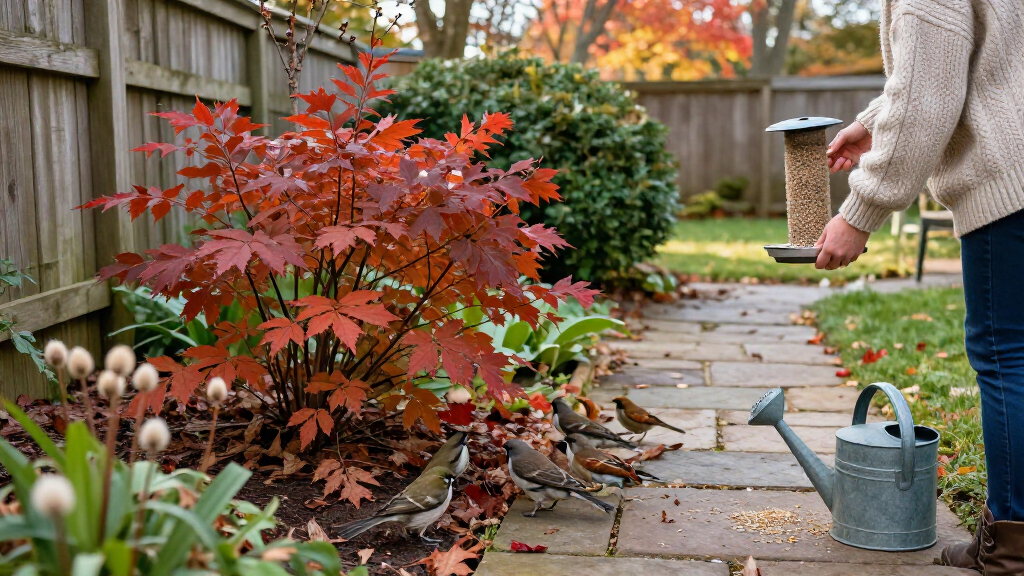
Gray recommends cleaning feeders thoroughly and keeping them stocked with high-energy foods such as suet, sunflower hearts and nuts, as part of helping backyard birds through fall. The report says damp, mild fall conditions can contribute to mold and fungal growth around feeders. Gray also suggests moving feeders to reduce debris beneath them and placing them out of direct sun to help protect food quality. The source does not specify a cleaning schedule or give detailed cleaning-product instructions.
Her other suggestions are to leave seed heads on plants such as coneflowers and black-eyed Susans, and to make or retain brush piles and leaf-litter areas, alongside plants that provide birds with food and shelter. The report says these can offer food, cover and places to forage. Gray notes that seed heads can also provide nesting material in spring, while leaf litter can shelter insects that ground-feeding birds may eat.
The fifth step is maintaining a clean source of water, including a bird bath—one of the helpful features in a migrating bird’s garden pit stop. The report highlights the potential value of water for migratory birds during fall, but does not provide migration counts or evidence measuring the effect of a particular garden feature. Taken together, the advice is presented as practical habitat support, not as a guarantee that birds will visit or remain in a yard.
Food, Water and Cover in Fall
October can bring changing weather and shifts in the food available in gardens. The recommendations address more than feeding: they pair reliable food and clean water with places for birds to shelter and forage. That broader approach gives readers straightforward ways to make a yard more useful to wildlife while seasonal conditions change.
The advice also suggests a practical balance for garden care. Leaves can be moved off grass where they might smother it, while some can be left in a quieter area; plant stems and faded blooms need not all be cut back immediately. Gray’s guidance favors selective tidying rather than clearing every patch of debris. The report does not claim that these actions alone will prevent wildlife declines or establish a measurable benefit for every garden.
As an affiliate, we earn on qualifying purchases.
The Five October Garden Steps
The article’s advice comes from Mary Mack Gray, identified by Homes & Gardens as Birdbuddy’s in-house ornithologist and a wildlife biologist with more than a decade of experience in research, conservation and regulation involving endangered and imperiled species. Her stated expertise includes avian ecology and habitat management. The supplied report offers her recommendations as expert guidance; it does not cite a new study or present original survey results.
The five steps are to clean feeders, keep them reliably stocked with suitable high-energy foods, leave seed heads, retain or create brush piles and leaf-litter areas, and provide clean water. The article names goldfinches and other songbirds as birds that may use seed heads, and song sparrows as examples of ground-feeding birds that forage in leaf litter. These are examples, not a promise that those species will appear in every yard.
The source also mentions adding feeders to accommodate more birds and using a solar-powered pump to keep water moving. Those are optional suggestions, not requirements. It gives no specific regional guidance, so local bird species, weather and wildlife rules may affect which plants, foods and garden practices are appropriate.
“Birds are attracted to reliable sources of high-quality food.”
— Mary Mack Gray, Birdbuddy in-house ornithologist, as quoted by Homes & Gardens
What the Advice Does Not Measure
The source does not report a study, trial or measured change in bird visits following these actions. It is not clear how much any one step affects bird numbers, or whether results differ by region, species or garden conditions. The report presents expert recommendations, rather than quantified findings.
It also does not provide detailed instructions for feeder sanitation, water changes, or choosing foods for specific species. Readers should not treat the article as a substitute for local wildlife guidance. No specific October year or publication date is included in the supplied material, and the source does not identify a later announcement or planned follow-up.
Practical Steps Through Fall
The report’s next steps for readers are ongoing garden practices: clean feeders, refill them consistently, maintain clean water, and leave some seed heads and sheltered ground cover in place. These actions can be adjusted as weather and garden conditions change. The source does not announce a formal programme, deadline or upcoming study; it presents advice for the October-to-winter period.
For readers applying the recommendations, the key distinction is between maintaining useful resources and guaranteeing a particular outcome. A yard with food, water and cover may offer birds more places to use, but the report does not promise that birds will visit. Any further evidence about the effects of these steps would require information beyond the source material.
Key Questions
What are the five October steps for helping backyard birds?
Homes & Gardens lists cleaning feeders, keeping them stocked, leaving seed heads, providing brush piles or leaf litter, and maintaining clean water.
Which foods does Mary Mack Gray recommend?
Gray points to high-energy foods, including suet, sunflower hearts and nuts. The report does not give species-specific feeding instructions.
Why leave leaves and plant stems in the garden?
The report says seed heads can provide food, while leaf litter and brush piles may offer cover and support insects that birds forage for. It suggests leaving debris in a suitable area rather than necessarily keeping it on the lawn.
Does the report prove these steps increase bird numbers?
No. It offers expert recommendations but provides no study data or measured results showing how much the actions change bird visits or populations.
Source: rss
Halloween Picks
halloween
As an affiliate, we earn on qualifying purchases.