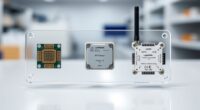
Calibration standards for PM and CO2 sensors involve using certified reference gases, gravimetric measurements, or calibration aerosols to guarantee accurate readings. You should follow manufacturer guidelines and ensure calibration is performed under environmental conditions similar to your operational environment. Regular calibration, documentation, and high-quality reference materials help maintain sensor accuracy over time. Continuing with this guide, you’ll discover more essential tips to optimize your calibration process effectively.
Key Takeaways
- Calibration for PM sensors typically involves comparison with gravimetric measurements or reference aerosols following standards like EPA or ISO methods.
- CO2 sensor calibration uses certified reference gases or calibration kits aligned with industry standards such as ASTM or NIST traceable references.
- Manufacturers recommend calibration procedures based on recognized standards to ensure measurement accuracy and consistency.
- Calibration procedures should include documentation and verification against recognized standards to meet quality and regulatory requirements.
- Regular calibration intervals follow best practices outlined by standards organizations, considering environmental conditions and sensor drift.

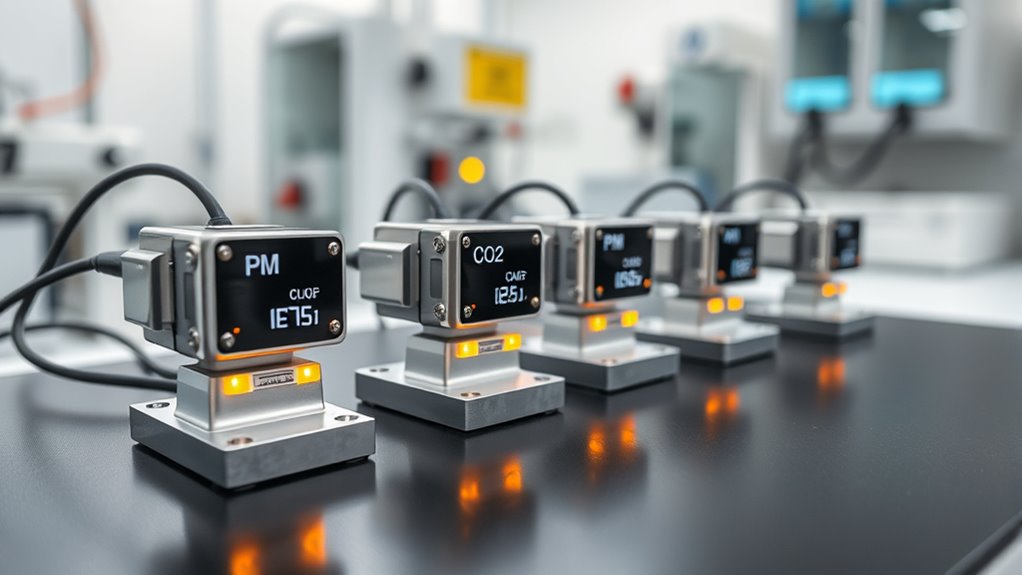
Maintaining accurate measurements from PM and CO2 sensors is essential for reliable air quality monitoring, but without proper calibration, their readings can be misleading. Sensor accuracy is the cornerstone of trustworthy data, and calibration procedures are key to guaranteeing that your sensors reflect true environmental conditions. When sensors drift over time or encounter environmental changes, their measurements can become skewed, leading to inaccurate assessments of air quality. Regular calibration helps correct these deviations, restoring sensor precision and ensuring your data remains dependable. Proper calibration also involves understanding the calibration standards recommended by the manufacturers to ensure consistency and accuracy across different sensor types. Calibration procedures typically involve exposing sensors to known reference standards or calibration gases that match the target measurements. For PM sensors, this might mean comparing readings against gravimetric measurements or using calibration aerosols with known particle concentrations. For CO2 sensors, calibration often involves using a reference gas with a certified concentration, such as a standard calibration kit. By doing this, you establish a baseline, allowing you to adjust the sensor outputs accordingly. Proper calibration isn’t a one-time task; it requires periodic repetition, especially if sensors are used continuously or in fluctuating conditions. This ongoing process helps identify and correct measurement drift, maintaining the integrity of your air quality data. Implementing effective calibration procedures also demands attention to environmental factors. Temperature and humidity can influence sensor readings, so calibration should be performed under conditions similar to those in which the sensors will operate. Many modern sensors include built-in compensation features, but manual calibration ensures these adjustments are accurate. Additionally, documenting calibration results is essential for quality control and regulatory compliance, providing a clear record of sensor performance over time. You should also be aware that different sensor types and manufacturers may recommend specific calibration protocols. Following manufacturer guidelines ensures you’re applying the correct procedures and using appropriate reference standards. Investing in quality calibration gases and reference materials can greatly improve sensor accuracy and longevity. Furthermore, integrating routine calibration into your maintenance schedule reduces the risk of data inaccuracies and helps in early detection of sensor malfunction. Ultimately, the goal of calibration is to keep your PM and CO2 sensors operating within their specified accuracy ranges. This reliability is crucial for making informed decisions about air quality management, health risk assessments, and regulatory reporting. By adhering to proper calibration procedures and maintaining diligent sensor care, you ensure your air quality monitoring system provides trustworthy, precise data that supports effective environmental management.
Frequently Asked Questions
How Often Should Sensor Calibration Be Performed?
You should calibrate your sensors regularly, typically every 6 to 12 months, depending on sensor drift and usage conditions. Frequent calibration helps maintain accuracy, especially if your sensors operate in harsh environments or show signs of drift. Keep an eye on sensor performance and data consistency, and adjust your calibration frequency if you notice deviations. Regular calibration guarantees reliable measurements and prolongs your sensor’s lifespan.
What Are the Costs Associated With Calibration Standards?
Coincidentally, calibration standards carry varied cost implications depending on their quality and frequency of use. You should consider the initial purchase price, which can range from affordable to premium, and ongoing expenses like replacement and maintenance. Standard longevity influences these costs, as longer-lasting standards reduce frequency and overall expenditure. While investing upfront might seem high, it guarantees accurate readings, ultimately saving money by preventing costly errors and ensuring sensor reliability.
Can Calibration Standards Be Reused or Are They Single-Use?
You can often reuse calibration standards, but their standard reuse depends on calibration durability and the type of standard used. For example, gas standards for CO2 might be reusable if stored properly, while particulate standards for PM may degrade faster. Always check manufacturer guidelines, as repeated use can affect accuracy. Proper storage and handling help extend calibration durability, ensuring your sensor calibration remains reliable over multiple uses.
Are There Industry-Specific Calibration Requirements for PM and CO2 Sensors?
Yes, industry-specific calibration requirements exist for PM and CO2 sensors, guaranteeing accurate measurements. You need to follow industry standards and obtain sensor certifications to meet regulatory and quality expectations. These standards specify calibration procedures, frequency, and acceptable accuracy levels, which vary depending on your application, whether environmental monitoring, industrial processes, or healthcare. Adhering to these requirements helps maintain sensor reliability and ensures compliance with relevant regulations.
How Do Environmental Factors Affect Calibration Accuracy?
They say “a chain is only as strong as its weakest link,” and environmental factors can weaken calibration accuracy. Humidity interference can cause sensors to misread particulate matter and CO2 levels, while temperature variation leads to drift in sensor readings. These fluctuations make calibration tricky, so you need to account for environmental conditions regularly. By doing so, you guarantee your sensors stay reliable, even when conditions change unexpectedly.
Conclusion
Think of calibration standards as the compass guiding your sensors through the fog of uncertainty. By regularly checking and adjusting your PM and CO2 sensors, you ensure their readings stay true, like a lighthouse guiding ships safely to shore. Without these standards, your data risks drifting off course. Stay vigilant with proper calibration, and let your sensors serve as reliable navigators, illuminating the path to accurate air quality insights every step of the way.

In the dynamic world of air purifiers and clean air advocacy, Aire stands out as a beacon of knowledge and passion. As the Editor in Chief of Aero Guardians, Aire has been instrumental in shaping the platform’s voice and direction, ensuring that every piece of content resonates with clarity, authority, and authenticity.