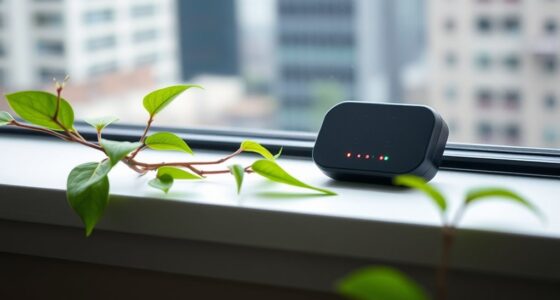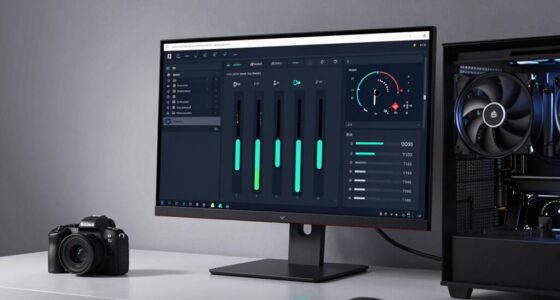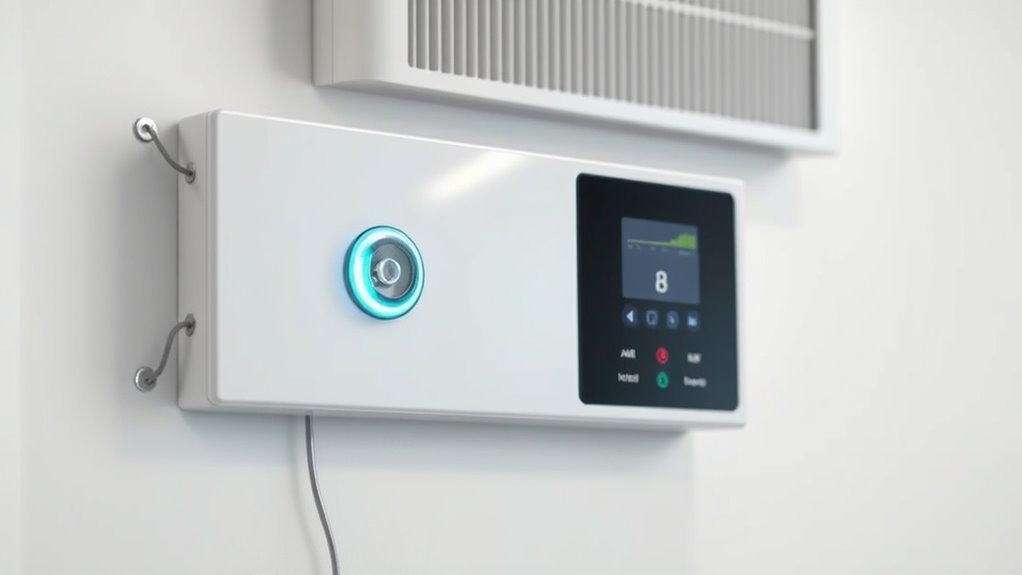
Integrating air quality sensors into your HVAC controls allows you to automatically respond to changes in indoor air conditions. These sensors provide real-time data on pollutants, humidity, and particulates, enabling your system to adjust ventilation and filtration efficiently. By calibrating sensors regularly and analyzing the data, you guarantee accuracy and optimize air quality management. This seamless automation helps maintain healthier environments while reducing energy use—exploring these aspects further will give you even better insights.
Key Takeaways
- Connect sensors directly to the HVAC control system for real-time data transmission and automatic adjustments.
- Use data analytics to interpret sensor readings and optimize ventilation, filtration, and airflow strategies.
- Calibrate sensors regularly to ensure accurate readings and reliable system responses.
- Set thresholds and alerts within the control system for proactive management of air quality issues.
- Implement automation protocols that adjust HVAC operations based on sensor data to maintain healthy indoor environments.

As indoor air quality becomes increasingly important, integrating air quality sensors into HVAC controls offers a practical solution to maintain healthier environments. These sensors continuously monitor levels of pollutants, humidity, and particulate matter, providing real-time data that can be used to adjust your HVAC system automatically. This integration allows you to maximize air circulation and filtration, reducing allergens and harmful contaminants without manual intervention. However, for these sensors to function effectively, proper sensor calibration is essential. Regular calibration ensures the sensor readings are accurate, preventing false alarms or overlooked issues. When sensors are correctly calibrated, your system responds precisely to changes in air quality, maintaining a safe and comfortable environment. Additionally, understanding the Vortex concept can help in designing more effective air circulation strategies that enhance indoor air quality. Beyond calibration, data analytics plays a critical role in harnessing the full potential of air quality sensors. By analyzing the data collected over time, you gain valuable insights into patterns and trends within your indoor environment. Data analytics helps identify persistent sources of pollution, peak times of poor air quality, or seasonal variations. Armed with this information, you can implement targeted strategies to improve air quality, such as adjusting ventilation schedules or upgrading filtration systems. Moreover, data analytics can help you detect sensor malfunctions early, ensuring your HVAC system relies on trustworthy data. This proactive approach minimizes downtime and maintains ideal indoor air conditions. Integrating air quality sensors isn’t just about installing new hardware; it involves creating a seamless connection between sensors and your HVAC controls. When this connection is well-designed, your system can automatically respond to sensor data, increasing efficiency and reducing energy consumption. For example, if sensors detect elevated levels of CO₂ or VOCs, the system can boost ventilation or filtration without your manual input. This automation not only enhances air quality but also reduces operational costs and energy waste. Additionally, with the help of advanced data analytics, you can set thresholds and alerts, prompting you to take action when air quality drops below safe levels, or to schedule maintenance proactively. To maximize the benefits of integrating air quality sensors into HVAC controls, you should prioritize regular sensor calibration and leverage data analytics. Calibration guarantees accuracy, while analytics transform raw data into actionable insights. Together, they enable your HVAC system to adapt intelligently to changing conditions, creating a healthier, more comfortable indoor environment. This integration ultimately empowers you to maintain superior air quality standards with less effort and greater precision, ensuring that your indoor spaces stay safe and welcoming for everyone.

16 in 1 Air Quality Monitor Indoor 7" Wildfire CO2 Monitor, 9 AQI+7 Alerts
- 16-in-1 Air Quality Monitoring: Detects 9 key air parameters
- Large 7-inch Display: Clear, bright air quality readings
- Multiple AQI Alerts: 7 alert buzzers for safety
As an affiliate, we earn on qualifying purchases.
As an affiliate, we earn on qualifying purchases.
Frequently Asked Questions
How Do Air Quality Sensors Impact Overall HVAC Energy Efficiency?
Air quality sensors boost your HVAC system’s energy efficiency by actively monitoring indoor air quality. When they detect poor air, your system adjusts ventilation and filtration, reducing unnecessary energy use during times of better air quality. This targeted approach guarantees you save energy while maintaining healthy indoor air. You benefit from consistent indoor air, and your system operates more efficiently, leading to significant energy savings over time.
What Maintenance Is Required for Air Quality Sensors in HVAC Systems?
You need to regularly check and calibrate your air quality sensors to guarantee accurate readings, typically every 6-12 months. Keep an eye on their performance, and if you notice inconsistent data or malfunctions, consider replacing them. Follow the manufacturer’s recommended replacement intervals, usually every 3-5 years, to maintain excellent system performance and indoor air quality. Proper maintenance helps your HVAC system operate efficiently and accurately.
Can Existing HVAC Systems Be Retrofitted With Air Quality Sensors?
Yes, you can retrofit your existing HVAC system with air quality sensors. Check the retrofit compatibility of your system and verify it has compatible control interfaces. Proper sensor placement is key; install sensors where airflow is representative of indoor air quality, such as central return vents or main duct entries. This upgrade helps you monitor air quality effectively, improving ventilation and indoor comfort without replacing your entire system.
How Accurate Are Current Air Quality Sensors in Different Environments?
Current air quality sensors are quite accurate when properly calibrated, but their data accuracy can vary across different environments. You need to regularly perform sensor calibration to guarantee reliable readings, especially in complex spaces with diverse pollutants. Factors like humidity, temperature, and interference impact accuracy. By maintaining calibration and selecting sensors suited for your environment, you’ll get precise data to optimize your HVAC system effectively.
What Are the Cost Implications of Integrating Air Quality Sensors?
Think of your budget as a garden where each investment blooms. Integrating air quality sensors requires an initial investment, which varies based on system complexity and sensor quality. You’ll need to take into account costs for sensor calibration to guarantee accuracy and reliability. While the upfront expense might seem high, improved air quality control can save money long-term by reducing energy costs and maintaining healthier indoor environments.
Conclusion
By integrating air quality sensors into your HVAC controls, you’re not just improving comfort—you’re actively protecting health and enhancing efficiency. Imagine a system that automatically adjusts to keep your indoor environment ideal at all times. Isn’t that the future of smart living? Embracing this technology means smarter decisions and better air quality for everyone. So, why settle for less when you can have an intelligent, responsive system working tirelessly for you?