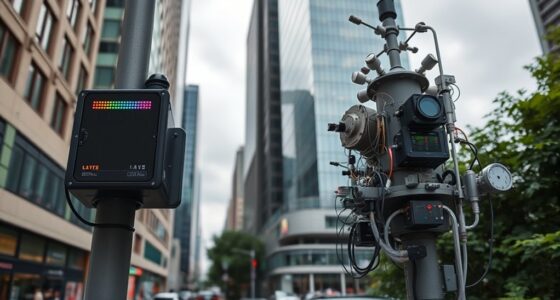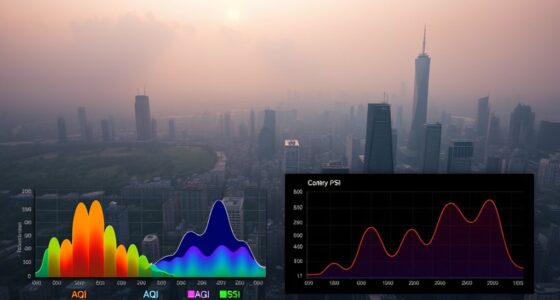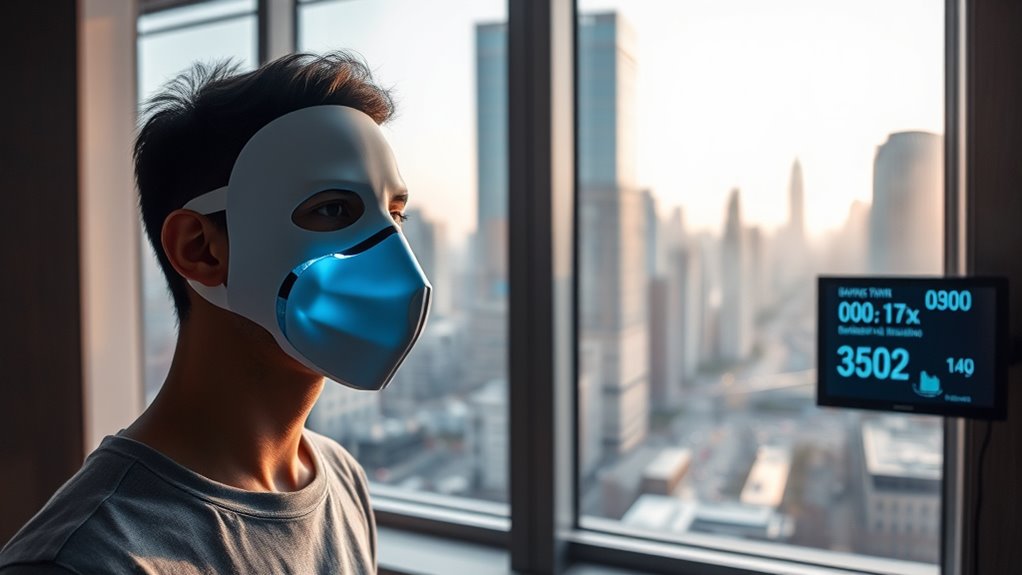

Monitoring CO₂ levels in indoor spaces is an effective way to assess ventilation and infection risk. Since humans exhale CO₂ continuously, high concentrations indicate poor airflow and increased potential for airborne pathogens to spread. Keeping CO₂ below around 800 ppm suggests good ventilation. By tracking these levels, you can take immediate steps to improve air quality and reduce infection risk. For more insights, discover how ongoing monitoring can protect indoor environments.
Key Takeaways
- Elevated CO₂ levels indicate poor ventilation, increasing the risk of airborne infection accumulation indoors.
- CO₂ concentration serves as a practical, real-time proxy to assess and improve ventilation effectiveness.
- Maintaining CO₂ below thresholds (e.g., 800 ppm) helps reduce airborne pathogen transmission risk.
- Continuous CO₂ monitoring enables dynamic ventilation management, enhancing indoor air safety.
- Using CO₂ as an indicator supports infection control strategies by identifying areas needing improved airflow.
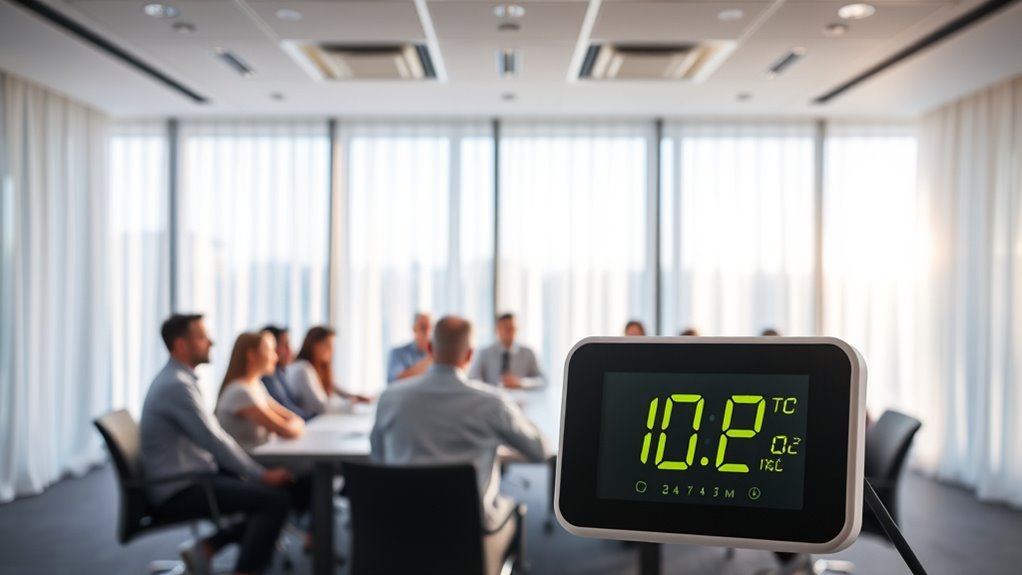
Understanding how well a space is ventilated is key to managing infection risk, especially in indoor environments. When air isn’t circulating properly, contaminants and airborne pathogens can accumulate, increasing the chance of illness spread. That’s where indoor air quality becomes critical. Monitoring it helps you identify areas with poor ventilation, so you can take steps to improve it. One effective way is by using carbon dioxide (CO₂) levels as a proxy for airflow. Since humans exhale CO₂ continuously, its concentration indoors reflects how well fresh air replaces stale air. Elevated CO₂ levels signal that the space isn’t ventilating efficiently, allowing you to pinpoint problem areas and implement targeted ventilation strategies.
Monitoring indoor CO₂ levels reveals ventilation quality and helps reduce airborne infection risks.
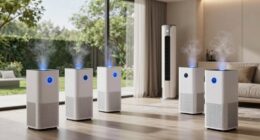
In practical terms, tracking CO₂ can guide you in adjusting ventilation systems, opening windows, or introducing air purifiers. When CO₂ accumulates, it indicates that the amount of fresh air entering the space isn’t enough to dilute the exhaled gases. This buildup not only diminishes indoor air quality but also raises the risk of airborne infections spreading among occupants. By maintaining lower CO₂ levels, you effectively reduce this risk, creating a healthier environment. You can set thresholds—such as 800 parts per million (ppm)—to signal when ventilation needs improvement. If CO₂ readings consistently exceed this level, it’s a clear sign that your ventilation strategies require attention.
Furthermore, using CO₂ as a proxy allows for continuous, real-time monitoring. Instead of relying on guesswork or periodic assessments, you get immediate feedback on how your ventilation measures are performing. This proactive approach helps you respond swiftly to changing occupancy levels or external conditions that may impact indoor air quality. Whether in classrooms, offices, or homes, understanding these dynamics helps you optimize air exchange rates, ensuring a safer environment for everyone. Proper ventilation isn’t just about comfort; it’s a critical infection control measure, especially during times of heightened concern about airborne diseases.
In essence, by paying close attention to indoor CO₂ levels, you’re leveraging a simple yet powerful indicator of ventilation effectiveness. This knowledge empowers you to implement smarter ventilation strategies, improve indoor air quality, and reduce infection risks. It’s a straightforward, cost-effective method to enhance safety and well-being in any indoor space. Remember, good ventilation isn’t a one-time fix—it’s an ongoing process that benefits from regular monitoring and adjustment. Using CO₂ as a proxy makes this process manageable and precise, helping you create healthier, safer indoor environments for everyone inside. Additionally, understanding the role of ventilation in infection control can inform better building design and operational practices.
Frequently Asked Questions
How Accurate Is CO2 as an Indicator for Ventilation Quality?
You can rely on CO2 levels as a decent indicator of indoor air quality and ventilation standards, but they’re not perfect. Elevated CO2 suggests poor ventilation, which might increase infection risk, yet other factors influence air quality. Continuous monitoring helps identify ventilation issues quickly, but for thorough assessment, consider additional measurements like humidity and particulate matter. Overall, CO2 provides a practical, real-time snapshot of your indoor air environment.
Can CO2 Levels Predict Actual Infection Transmission Rates?
You might find that CO2 levels alone can’t reliably predict infection transmission rates, despite over 80% of airborne pathogens traveling with aerosols. While high CO2 indicates poor air exchange, it doesn’t account for aerosol dynamics like particle size, airflow patterns, or occupancy. These factors critically influence infection risk, making CO2 a helpful but thorough indicator for predicting actual transmission rates. Always consider extensive ventilation and airflow assessments.
What Are the Limitations of Using CO2 Measurements in Different Settings?
You should know that using CO2 measurements has limitations in different settings. Variability in occupancy can skew readings, making it hard to assess actual ventilation. Additionally, sensor calibration issues can lead to inaccurate results. These factors mean that CO2 levels alone may not reliably reflect infection risk across diverse environments. Regular calibration and accounting for occupancy changes are essential to improve measurement accuracy and usefulness.
How Frequently Should CO2 Levels Be Monitored for Safety?
You should check indoor air CO2 levels every 15 to 30 minutes, especially when outdoor influence varies. This way, you catch sudden spikes that could turn your space into a breathless nightmare. If outdoor air quality drops or indoor occupancy changes, bump up monitoring frequency. Remember, consistent checks keep your environment safe and breathable, avoiding the chaos of stale air and potential infection risks.
Are There Alternative Proxies for Assessing Infection Risk Besides CO2?
You can consider using particle counters to monitor aerosol levels, which directly relate to pathogen spread during air exchange. Additionally, measuring volatile organic compounds (VOCs) can indicate ventilation efficiency, helping assess infection risk. These proxies offer real-time insights into how well your space exchanges air and reduces airborne contaminants, giving you a more thorough understanding of infection risk beyond just CO2 levels.
Conclusion
So, next time you’re in a crowded room, pay attention to the CO₂ levels around you. It’s not just about comfort, but a hidden warning sign of potential infection risk. Will you act on this simple clue before it’s too late? The stakes are higher than you think. Keep monitoring, stay cautious, and reveal the secret power of CO₂ to protect yourself and others—because what you don’t see could change everything.