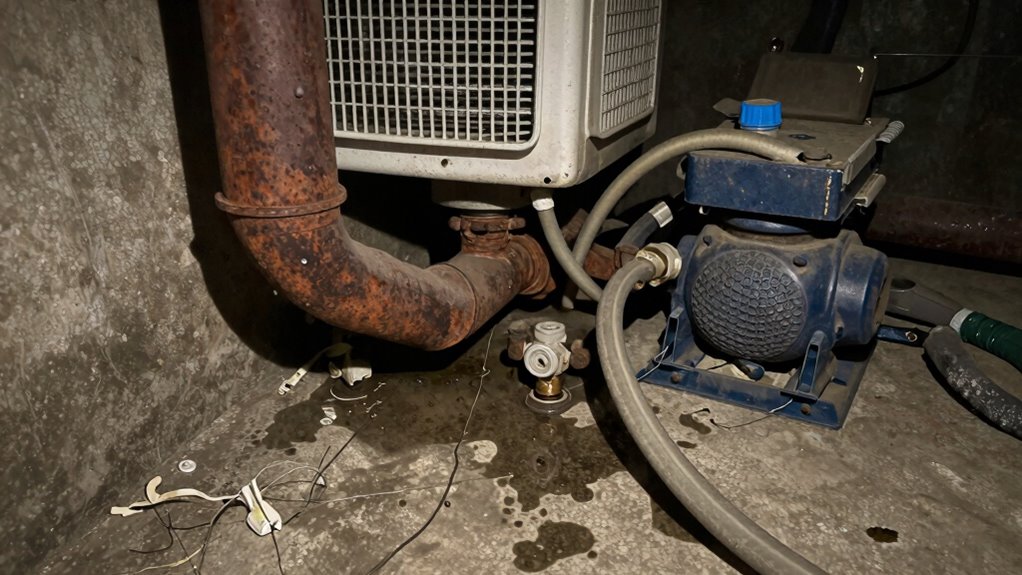
Many homeowners mess up their crawlspace dehumidifier setup by improperly placing drain lines or choosing the wrong pump. Common mistakes include positioning drains too high, using incorrect slopes, or selecting a pump that can’t handle the water volume. These errors often lead to backups, leaks, and potential damage. Ensuring proper placement, choosing the right pump, and maintaining the system can prevent these issues—keep going to find out how to get it right the first time.
Key Takeaways
- Incorrect drain line slope or placement causes water backup and reduces drainage efficiency.
- Choosing an underpowered pump leads to inadequate water removal and potential system failure.
- Neglecting regular maintenance allows clogs, leaks, and pump malfunctions to go unnoticed.
- Failing to install a check valve risks backflow and water re-entry into the crawlspace.
- Improper pump location hampers access for routine inspections and repairs, shortening system lifespan.
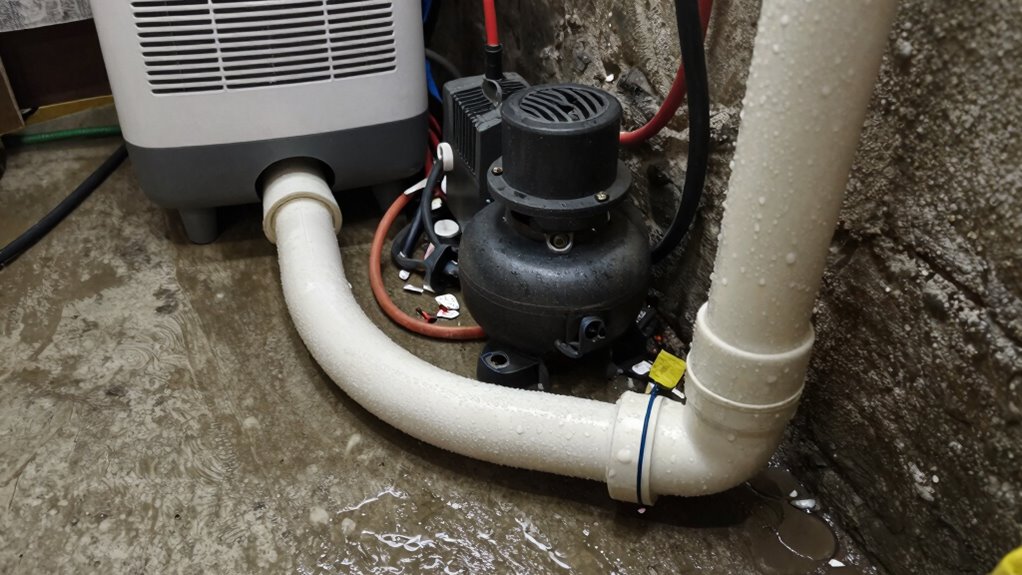
Are you tired of musty smells and excess moisture in your crawlspace? Installing a crawlspace dehumidifier can considerably improve your home’s air quality and protect your foundation. However, many people overlook the importance of proper drain and pump setup, which can lead to costly problems down the line. Ensuring your dehumidifier is correctly installed with an efficient drain system not only keeps your crawlspace dry but also enhances energy efficiency and reduces maintenance headaches. When setting up your drain and pump, you want to make sure the system is designed for smooth operation. A common mistake is positioning the drain line too high or at the wrong angle, causing water to back up or drain slowly. You should aim for a gravity-fed drain that slopes downward, allowing water to flow freely into a sump pump or drainage area. If you opt for a pump, verify that it is powerful enough to handle the volume of water your dehumidifier extracts. An undersized pump will struggle, leading to frequent failures or water leaks, which can damage your home’s structure. Proper pump placement is equally critical; it needs to be accessible for maintenance and positioned in a way that prevents airlocks or blockages. Many homeowners neglect routine maintenance tips, such as checking for clogs or leaks in the drain line and ensuring the pump is functioning correctly. Regular inspection keeps your system running efficiently, saving you money on energy costs and preventing water damage. Using a high-quality drain pipe with reliable fittings can prevent leaks and backups, maintaining the system’s integrity over time. Additionally, consider installing a check valve to prevent backflow, which can cause water to re-enter your crawlspace. This not only improves energy efficiency by ensuring your dehumidifier doesn’t work harder than necessary but also reduces the need for frequent repairs. Proper drainage setup also minimizes mold growth and musty odors, creating a healthier environment inside your home. Remember, a well-installed drain and pump system extends your dehumidifier’s lifespan and keeps maintenance simple. Adequate drain line design plays a crucial role in preventing water pooling and ensuring smooth flow. Keep in mind that neglecting these details can lead to water pooling, increased humidity, and potential structural issues. Taking the time to plan your drain and pump setup carefully, following maintenance tips, and ensuring everything is secure and functional will save you headaches and money in the long run. So, if you want an effective, energy-efficient crawlspace dehumidifier system, focus on getting the drain and pump setup right from the start. It’s the difference between a dry, healthy crawlspace and ongoing frustration with leaks, mold, and high energy bills.
Frequently Asked Questions
How Often Should I Check the Drain and Pump for Clogs?
You should check the drain and pump every month as part of your maintenance schedule. Regular inspections help prevent clogs and guarantee everything runs smoothly. Look for any debris or buildup that could block water flow. By staying proactive with clog prevention, you’ll avoid costly repairs and keep your dehumidifier functioning efficiently. Consistent checking is key to maintaining a healthy crawlspace environment.
Can I Install a Drain and Pump System Myself?
Think of installing a drain and pump system as building a bridge—precision matters. You can attempt DIY installation if you have decent plumbing skills, but it’s not a job to take lightly. Proper setup guarantees reliable drainage and prevents water damage. If you’re comfortable with plumbing tasks, follow detailed instructions carefully. Otherwise, consider hiring a professional to avoid costly mistakes and ensure everything functions smoothly.
What Signs Indicate My Dehumidifier’s Drain or Pump Is Failing?
You’ll notice signs like drainage backups or a foul odor, indicating your dehumidifier’s drain or pump might be failing. If you hear unusual pump noise or it stops working altogether, that’s another warning. You might also see water pooling or increased humidity levels. Address these issues promptly to prevent further damage. Regular maintenance can help catch problems early and keep your crawlspace dry and healthy.
Is Professional Installation Necessary for the Drain and Pump Setup?
You should definitely consider professional installation for your drain and pump setup, even if DIY tips seem tempting. Without proper expertise, a small mistake can lead to major water damage or system failure. Professionals ensure your setup is secure, reliable, and efficient, giving you peace of mind. Don’t gamble with your crawlspace’s health—trust the pros to handle the critical drain and pump installation properly, avoiding costly mistakes down the line.
How Do I Prevent Mold Growth Around the Drain Area?
To prevent mold growth around the drain area, you should regularly inspect and clean the drain and pump to guarantee proper drain maintenance. Keep the area dry by fixing leaks promptly and using a dehumidifier to control moisture levels. Additionally, consider applying a mold-resistant sealant around the drain to inhibit mold prevention. Consistent upkeep and moisture control are key to avoiding mold around your crawlspace drain.
Conclusion
To keep your crawlspace dry and prevent costly issues, get the drain and pump setup right. Many people overlook this step, leading to water damage and mold. Did you know that improperly installed dehumidifiers can reduce their efficiency by up to 30%? Don’t let a simple mistake cost you hundreds in repairs. Take the time to set up your system correctly, and you’ll enjoy a healthier, more comfortable home for years to come.