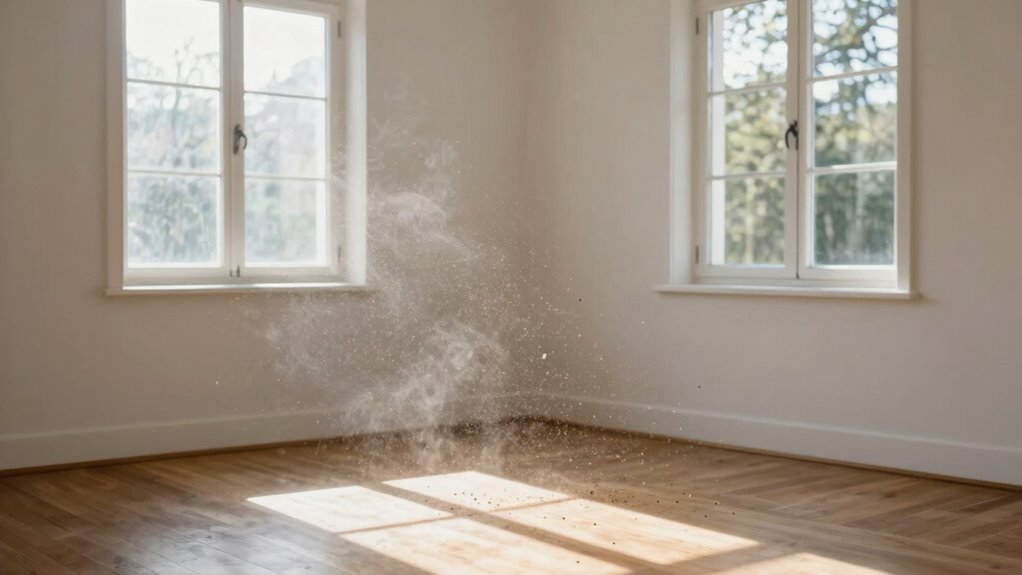

Cross-ventilation helps reduce indoor particles by creating airflow that pushes contaminated air outside and brings in cleaner outdoor air. When you open windows and doors on opposite sides, you generate a breeze that dilutes dust, pollen, bacteria, and viruses inside your space. Proper airflow speeds and directions are key; they guarantee pollutants don’t settle or linger. If you want to discover how to maximize these benefits and improve indoor air quality further, keep exploring this topic.

Get garden gear delivered free with Prime
- Fast, free delivery on millions of items
- Prime Video, Amazon Music and more included
- Member-only deals all year
Key Takeaways
- Cross-ventilation displaces indoor pollutants with cleaner outdoor air, reducing indoor particle concentrations.
- It enhances airflow speed and direction, promoting more effective removal of dust, pollen, and microbes.
- Properly designed cross-ventilation prevents stale air buildup and minimizes particle settling zones.
- External conditions like outdoor pollution and wind affect the efficiency of particle removal through cross-ventilation.
- Combining cross-ventilation with filters and cleaning improves overall indoor air quality.

Have you ever wondered how cross-ventilation impacts the levels of indoor particles? When you open windows or doors on opposite sides of a room, you create a flow of air—airflow dynamics—that can vital influence the particles floating inside. This movement doesn’t just bring fresh air in; it can also help remove or reduce airborne pollutants, but how effective it is depends on several factors. Understanding the role of airflow dynamics and particle filtration can help you optimize natural ventilation to improve indoor air quality.
As air moves through your space, it acts like a natural filter, pushing out stale air and drawing in cleaner, outdoor air. This process can dilute indoor particles such as dust, pollen, pet dander, or even airborne bacteria and viruses. The effectiveness hinges on the speed and direction of airflow. Strong, steady cross-ventilation generates higher airflow velocities, which can more effectively displace contaminated indoor air and bring in fresher outdoor air. However, if the airflow is too turbulent or stagnant, particles may settle or linger, reducing the benefits. Proper placement of windows and vents influences airflow patterns, helping to maximize particle removal and prevent dead zones where pollutants could accumulate.
Effective cross-ventilation relies on steady airflow to remove indoor particles and improve air quality.
Particle filtration through cross-ventilation isn’t as targeted as using a dedicated air purifier with HEPA filters, but it still plays an essential role in maintaining healthier indoor conditions. When you promote good airflow, you’re fundamentally enhancing the natural particle filtration process by continuously replacing contaminated air with cleaner air from outside. This process is especially useful in environments with low levels of outdoor pollution, as it allows you to leverage natural ventilation without relying solely on mechanical systems. Still, it’s vital to consider outdoor air quality—if pollution levels outside are high, opening windows might introduce more particles than it removes, negating the benefits.
Additionally, the design of your space impacts how well cross-ventilation works for particle reduction. Narrow corridors or obstructions can disrupt airflow, making it less effective at displacing indoor pollutants. Using fans or strategically opening multiple windows can help guide airflow along desired paths, improving overall particle filtration. Properly managing airflow velocity and direction can significantly enhance the efficiency of natural ventilation in reducing indoor particles. External factors such as wind direction can also influence how well cross-ventilation performs, sometimes requiring adjustments in window positioning or timing. Keep in mind, though, that cross-ventilation isn’t a cure-all; it works best when combined with other strategies like maintaining cleanliness and using filters for sources of indoor particles. By understanding airflow dynamics and optimizing how your home circulates air, you can markedly reduce the presence of indoor particles and breathe easier.
HEPA air purifier for indoor air quality
As an affiliate, we earn on qualifying purchases.
As an affiliate, we earn on qualifying purchases.
Frequently Asked Questions
How Does Cross-Ventilation Compare to Mechanical Air Purification?
Cross-ventilation naturally promotes air exchange, helping to remove indoor particles by replacing stale air with fresh outdoor air. However, it’s less effective than mechanical air purification for targeted particle removal, especially small or harmful particles. Mechanical systems actively filter and trap particles, providing cleaner air consistently. While cross-ventilation is good for freshening spaces, combining it with air purifiers offers the best particle removal and overall indoor air quality.
Can Cross-Ventilation Reduce All Types of Indoor Particles Effectively?
Cross-ventilation can effectively reduce some indoor particles, especially larger ones, by increasing the ventilation rate and replacing contaminated indoor air with cleaner outdoor air. However, its effectiveness depends on particle size; smaller particles, like viruses or fine dust, may still linger because they require higher filtration or air purification methods. To maximize particle removal, combine cross-ventilation with other strategies like air purifiers for thorough indoor air quality.
What Are the Best Times of Day for Optimal Cross-Ventilation?
Think of timing optimization as finding the perfect dance partner—you want to move when the breeze patterns are in your favor. The best times for cross-ventilation are early mornings and late evenings when outdoor winds are calmer and more consistent. During these hours, you can harness the natural breeze to clear indoor particles effectively, enhancing air quality and keeping your space fresh and inviting.
Does Cross-Ventilation Increase Outdoor Pollutants Indoors?
Yes, cross-ventilation can increase outdoor pollutants indoors by allowing outdoor infiltration, which leads to pollutant exchange. When you open windows and doors to create airflow, outdoor particles like pollen, dust, and smog can enter your space. This exchange can temporarily elevate indoor pollutant levels, especially during high pollution periods. To minimize this, consider ventilating during cleaner air times and using filters to reduce outdoor infiltration.
How Does Building Design Influence Cross-Ventilation Efficiency?
You’re on the right track—building design really influences cross-ventilation efficiency. A well-thought-out architectural layout maximizes natural airflow, ensuring fresh air sweeps through your space smoothly. Strategic placement of windows, vents, and open areas acts as the backbone for effective cross-ventilation. When these elements align, you get a breeze that clears out indoor pollutants and boosts comfort. It’s all about making the design work for you, not against you.
Conclusion
By opening windows for cross-ventilation, you might think you’re purifying your space, but it can also introduce outdoor particles you’d rather avoid. The invigorating breeze versus airborne pollutants creates a delicate balance. While ventilation can clear indoor contaminants, it’s not a guarantee against outdoor pollutants sneaking in. So, you’re left with the choice: embrace fresh air or protect your indoor air quality. Sometimes, the breeze that feels so invigorating also carries unseen risks.
Columbus Day / Indigenous Peoples' Day Picks
long weekend sales
As an affiliate, we earn on qualifying purchases.