
TL;DR

Get garden gear delivered free with Prime
- Fast, free delivery on millions of items
- Prime Video, Amazon Music and more included
- Member-only deals all year
A Gardening Know How report advises inspecting plants that spent summer outdoors for scale insects before bringing them inside for fall. It recommends isolating affected plants, removing small infestations by hand and using only plant-safe products according to their labels, with repeated checks through winter.
Gardening Know How is advising people to inspect plants that spent summer outdoors for scale insects before bringing them inside for fall. The report says infested plants can carry the pests into homes, where they may continue feeding and reproducing on houseplants during winter.
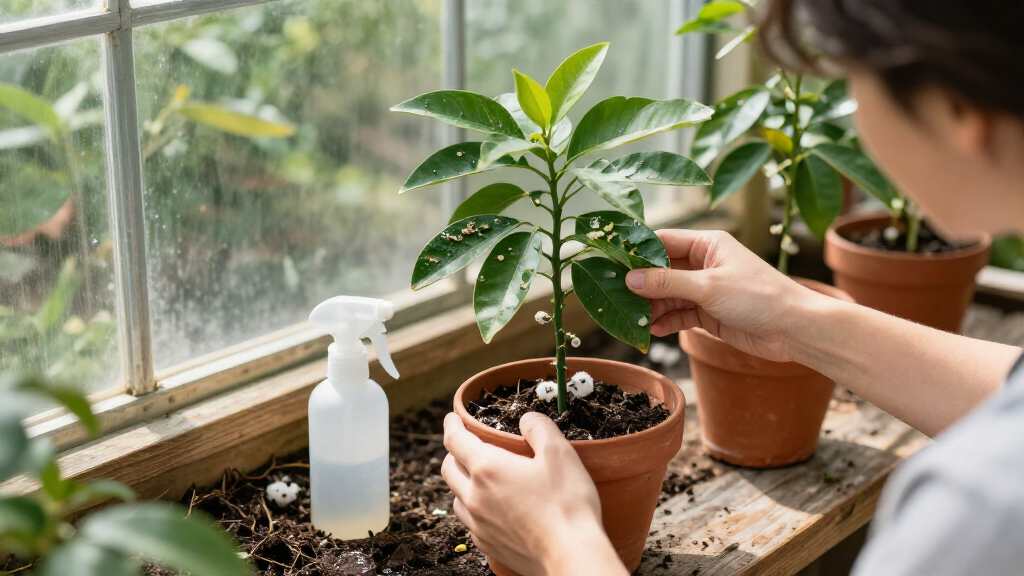
Scale insects often appear as small bumps on stems, leaf veins and leaf undersides. They may be brown, tan, white or black, and their protective covers can make them look like rough spots on a plant. The report recommends using a magnifying glass and checking for yellowing leaves, leaf drop or stunted growth. Soft scale can also leave sticky honeydew on foliage or surfaces beneath a pot; sooty mold may grow on the residue.
Because adult scale insects are generally stationary and protected by a hard or waxy cover, sprays may not reach them effectively. The report says the mobile, newly hatched insects, called crawlers, are more vulnerable to contact treatments. New crawlers can appear over time, so a single treatment may not be enough.
For a small number of insects, the report recommends removing them by hand with a fingernail, toothpick or soft toothbrush. It also describes using a cotton swab with isopropyl alcohol, advising readers to test it on one leaf and wait a day or two for damage. Heavier infestations may call for horticultural oil or insecticidal soap, but users should follow the product label, test a few leaves first and check that the product is suitable for the plant. The report cautions that insecticidal soap can damage jade plants and ferns, and that edible plants such as citrus and bay laurel require extra care because not every product is labeled for food crops.
Why Fall Inspections Matter
Moving a plant indoors can also move its pests into close contact with other plants. According to the report, crawlers can travel between pots when leaves touch and can be carried on hands or pruning tools. Once inside, they may continue feeding through winter, while the natural predators and outdoor conditions that may limit scale outdoors are no longer present in the same way.
Finding scale before move-in gives gardeners a chance to separate affected plants and address the problem before plants are grouped indoors. That matters for citrus, jade, hibiscus, ficus, bay laurel, oleander and orchids, among other common hosts. A missed infestation can be hard to spot because dead insects may remain attached to leaves or stems for months.
plant-safe horticultural oil for scale insects on houseplants
As an affiliate, we earn on qualifying purchases.
As an affiliate, we earn on qualifying purchases.
How Scale Spreads Indoors
The report describes scale insects as plant feeders that use a thin, straw-like mouthpart to draw from stems or leaves. Soft scale has a covering that is part of its body; in armored scale, the cover can lift away and leave the insect beneath. Types differ in size and appearance, so the article recommends looking closely rather than relying on color alone.
Plants that spent summer outdoors, especially those kept close together on a porch or patio, are the priority for inspection. The report recommends checking them before cold nights prompt the move inside, then keeping any affected plant apart from others. Its suggested isolation period is not a fixed number of days: keep the plant separate until several weekly checks in a row find no new scale.
Treatment Results Can Vary
The report does not provide independent trial data comparing treatment methods or establish how quickly an infestation will be cleared. Results may depend on the scale species, infestation severity, plant type and product used. Its suggested schedule of two or three spray rounds, 10 to 16 days apart, is presented as a common approach, not a universal prescription; product directions take precedence.
It is also not possible to identify every scale insect from a general description alone. The report notes that dead scale can remain attached, so a bump on a plant does not necessarily indicate a live infestation. It suggests pressing a bump with a toothpick: a wet smear may indicate that it is alive. Readers should check plants carefully and avoid treating edible plants with products whose labels do not permit that use.
Keep Checking Through Winter
After bringing plants indoors, the report recommends inspecting them once a week throughout winter, including plants with no known infestation. Focus on new growth, leaf joints and leaf undersides. Wash hands and tools after handling an affected plant, and maintain separation until repeated checks find no new insects.
If treatment is needed, follow the product label for application, timing and plant suitability, and use any protective equipment the label directs. Recheck plants after each treatment because additional crawlers may hatch. The report’s practical next step is to begin with an outdoor inspection before the seasonal move, when plants can be examined and any necessary treatment started before they join indoor collections.
Key Questions
What are the first signs of scale insects?
Look for small brown, tan, white or black bumps on stems, leaf veins and the undersides of leaves. Yellowing foliage, leaf drop or sticky honeydew can also be signs of an infestation.
Should I bring a plant indoors if I find scale?
The report recommends isolating an affected plant from other houseplants. Keep it separate and check it weekly; return it near other plants only after several weekly checks find no new scale.
Can I remove a small infestation without spraying?
Yes. The report suggests removing a few insects with a fingernail, toothpick or soft toothbrush. If using isopropyl alcohol on a cotton swab, test one leaf first and wait a day or two to check for damage.
How often should a plant be treated?
The report describes two or three rounds spaced 10 to 16 days apart as a common schedule for some sprays, because new crawlers may hatch after the first application. Always follow the specific product label instead of treating that interval as universal.
Are insecticidal soaps safe for every houseplant?
No. The report cautions that insecticidal soap can damage jade plants and ferns. Test any spray on a few leaves, follow its label, and confirm it is appropriate for the plant—particularly if the plant is edible.
Source: rss
Halloween Picks
halloween
As an affiliate, we earn on qualifying purchases.