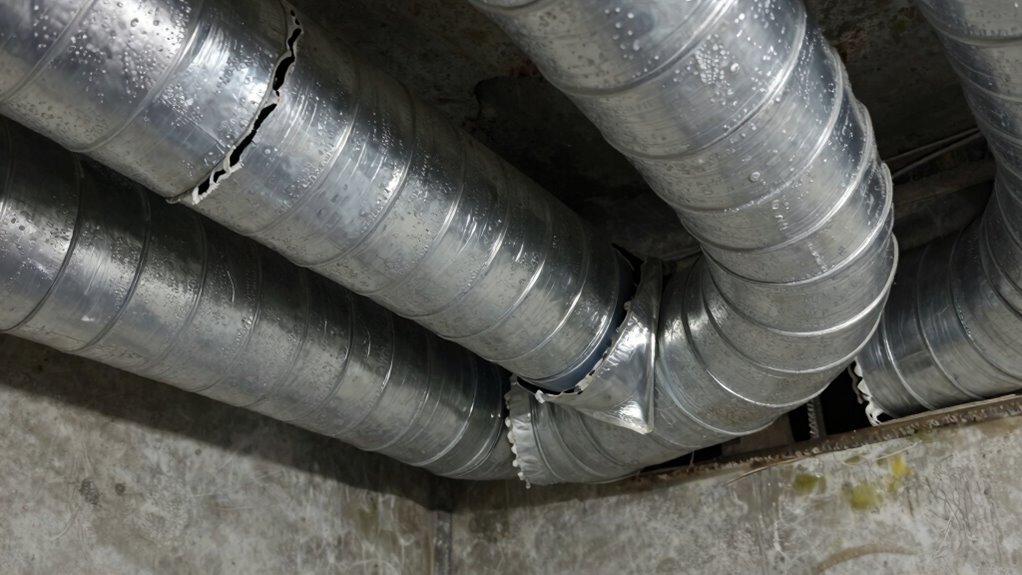
If your house smells like the garage, leaky ductwork might be to blame. Gaps, holes, or loose joints allow odors, dust, and contaminants from unconditioned spaces to seep into your living areas. These hidden leaks can also cause uneven temperatures and higher energy bills. Sealing your ducts with proper materials like mastic or foil tape can eliminate odors and improve indoor air quality. To uncover more about how to fix this issue, keep exploring the details ahead.
Key Takeaways
- Leaks in ductwork can allow garage odors to infiltrate living spaces through unsealed gaps.
- Duct leaks often occur near garage penetrations or unconditioned spaces, facilitating odor migration.
- Sealing duct leaks prevents odors from garage or storage areas from entering your home.
- Proper duct sealing improves indoor air quality by stopping contaminant infiltration.
- Addressing duct leaks enhances overall HVAC efficiency and reduces unwanted smells in the house.
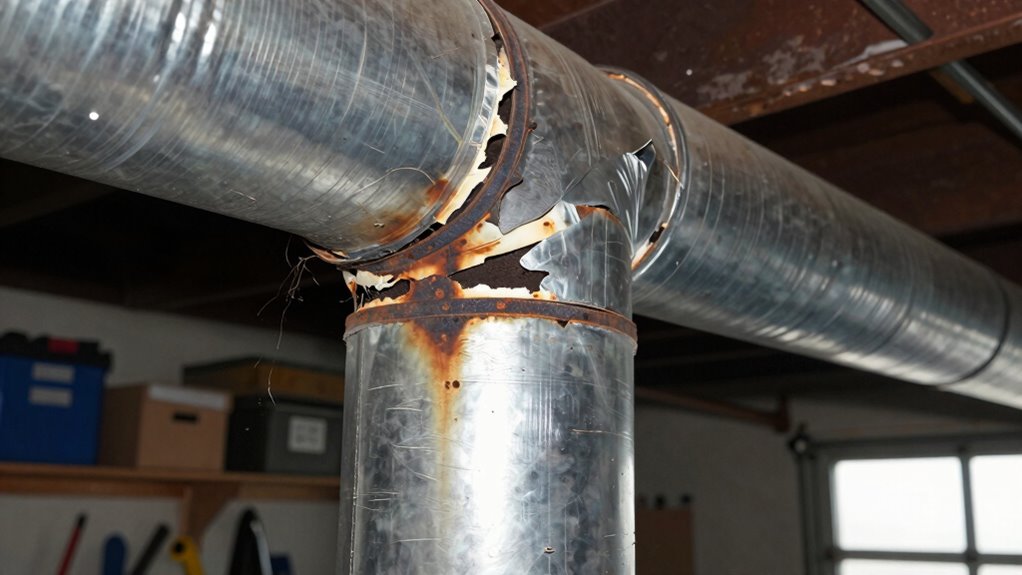
Have you ever noticed uneven heating or rising energy bills? If so, your duct system might be the culprit. Duct leaks are often hidden behind walls or ceilings, making them easy to overlook. When ducts aren’t sealed properly, they lose conditioned air to unoccupied spaces or the attic, which considerably impacts your home’s airflow efficiency. This inefficiency doesn’t just cause discomfort; it also forces your heating and cooling systems to work harder, leading to higher energy costs and uneven temperatures throughout your house.
One of the most effective ways to address this problem is by focusing on duct sealing techniques. Sealing your ducts properly can restore ideal airflow, ensuring that heated or cooled air reaches its intended destination without escaping along the way. You might think sealing ducts is a complicated or expensive process, but it’s actually straightforward and affordable when done correctly. Using mastic sealant or foil tape, you can close gaps, holes, or loose joints in your ductwork. Start by inspecting accessible sections for visible leaks—common spots include joints, elbows, and where ducts run through unconditioned spaces. Once sealed, these leaks prevent conditioned air from slipping out, which means your house will heat or cool more evenly and efficiently.
Sealing ducts with mastic or foil tape improves airflow, efficiency, and comfort in your home.
Improving airflow efficiency through proper duct sealing also helps eliminate that telltale garage smell that sometimes sneaks into your home. When ducts are leaky, they can draw in air from garages, attics, or crawlspaces—areas that often harbor odors, fumes, and contaminants. This contaminated air then travels through your duct system and into living spaces, making your home smell like a garage or storage area. Sealing these leaks stops unwanted air infiltration, keeping the indoor environment fresher and healthier. Additionally, modern tech such as pressure tests and leak detection tools can help identify hidden leaks more effectively than visual inspections alone.
Additionally, sealing ducts isn’t just about odor control or energy savings; it also extends the lifespan of your HVAC system. When your system doesn’t have to compensate for leaks, it runs more smoothly and experiences less wear and tear. This means fewer repairs and a longer life for your equipment. Plus, with better airflow efficiency, you’ll notice more consistent temperatures throughout your home, eliminating hot or cold spots.
Frequently Asked Questions
Can Duct Leaks Cause Increased Energy Bills?
Yes, duct leaks can increase your energy bills. When ducts aren’t sealed properly, your HVAC system works harder to heat or cool your home, reducing energy efficiency. Regular duct maintenance helps identify and fix leaks, saving you money and improving comfort. Without proper maintenance, leaks waste energy, drive up costs, and make your system less effective. Keep your ducts sealed to lower bills and boost overall energy efficiency.
How Can I Detect Duct Leaks Myself?
Did you know that duct leaks can waste up to 30% of your energy? To detect leaks yourself, start with a thermal imaging camera to spot temperature differences along your ducts, or use a soapy water test—apply the solution to joints and fittings. Bubbles indicate leaks. These simple methods help pinpoint problem spots, saving you money and making your home more comfortable.
Are Duct Leaks Common in New Homes?
Yes, duct leaks are quite common in new homes. During house construction, ducts made from various materials like metal or flexible plastic can develop leaks if not properly sealed. You might notice uneven heating or cooling, or a persistent garage smell, which indicates duct issues. Regular inspections and sealing with proper materials help prevent leaks, ensuring your HVAC system runs efficiently and keeps your home smelling fresh.
Do Duct Leaks Affect Indoor Air Quality?
Yes, duct leaks can impact indoor air quality by allowing outdoor pollutants and dust to enter your home’s air circulation. This reduces ventilation efficiency, making it harder to remove indoor pollutants like allergens, pet dander, and mold spores. You might notice increased allergies or respiratory issues. Sealing duct leaks improves airflow, enhances ventilation, and creates a healthier indoor environment, keeping your home fresher and safer.
What Is the Best Method to Seal Duct Leaks?
You should use mastic sealant or metal-backed tape for sealing duct leaks, as they’re the superheroes of duct repair! Apply the sealant thoroughly around joints and seams, ensuring a tight, lasting bond. Duct tape might seem handy, but its durability is no match for professional-grade sealants. This powerful combo prevents leaks, improves airflow, and keeps your home smelling fresh—no more garage odors sneaking in!
Conclusion
Think of your duct system as the veins of your home—when they develop leaks, it’s like blood escaping from your body. Those hidden cracks can send unpleasant garage odors sneaking into your living space, making your home feel less fresh. Luckily, sealing those leaks is like patching up a leaky pipe—restoring flow and comfort. Take action now, and breathe easy knowing your home is sealed tight, keeping unwanted smells out and comfort in.