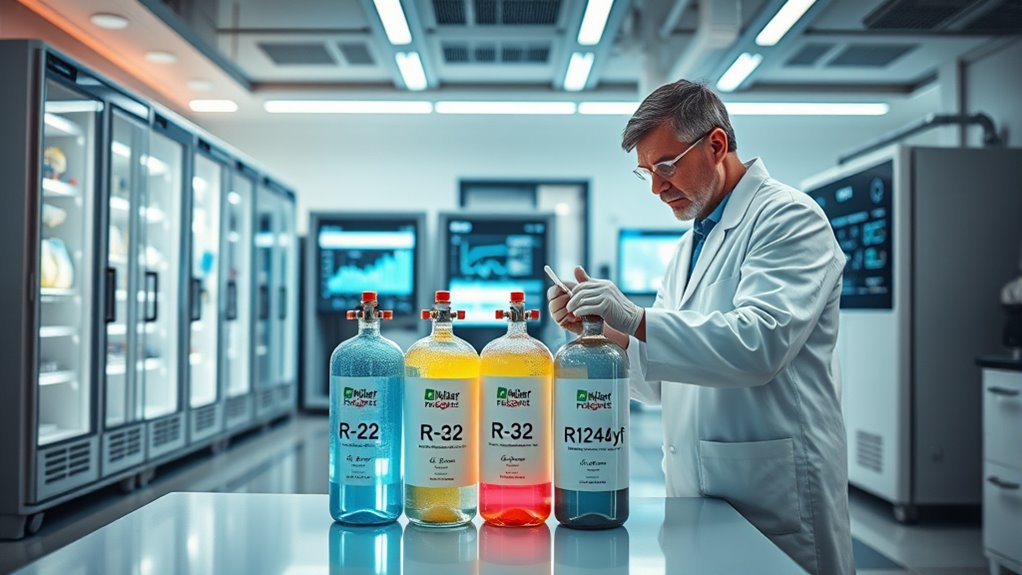

Switching from R-22 to eco-friendly refrigerants like R-32 and R-1234yf can substantially lower your system’s environmental impact. R-32 has a third of R-410A’s GWP, while R-1234yf’s GWP is less than 1, making them ideal choices for reducing greenhouse gases. This change supports regulatory compliance and advances sustainability efforts. By adopting these refrigerants, you help protect the planet and improve system efficiency—discover more about how this shift benefits your systems and the environment.

Get garden gear delivered free — and shop member deals
- Fast, free delivery on millions of items
- Access to Prime Big Deal Days deals on October 6–7
- Prime Video, Amazon Music and more included
Key Takeaways
- Transitioning from R-22 to R-32 and R-1234yf reduces environmental impact due to their lower GWP.
- R-32 offers improved energy efficiency while maintaining a lower GWP, making it a popular substitute.
- R-1234yf has an extremely low GWP (<1), supporting climate change mitigation efforts.
- System upgrades and professional handling are essential for safe, compliant transition to these eco-friendly refrigerants.
- Switching refrigerants demonstrates environmental responsibility and aligns with global regulations to phase out high-GWP substances.

As concerns about climate change grow, switching to eco-friendly refrigerants has become more important than ever. You’re likely aware that traditional refrigerants like R-22 have long been used in air conditioning and refrigeration systems, but their environmental impact can no longer be ignored. R-22, classified as a hydrochlorofluorocarbon (HCFC), contributes significantly to ozone depletion and global warming. The good news is that there are refrigerant alternatives designed to reduce this impact. Moving to these options isn’t just about compliance; it’s about making a conscious choice to protect the environment while maintaining system efficiency.
Refrigerant alternatives such as R-32 and R-1234yf are gaining popularity because they offer lower global warming potential (GWP) compared to older refrigerants. R-32, for example, has a GWP approximately one-third that of R-410A, a common substitute for R-22. It’s also more energy-efficient, which means it can help reduce your overall carbon footprint. R-1234yf, on the other hand, has an even lower GWP—less than 1, making it one of the most environmentally friendly options available. These refrigerants not only help minimize environmental impact but also align with evolving regulations that aim to phase out high-GWP substances.
Refrigerant alternatives like R-32 and R-1234yf lower GWP and support eco-friendly, regulation-compliant cooling solutions.
Switching to eco-friendly refrigerants involves understanding the benefits of these refrigerant alternatives. R-32, being a mildly flammable hydrofluorocarbon (HFC), requires careful handling but offers a good balance of low GWP and efficiency. R-1234yf is a hydrofluoroolefin (HFO), which decomposes quickly in the atmosphere, further reducing its environmental footprint. By choosing these refrigerants, you contribute to lowering greenhouse gas emissions and help slow the pace of climate change. Additionally, modern heat pump systems designed with quieter operation in mind often incorporate advanced refrigerant technology to optimize efficiency and environmental benefits. This shift is also a step toward future-proofing your systems, as regulations increasingly favor low-GWP refrigerants.
Implementing the move isn’t just about swapping out old refrigerants; it involves system assessments and sometimes modifications to ensure safety and peak performance. Working with professionals experienced in handling refrigerant alternatives ensures that your systems meet standards and operate efficiently. Ultimately, embracing eco-friendly refrigerants like R-32 and R-1234yf is a proactive move. It demonstrates your commitment to sustainability, reduces your environmental impact, and aligns with the global effort to combat climate change. Making informed choices about refrigerant options not only benefits the planet but also enhances your reputation as a responsible and forward-thinking individual or organization.
As an affiliate, we earn on qualifying purchases.
Frequently Asked Questions
Are Eco-Friendly Refrigerants Cost-Effective Long-Term Solutions?
Yes, eco-friendly refrigerants are cost-effective long-term solutions. They offer significant cost savings through increased energy efficiency and reduced maintenance needs. As market growth accelerates, prices are likely to decrease further, making these refrigerants more affordable. Investing now helps you benefit from lower operating costs and aligns with environmental standards, ensuring compliance and sustainability. Overall, adopting R-32 and R-1234yf is a smart, economically sound choice for your cooling systems.
How Do Eco-Friendly Refrigerants Impact Energy Consumption?
Oh, absolutely, eco-friendly refrigerants are here to save the planet while secretly boosting your energy bills! They improve energy efficiency, reducing overall energy consumption, and provide significant environmental benefits. By switching to R-32 or R-1234yf, you’re not just helping the environment—you’re also optimizing system performance. So, go ahead, embrace these greener options, and enjoy lower energy use with a side of guilt-free eco-consciousness!
Can Existing Systems Be Easily Converted to Eco-Friendly Refrigerants?
You can convert existing systems to eco-friendly refrigerants, but it isn’t always straightforward. Retrofit challenges include compatibility issues with existing components and the need for professional assessment. You might need to replace certain parts or adjust system settings to guarantee ideal performance. While conversion is possible, it’s essential to consult a qualified technician to navigate these challenges safely and effectively.
What Are the Safety Considerations for Handling New Refrigerants?
Imagine the moment you handle a new refrigerant—your safety hinges on proper refrigerant handling and strict safety protocols. Always wear protective gear, verify proper ventilation, and avoid leaks. R-32 is mildly flammable, so you must follow guidelines to prevent fire hazards. For R-1234yf, be aware of its low toxicity but still handle with care. Your awareness and adherence to safety protocols keep everyone safe during refrigerant handling.
Are Eco-Friendly Refrigerants Compatible With All HVAC Equipment?
Eco-friendly refrigerants like R-32 and R-1234yf aren’t compatible with all HVAC equipment. You might face compatibility issues that require equipment modifications to guarantee proper function and safety. Before switching, check your system’s specifications and consult manufacturers. Upgrading or adjusting components can prevent leaks, efficiency drops, or damage, making sure your system runs smoothly with these newer, environmentally friendly refrigerants.
Conclusion
By switching to smarter, sleeker, and more sustainable refrigerants like R-32 and R-1234yf, you’re taking a significant step toward a greener globe. This shift not only reduces your carbon footprint but also champions cleaner, cost-effective cooling solutions. Embrace eco-friendly refrigerants to foster a future where freshness and responsibility go hand in hand. Make this mindful move today—your commitment can create a cleaner, cooler, and more conscientious climate tomorrow.
Fall Picks
fall essentials
As an affiliate, we earn on qualifying purchases.