Gaskets often fail before filters because they’re more susceptible to environmental factors, wear, and installation errors. Over time, exposure to heat, chemicals, and pressure cause material breakdown, especially if the wrong gasket material is used. Improper installation, like overtightening or misalignment, also weakens the seal, leading to early failure. Understanding these common issues helps you prevent gasket problems—continue exploring to discover how to keep your seals in top shape.
Key Takeaways
- Gaskets are more vulnerable to wear, environmental damage, and material degradation than filters.
- Improper installation, such as overtightening or misalignment, accelerates gasket failure.
- Gasket material incompatibility with chemicals or extreme temperatures leads to quicker deterioration.
- Seal integrity depends on even pressure and proper seating, which, if compromised, causes early failure.
- Filters typically have longer lifespans due to less exposure to environmental and mechanical stresses.
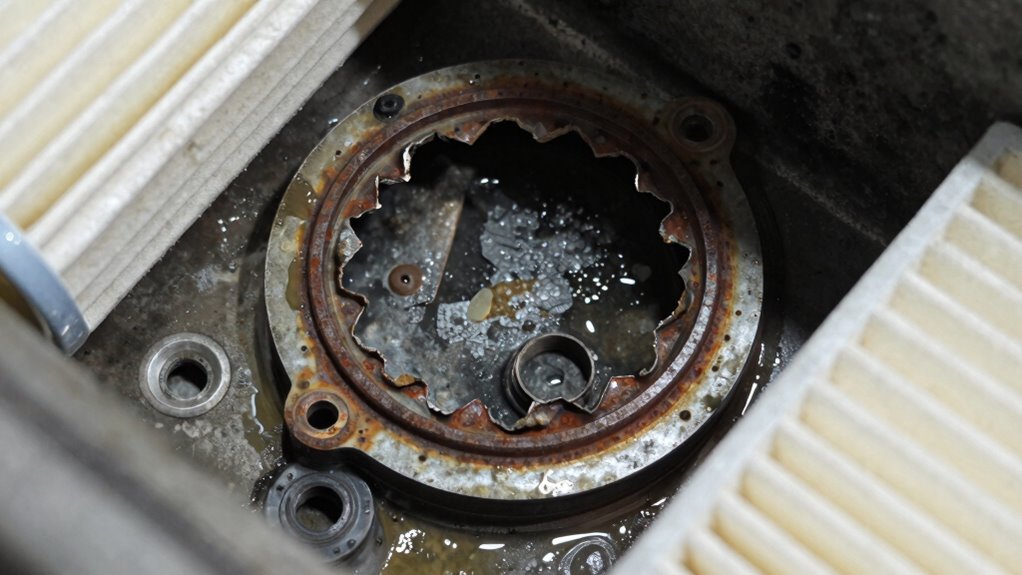
Gaskets often fail before filters because they are more vulnerable to wear and environmental factors. Unlike filters, which are designed to trap contaminants and can often be replaced easily, gaskets serve as seals between components, making their integrity critical for preventing leaks. Over time, material degradation becomes a significant issue. Exposure to heat, chemicals, and constant pressure causes gasket materials like rubber, silicone, or cork to break down. This deterioration weakens the seal, making it prone to leaks even if the filter itself remains functional. Because gaskets are directly exposed to harsh conditions, their lifespan is often shorter, and their failure can occur unexpectedly. A material degradation can accelerate if the gasket is exposed to incompatible chemicals or extreme temperatures. Installation errors also play a major role in early gasket failure. When gaskets aren’t installed correctly, their sealing surfaces may be compromised, leading to uneven pressure distribution. For example, overtightening a bolt can distort the gasket, causing it to crack or deform prematurely. Conversely, under-tightening may leave gaps that allow leaks to develop. Improper alignment during installation can also stress the gasket unevenly, accelerating wear and tear. If the gasket isn’t seated properly, it won’t form a tight seal, increasing the likelihood of failure. These errors are common, especially if you’re not paying close attention during maintenance or if instructions aren’t followed precisely. Additionally, material compatibility plays a crucial role in gasket longevity, as using the wrong gasket material for a specific environment can lead to rapid deterioration. Ensuring the use of correct installation techniques can significantly reduce the risk of early failure. Proper installation techniques and awareness of environmental conditions are essential for extending gasket lifespan and preventing unexpected failures. The right gasket material must be selected considering the specific application, and neglecting this can result in early failure.

Wire Mesh Gasket Kit Fit for Kamado Joe Classic – 150" Fiberglass Gasket Replacement Kit – Fit for Big Green Egg – Kamado Accessories & Replacement Parts – Smoker Gasket Seal
- Perfect Fit & Compatibility: Fits Kamado Joe and Big Green Egg
- Easy Installation: Quick upgrade for better performance
- Enhanced Durability: Steel wire mesh for longevity
As an affiliate, we earn on qualifying purchases.
As an affiliate, we earn on qualifying purchases.
Frequently Asked Questions
How Can I Tell if a Gasket Has Failed Prematurely?
You can tell if a gasket has failed prematurely by inspecting for leaks, cracks, or deformation around the seal. Check if chemical compatibility issues caused deterioration, as certain substances can weaken gaskets faster. Also, consider installation errors, like over-tightening or improper alignment, which can lead to early failure. Regular maintenance and careful installation help prevent these issues, ensuring your gasket functions properly and lasts longer.
Are Some Gasket Materials More Prone to Early Failure?
Yes, some gasket materials are more prone to early failure. You should consider material compatibility with your application’s chemicals, temperature, and pressure to prevent premature breakdown. Additionally, manufacturing quality plays a vital role; poorly made gaskets can have defects that lead to early failure. Always choose high-quality materials suited for your specific conditions, and guarantee proper installation to maximize gasket lifespan and avoid early issues.
What Maintenance Practices Prevent Gasket Failures?
You can beat the odds by following proper maintenance practices for gasket longevity. Always guarantee material compatibility with your system’s fluids and temperature conditions, and use correct installation techniques—like proper torque and alignment—to prevent failures. Regular inspections catch issues early, and replacing gaskets before they show signs of wear keeps everything running smoothly. A stitch in time saves nine, so proactive care is your best defense against gasket failures.
Do Gasket Failures Pose Safety Risks?
Gasket failures definitely pose safety concerns because a damaged gasket can lead to leaks, spills, or even equipment malfunctions. The gasket material plays an essential role; if it’s incompatible with the fluid or operating conditions, failure risks increase. When gaskets fail, you might face hazardous situations like exposure to toxic substances or fire hazards. Regular inspections and choosing the right gasket material help mitigate these safety risks effectively.
How Does Temperature Affect Gasket Longevity?
Temperature greatly impacts gasket longevity by affecting material compatibility and causing thermal expansion. When temperatures rise, some gasket materials may weaken or degrade, leading to failure. Thermal expansion can also cause gaskets to lose sealing pressure, especially if materials aren’t designed for high heat. You should select gaskets that match your operating temperature range and consider how thermal expansion might affect their fit and seal, ensuring long-lasting performance.
Conclusion
You might find it surprising, but gaskets often fail before filters—sometimes by up to 50%. This happens because gaskets endure constant pressure, temperature fluctuations, and chemical exposure, wearing out faster. If you overlook gasket maintenance, you risk leaks and costly repairs. Staying vigilant and replacing gaskets proactively can save you time and money. Remember, prioritizing gasket health isn’t just smart; it’s essential to keep your system running smoothly and safely.