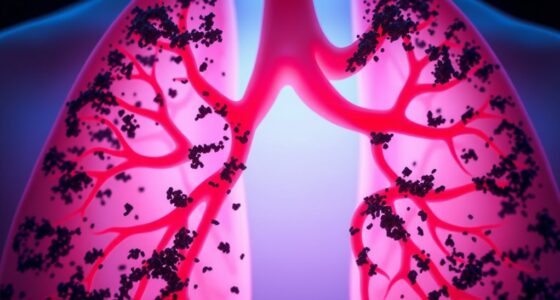

Ultrafine particles and PM1 are tiny pollutants that can easily enter your lungs and bloodstream, leading to serious health issues. Exposure increases your risk of inflammation, cardiovascular problems, and respiratory ailments like asthma or COPD. These particles often come from indoor sources like cooking, smoking, or heating, especially without proper ventilation. Protecting yourself with clean air practices and filters can reduce risks—reach further into this topic to discover more ways to stay safe from invisible indoor threats.
Key Takeaways
- Ultrafine particles can penetrate deep into lungs and enter the bloodstream, causing systemic health effects.
- Exposure increases the risk of cardiovascular problems like inflammation, atherosclerosis, and heart attacks.
- Indoor sources such as cooking fumes and tobacco smoke significantly contribute to ultrafine particle levels.
- Short-term exposure can trigger respiratory symptoms, especially in individuals with asthma or COPD.
- Using air purifiers and proper ventilation can help reduce indoor ultrafine particle exposure and associated health risks.

Air pollution from tiny particles, especially PM1 and ultrafine particles, poses serious health risks that often go unnoticed. While we usually think of outdoor smog or exhaust fumes, these microscopic particles can also be present indoors, substantially impacting your indoor air quality. You might not realize it, but the air inside your home or office can be just as contaminated as outside, if not more so. These particles are so small that they bypass the body’s natural defenses, penetrate deep into your lungs, and even enter your bloodstream. Over time, exposure to PM1 and ultrafine particles can contribute to a range of health problems, particularly affecting your heart and circulatory system.
Tiny indoor particles like PM1 and ultrafine matter threaten your heart and lung health silently.
When the air you breathe indoors contains high levels of ultrafine particles, your cardiovascular risks increase. These tiny particles can cause inflammation in blood vessels, leading to the development of atherosclerosis, which is the buildup of plaque that narrows arteries. As your arteries become more restricted, your heart has to work harder to pump blood, raising your risk of heart attacks, strokes, and other cardiovascular events. The problem is compounded because indoor environments often trap pollutants, especially if ventilation is poor or if you’re exposed to sources like cooking fumes, tobacco smoke, or certain heating devices. Without proper awareness and measures to improve indoor air quality, you’re unknowingly putting your heart at risk every day.
Moreover, these particles aren’t just a concern for long-term health—they can trigger immediate symptoms too. You might notice increased coughing, wheezing, or shortness of breath, especially if you already have respiratory conditions like asthma or COPD. The continuous inhalation of ultrafine particles causes oxidative stress and inflammation within your lungs, which can spill over into the cardiovascular system. This connection underscores the importance of maintaining good indoor air quality, not just for comfort but for your overall health. Simple steps like using air purifiers equipped with HEPA filters, ensuring proper ventilation, and avoiding indoor smoking can dramatically reduce your exposure to these dangerous particles.
In essence, understanding the link between indoor air quality and cardiovascular risks highlights why paying attention to the cleanliness of your indoor environment matters. Protecting yourself from ultrafine particles isn’t just about avoiding visible dirt or dust; it’s about safeguarding your heart and lungs from invisible threats that can silently cause damage over time. Taking proactive steps to improve indoor air quality helps minimize these risks, giving you cleaner, healthier air to breathe every day.
Frequently Asked Questions
How Do PM1 and Ultrafine Particles Enter the Human Body?
You inhale PM1 and ultrafine particles, which enter your body through respiratory absorption in your lungs. These tiny particles can also penetrate your skin, especially if it’s broken or wet, leading to skin absorption. Once inside, they can travel through your bloodstream, potentially causing health issues. To minimize exposure, avoid heavily polluted areas and wear protective masks when air quality is poor.
Are Children More Vulnerable to PM1 and Ultrafine Particle Exposure?
Yes, children are more vulnerable to PM1 and ultrafine particle exposure because their immune systems are still developing. Their developmental sensitivities mean that these tiny particles can penetrate deeper into their lungs and even enter their bloodstream more easily. As a result, children face higher risks of respiratory issues, allergies, and other health problems. Protecting them from exposure is essential for their long-term health and development.
Can Indoor Air Purifiers Effectively Reduce PM1 Levels?
Indoor air purifiers can effectively reduce PM1 levels if they use high-quality filters designed for ultrafine particles. Focus on indoor filtration systems with HEPA or activated carbon filters, as they improve air purifier efficiency in capturing tiny particles. Regularly maintaining and replacing filters guarantees peak performance, helping you breathe cleaner air and minimize health risks associated with ultrafine particles indoors.
What Are the Long-Term Health Effects of Chronic Exposure?
Chronic exposure to PM1 and ultrafine particles can lead to serious health issues. You might develop chronic respiratory problems like asthma or COPD, and your cardiovascular risks increase, raising the chance of heart attacks or strokes. Over time, these tiny particles can cause inflammation and damage your lung and heart tissues. Protect yourself by reducing exposure, especially if you’re in polluted environments, and stay vigilant about air quality.
How Do Weather Conditions Influence Ultrafine Particle Concentrations?
Weather conditions directly influence ultrafine particle concentrations. Temperature fluctuations can cause particles to disperse or settle, affecting their levels in the air. When temperatures rise, particles often disperse more quickly, reducing concentrations. Wind dispersion also plays a vital role; strong winds can carry ultrafine particles away from their source, lowering local concentrations, while calm conditions may allow particles to accumulate, increasing health risks.
Conclusion
In summary, understanding the harmful health hazards of PM1 and ultrafine particles is essential. By recognizing the risks, you can better bolster your barriers against breathing in these tiny toxins. Staying informed, minimizing exposure, and advocating for air quality improvements can make a significant difference. Don’t delay—delve into details, defend your health, and dedicate yourself to reducing dangerous dust dangers. Your lungs will thank you for your proactive, powerful, and persistent efforts.