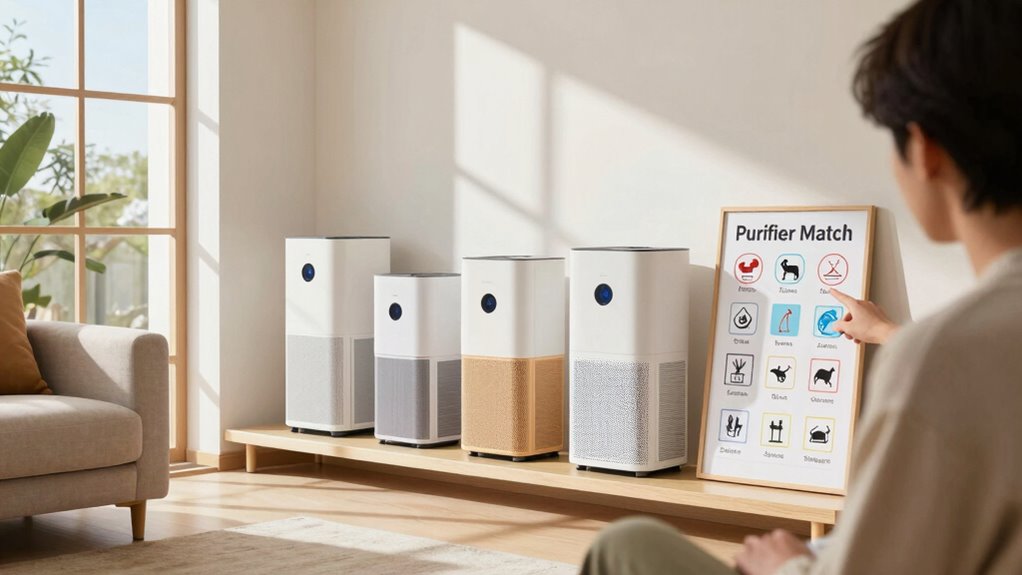
To match a purifier to your lifestyle in five minutes, start by evaluating your indoor air quality—check for odors, dust, or allergens and consider if anyone in your home has allergies or respiratory issues. Then, identify your space size to pick the right capacity, and decide if you need extra features like Wi-Fi or quiet operation. Finally, consider long-term costs and maintenance. Want to get it just right? Keep going to explore all the essential steps.
Key Takeaways
- Assess indoor air concerns like odors, dust, allergies, or pollution to determine necessary filtration levels.
- Match purifier features such as HEPA or activated carbon filters to your specific air quality needs.
- Consider your lifestyle preferences including noise tolerance, cleaning ease, and connectivity options.
- Measure room size to select a device with appropriate capacity for effective coverage.
- Evaluate maintenance costs, filter lifespan, and energy efficiency to ensure sustainable, cost-effective operation.
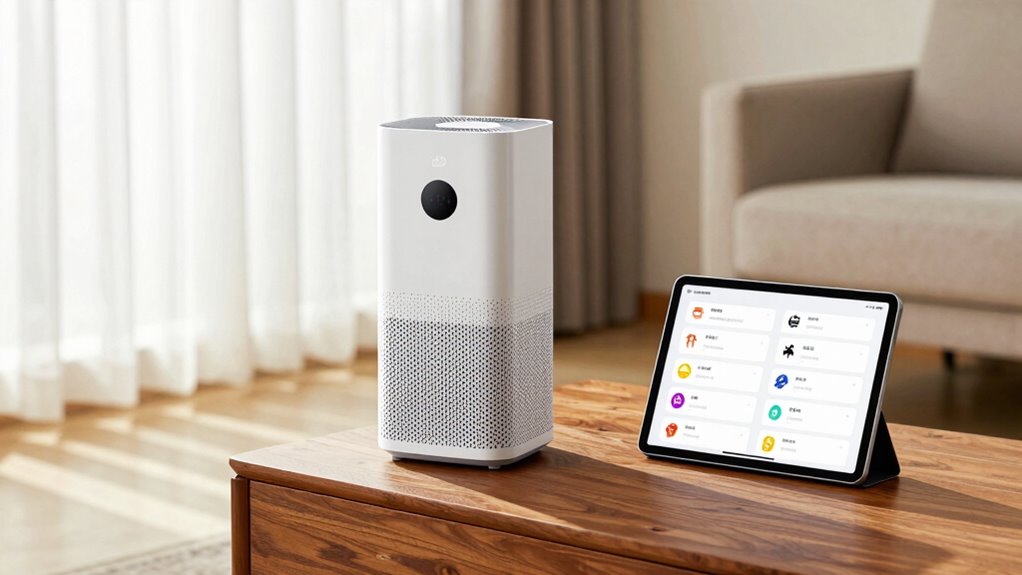
Are you unsure how to choose the right air purifier for your home? The key is understanding how your air quality and lifestyle needs influence the features you should prioritize. Your living environment plays a big role in determining which purifier will work best. If you live in a city with high pollution, for example, you’ll need a device with strong filtration capabilities to remove airborne contaminants. Conversely, if you have allergies or asthma, you’ll want an air purifier that targets specific allergens like pollen, dust, or pet dander. Think about what matters most to you—clean air or convenience—and how much effort you’re willing to put into maintenance. This quick checklist helps you consider these factors so you can make an informed choice.
Start by evaluating your air quality. Are you noticing persistent odors, smoke, or visible dust? Do you or someone in your household suffer from allergies or respiratory issues? These questions help you determine the level of filtration required. For example, if indoor air quality is compromised due to pollution or smoking, look for purifiers with HEPA filters and activated carbon layers. These are effective at capturing fine particles and odors. If your air quality is relatively good but you want to prevent seasonal allergens, a simpler model with a HEPA filter might suffice. Matching your purifier’s features to your air quality ensures you’re effectively improving the air you breathe.
Evaluate your air quality to choose the right purifier with HEPA and activated carbon filters.
Next, consider your lifestyle needs. Do you prefer a device that operates quietly in the background, or are you okay with a noisier unit that runs more aggressively? If you have young children or pets, you’ll want a purifier with easy-to-clean filters and safe, user-friendly controls. If you’re often away from home, an air purifier with Wi-Fi connectivity and remote control features might suit you better. Also, think about the size of the space you want to purify. Larger rooms require more powerful units, while smaller spaces can get by with compact models. Choosing a purifier that fits your space and usage habits ensures you won’t have to compromise on comfort or air quality.
Finally, factor in maintenance and operational costs. Some purifiers require frequent filter replacements, which can add up over time. Decide if you’re comfortable with regular upkeep or prefer a model with long-lasting filters. Also, check energy consumption—an energy-efficient purifier saves you money and reduces your environmental impact. Understanding the importance of trusted filtration and selecting a model with reliable components can make a significant difference in your air quality and peace of mind. By aligning these practical aspects with your lifestyle, you ensure the purifier you choose is sustainable and effective for your everyday needs. In just five minutes, considering your air quality, lifestyle needs, and maintenance preferences will lead you to a purifier that enhances your home environment without hassle.
Frequently Asked Questions
Can Purifiers Eliminate All Types of Airborne Allergens?
Purifiers can’t eliminate all types of airborne allergens because of their limitations. While they effectively reduce common airborne allergens like pollen, pet dander, and dust mites, some allergens such as certain mold spores and chemical fumes may still linger. You should choose a purifier with HEPA filters and consider additional measures for thorough protection. Keep in mind, understanding purifier limitations helps you set realistic expectations and improve your indoor air quality effectively.
How Often Should I Replace or Clean Purifier Filters?
Think of your purifier’s filters as the lungs of your air cleaner—when they’re clogged, breath becomes strained. You should replace or clean filters according to their filter lifespan and cleaning schedule, typically every 3 to 6 months. Regular maintenance ensures peak airflow and allergen removal, so stay attentive to manufacturer instructions. Don’t let neglect turn your purifier into a stagnant pond—keep it fresh, functional, and breathing easy.
Are Portable Purifiers Effective for Large Rooms?
Portable purifiers can be effective for large rooms if they have sufficient capacity and airflow. Check the device’s room suitability and CADR (Clean Air Delivery Rate) to make certain it matches your space. While smaller units excel in compact areas, larger portable purifiers with high CADR ratings can improve air quality effectively across bigger rooms. Always verify their portable effectiveness for your room size before purchasing.
Do Purifiers Remove Odors and Volatile Organic Compounds (VOCS)?
Yes, purifiers do remove odors and VOCs effectively. They use activated carbon filters for odor removal and VOC filtration, trapping harmful chemicals and smells from your air. Some models even combine HEPA and carbon filters to improve overall air quality. So, if you’re concerned about lingering smells or airborne chemicals, investing in a purifier with these features can make a noticeable difference in your environment.
What Maintenance Is Required to Keep a Purifier Functioning Optimally?
To keep your purifier working effectively, you need to replace the filters regularly and perform routine cleaning. Check the manufacturer’s guidelines for filter replacement intervals, usually every 6 to 12 months. Additionally, wipe down the exterior and clean the pre-filters often to prevent dust buildup. Doing these simple maintenance tasks ensures your purifier continues to effectively remove odors, VOCs, and other airborne pollutants.
Conclusion
Now that you’ve got this quick checklist in your back pocket, choosing the perfect purifier is like finding a trusted friend who knows exactly how to breathe new life into your space. Think of it as planting a seed that blossoms into crisp, clean air, turning your home into a sanctuary. With these easy steps, you’re steering your lifestyle’s ship toward clearer, healthier waters—making every breath you take a invigorating breeze in your daily voyage.