
TL;DR

Get garden gear delivered free with Prime
- Fast, free delivery on millions of items
- Prime Video, Amazon Music and more included
- Member-only deals all year
A Homes & Gardens report outlines seven ways to support Northern cardinals as fall turns to winter, drawing on advice from experts at the Cornell Lab of Ornithology and the American Birding Association. Suggestions include leaving leaves, creating brush piles, preserving cover, growing berry-bearing plants, providing clean water and offering appropriate seed; the report does not quantify how much these steps affect bird survival.
A Homes & Gardens report published in October outlines seven ways people can support Northern cardinals as winter approaches, including leaving fallen leaves, building brush piles and keeping berry-producing plants for food and shelter. The recommendations draw on comments from Cornell Lab of Ornithology and American Birding Association experts, and focus on resources that may become harder for birds to find in colder months.
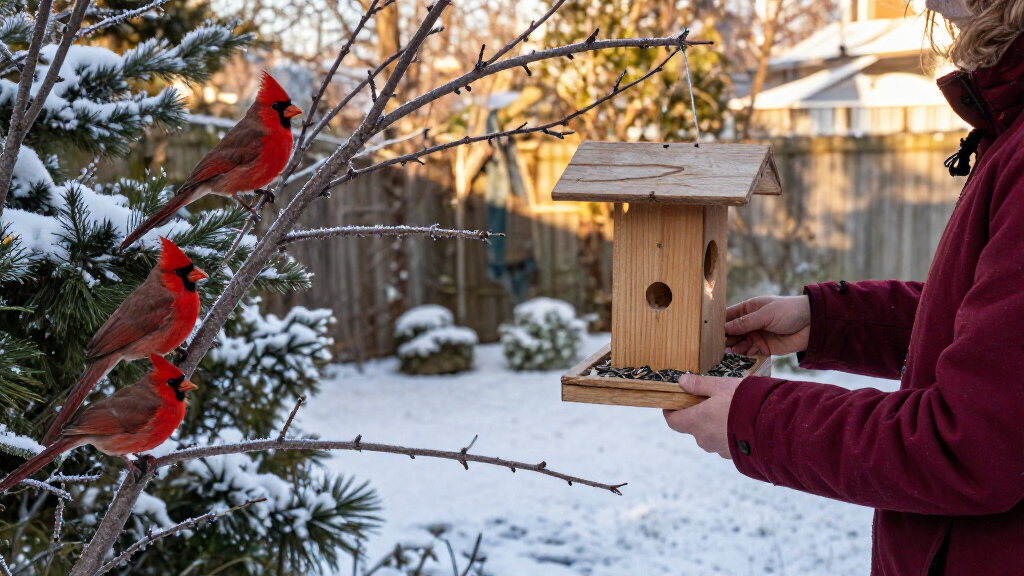
Miranda Rinck, an engagement support specialist for Project FeederWatch at the Cornell Lab of Ornithology, told Homes & Gardens that cardinals may gather in larger groups in fall and winter than during spring and summer. She said competition between pairs is lower outside the breeding season, when food, mates and territory are in greater demand. Cardinals also tend to be quieter in winter, Rinck said, as they are no longer singing to attract mates or defend territories.
The report’s habitat suggestions include leaving some fallen leaves for birds to forage through and piling fallen branches and twigs in a quiet part of the yard, simple ways to help backyard birds through fall. Rinck said leaf piles can contain insects, seeds and fruit, while brush piles can offer shelter, resting places and protection from harsh weather and predators. The report also recommends keeping shrubs, vines and thickets rather than cutting them back heavily, since they can provide cover and roosting spots.
Other recommendations include planting native trees and shrubs that produce berries, such as locally appropriate dogwood, holly and hawthorn; retaining grasses and sedges; and avoiding pesticides to protect invertebrates that some cardinals eat. The seven-step list also includes supplying suitable birdseed and making water available, including with a heated bird bath where appropriate, alongside other ways to support garden birds in winter. The report advises checking which plants are native to a person’s region rather than treating one species list as suitable everywhere.
Food and Cover as Weather Turns
The advice centers on making yards more useful as natural food and shelter become less available or more difficult to reach in cold weather. A leaf or brush pile can add foraging space and cover without requiring a formal feeder, while berry-bearing plants can supply food and protected places to rest. These steps may also support other wildlife, including insects that birds feed on.
The guidance is practical but should not be read as a guarantee that any single yard will attract cardinals or improve their survival. It instead identifies habitat features that experts say can provide resources. For readers, the main takeaway is that leaving some areas less tidied—and limiting pesticide use—can benefit wildlife alongside more deliberate actions such as providing seed and water.
As an affiliate, we earn on qualifying purchases.
Cardinal Behavior in Fall
The report describes a seasonal shift in cardinal behavior as temperatures fall. According to Rinck, larger groups are more likely outside the breeding period, while winter birds may seek places to rest, hide and find seeds or fruit. This seasonal context explains why the recommendations emphasize both food and protected cover, rather than feeders alone.
Ted Floyd, editor of the American Birding Association’s Birding magazine, told Homes & Gardens that cover can be valuable even when it does not provide food. He named shrubs, vines, thickets and brush as useful options and said a brush pile at a nearby garden was used by birds. Floyd also said cardinals in warmer regions may eat many invertebrates in October and winter, reinforcing the report’s advice to provide habitat and avoid pesticides.
““Leaving your leaves is a great way to provide a variety of food for Cardinals and other birds in your yard.””
— Miranda Rinck, Project FeederWatch, Cornell Lab of Ornithology
What the Advice Does Not Measure
The report offers expert recommendations, not measured results: it does not quantify how much any one action increases cardinal visits, health or winter survival. The effects will also depend on local climate, habitat and available plants. Its suggestions do not establish that every listed plant is native or suitable in every region, so readers should check local guidance.
The source material does not specify detailed feeder hygiene or seed amounts, nor does it establish that a heated bath is needed in every location. It also does not report a controlled comparison of yards with and without these features. The advice is best understood as practical habitat guidance rather than a promise of a particular outcome.
Seasonal Yard Steps to Take
As fall progresses, readers can start with changes suited to their property: leave a portion of fallen leaves, stack branches in a quiet location, and retain existing shrubs or thickets where practical. Before planting, check which berry-producing trees and shrubs are native to the local area. If using feeders or a water source, maintain them appropriately and consider local conditions.
The report sets out no future study, deadline or policy action. Its recommendations are intended for use as winter approaches; any observed change in cardinal activity will depend on local conditions and cannot be predicted from the article alone.
Key Questions
What are the main ways to help cardinals in winter?
The report recommends leaving leaf piles, making brush piles, preserving shrubs and thickets, growing native berry-bearing plants, limiting pesticide use, offering appropriate seed and providing water.
Why leave fallen leaves in the yard?
Miranda Rinck of Project FeederWatch said leaf piles can harbor insects, dried seeds and fruit that birds can find while foraging.
Do cardinals need brush piles for food?
Brush piles can provide shelter, resting places and protection, according to Rinck. Their value is not limited to food.
Which plants should I grow for cardinals?
The report mentions berry-producing plants such as dogwood, holly and hawthorn, as well as shrubs and vines. Check local sources to determine which species are native and suitable in your region.
Does the report prove these steps increase cardinal survival?
No. It presents expert-informed habitat recommendations but gives no measured survival effect or quantified increase in cardinal visits.
Source: rss
Fall yard work Picks
leaf blowers
As an affiliate, we earn on qualifying purchases.