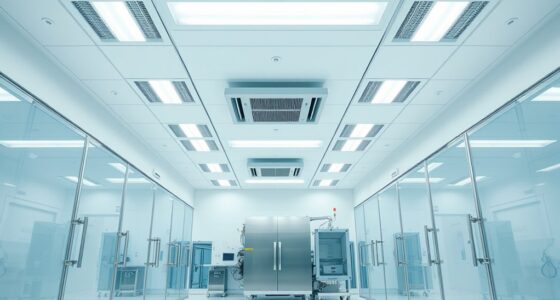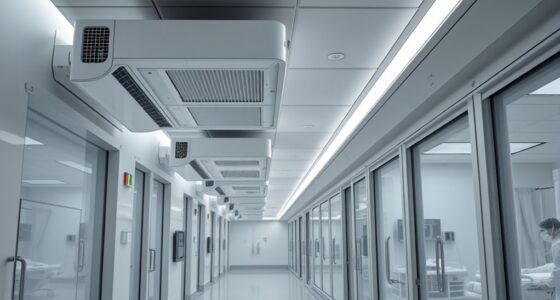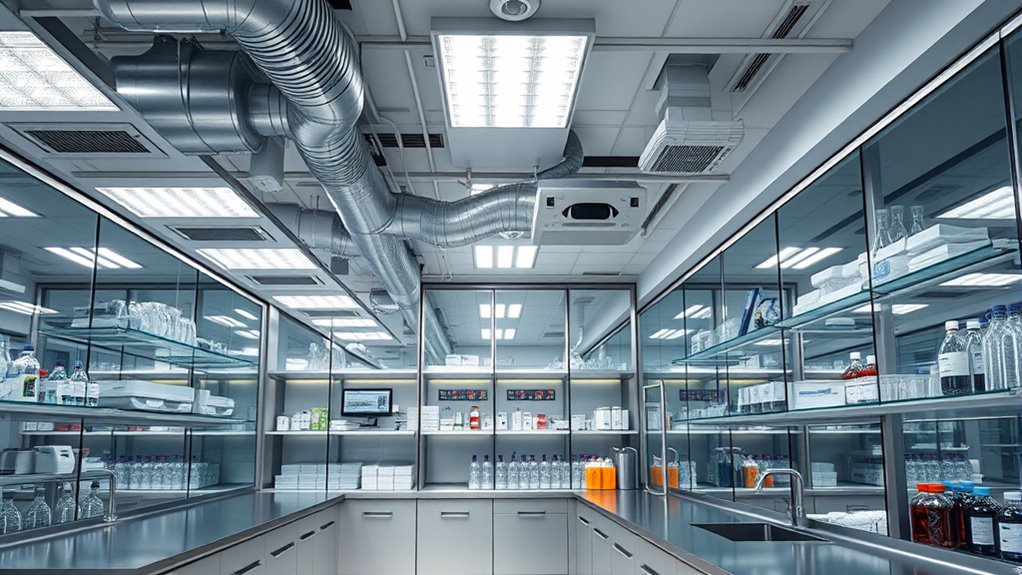

In laboratories and research facilities, maintaining good IAQ is challenging due to hazardous chemicals, biological agents, and sensitive equipment. You must guarantee effective ventilation, proper air filtration like HEPA and activated carbon filters, and regular system maintenance. Balancing airflow rates and monitoring IAQ levels are essential to prevent contamination and exposure. Staying on top of these challenges helps you keep a safe environment. Discovering more can help you implement better IAQ strategies for your lab.
Key Takeaways
- Controlling airborne biological, chemical, and particulate contaminants to prevent exposure risks.
- Ensuring proper design and maintenance of ventilation and filtration systems for consistent airflow.
- Managing VOCs and fumes generated by laboratory processes to prevent indoor air quality deterioration.
- Maintaining negative pressure environments and airflow patterns to contain hazardous agents.
- Monitoring IAQ parameters in real-time for prompt detection and correction of contamination issues.
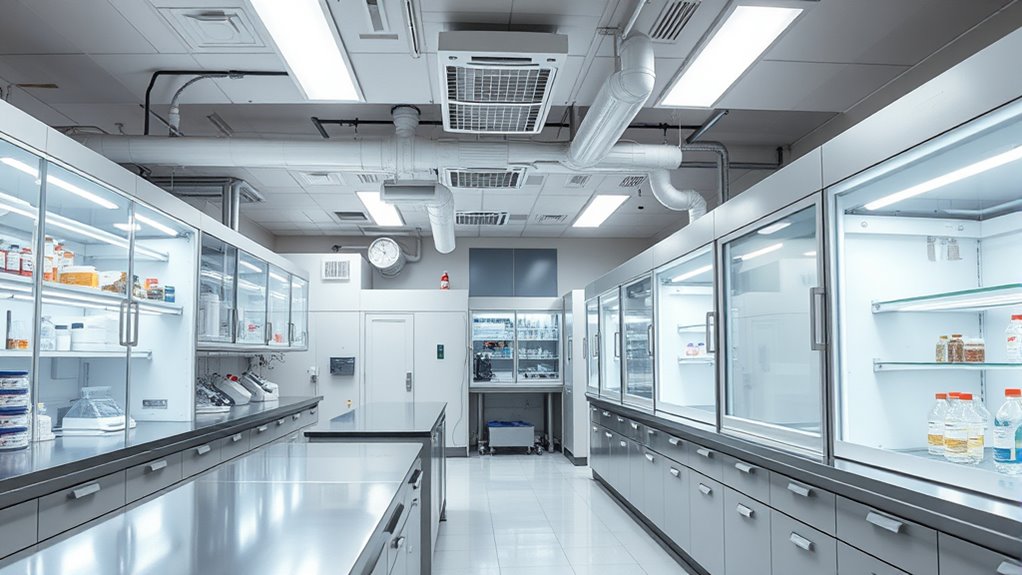
Maintaining good indoor air quality (IAQ) in laboratories and research facilities is essential for ensuring both safety and ideal work conditions. These environments often handle hazardous chemicals, biological agents, and sensitive equipment, making air quality a top priority. To achieve this, you must pay close attention to air filtration and ventilation design, which are vital components of any effective IAQ strategy.
Air filtration is your first line of defense against airborne contaminants. High-efficiency particulate air (HEPA) filters are a common choice because they can trap particles as small as 0.3 microns, including bacteria, viruses, and chemical fumes. When you select the right filters, you greatly reduce the risk of contaminant spread and exposure. Regularly maintaining and replacing these filters guarantees optimal performance. You also need to consider activated carbon filters, which can absorb volatile organic compounds (VOCs) and other chemical vapors that may be present in lab environments. Combining different filtration types tailored to your specific lab activities can create a cleaner, safer air supply.
Ventilation design plays a crucial role in controlling IAQ. An effective ventilation system ensures the continuous exchange of indoor and outdoor air, diluting and removing pollutants. You should design your ventilation system to provide sufficient airflow rates, aligned with what your laboratory activities generate. For example, fume hoods and local exhaust systems must be properly balanced with general ventilation to prevent the accumulation of hazardous fumes or biological aerosols. Negative pressure rooms are often necessary to contain dangerous agents, so your ventilation layout must facilitate containment while maintaining overall air quality. Proper airflow patterns prevent cross-contamination between different zones within the facility. Additionally, utilizing proper maintenance of fans and ductwork is critical to ensure consistent airflow and prevent system failures that could compromise IAQ. Implementing a well-planned ventilation design also involves ensuring proper airflow direction and pressure differentials. You need to make sure that air flows from cleaner areas to less clean zones, avoiding the spread of contaminants. This requires precise calculation and balancing of air supply and exhaust rates. Additionally, incorporating air exchange rates recommended by safety standards guarantees the environment stays within safe limits. You might also consider integrating real-time IAQ monitoring systems that track particulate levels, VOCs, and humidity. These systems can alert you to deviations, allowing prompt adjustments to ventilation or filtration systems.
Frequently Asked Questions
How Do Ventilation Systems Impact IAQ in Sensitive Research Areas?
Your ventilation systems directly impact IAQ in sensitive research areas by controlling air exchange and filtration efficiency. Properly designed systems guarantee fresh air enters regularly, removing contaminants and maintaining a clean environment. High filtration efficiency traps harmful particles, preventing them from circulating. By optimizing these factors, you ensure a safer, healthier space where research integrity is preserved and potential hazards are minimized effectively.
What Are the Best Practices for Monitoring IAQ in Laboratories?
You should regularly monitor IAQ in laboratories by using advanced monitoring technologies like sensors and real-time data loggers. Guarantee your practices align with air quality standards set by relevant authorities, such as OSHA or EPA. Conduct continuous or scheduled measurements of airborne contaminants, temperature, and humidity. Proper documentation and analysis of this data help you identify potential issues early, allowing timely corrective actions to maintain a safe and compliant environment.
How Can Equipment Emissions Affect Indoor Air Quality?
Equipment emissions act like sneaky spies, slowly contaminating your indoor air. As they release fumes or particles, they cause air contamination that can jeopardize your health and experiment integrity. You might not see or smell these emissions, but they linger unseen, impacting air quality. Regular maintenance, proper ventilation, and using low-emission equipment help you fight this invisible threat, keeping your lab environment safe and breathable.
What Are Cost-Effective Solutions for IAQ Improvement?
You can improve IAQ cost-effectively by implementing source control measures, like isolating emissions and using proper ventilation. Air filtration systems, such as HEPA filters, help remove airborne contaminants efficiently. Regular maintenance of HVAC systems ensures peak performance. Combining source control with effective air filtration reduces airborne pollutants, improves indoor air quality, and keeps costs manageable, making your environment safer without breaking the bank.
How Does Occupant Behavior Influence IAQ Management Strategies?
You shape indoor air quality through your occupant habits, often without realizing it. By adopting simple behavioral interventions—like timely ventilation, proper waste disposal, and mindful use of equipment—you can markedly improve IAQ. Your proactive approach encourages a cleaner, healthier environment for everyone. Small changes in daily habits create a ripple effect, making IAQ management more effective and sustainable, ultimately fostering a safer, more productive space for all occupants.
Conclusion
Addressing IAQ challenges in labs and research facilities is no small feat, but staying vigilant and proactive can make all the difference. By understanding the risks and implementing proper ventilation and filtration, you can keep your environment safe and efficient. Remember, it’s better to nip problems in the bud before they grow. When you stay ahead of IAQ issues, you’ll ensure your research thrives and risks don’t slip through the cracks.