In-duct UV lights can effectively reduce mold, bacteria, and viruses in your HVAC system, helping to improve indoor air quality. However, they can’t remove larger particles like dust or pollen, eliminate odors or chemical pollutants, or fully sterilize every surface and hidden mold growth. They work best when used with regular cleaning and proper filters. To learn more about their limits and advantages, keep exploring how they fit into your overall air quality strategy.
Key Takeaways
- They neutralize airborne microbes but do not remove dust, pollen, or chemical pollutants.
- They cannot eliminate existing mold growth or sterilize all duct surfaces.
- They improve air quality but don’t directly address odors or chemical contaminants.
- Proper installation and maintenance are essential; they won’t work effectively if neglected.
- They are part of a broader air quality strategy and cannot replace regular cleaning and filtration.
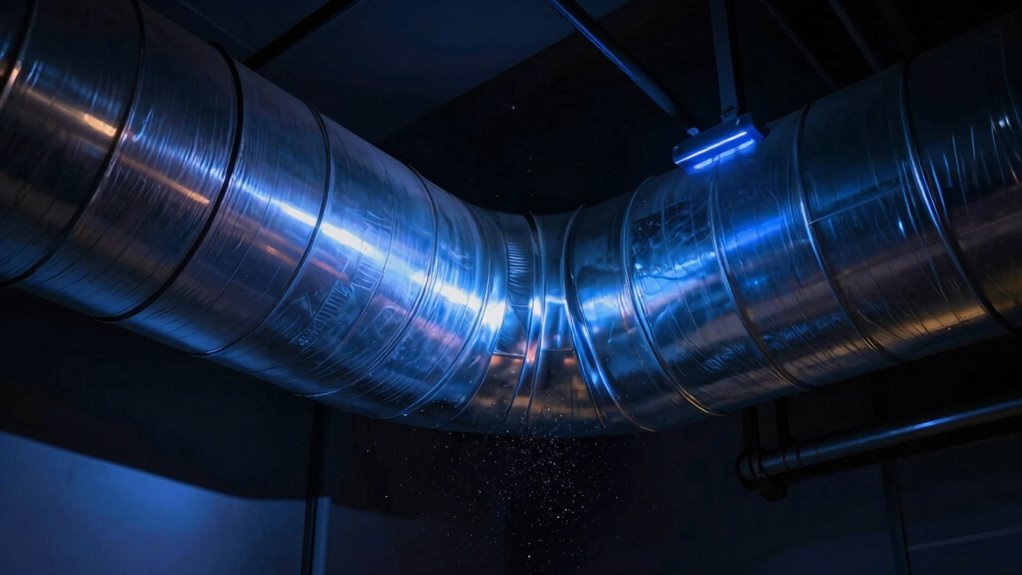
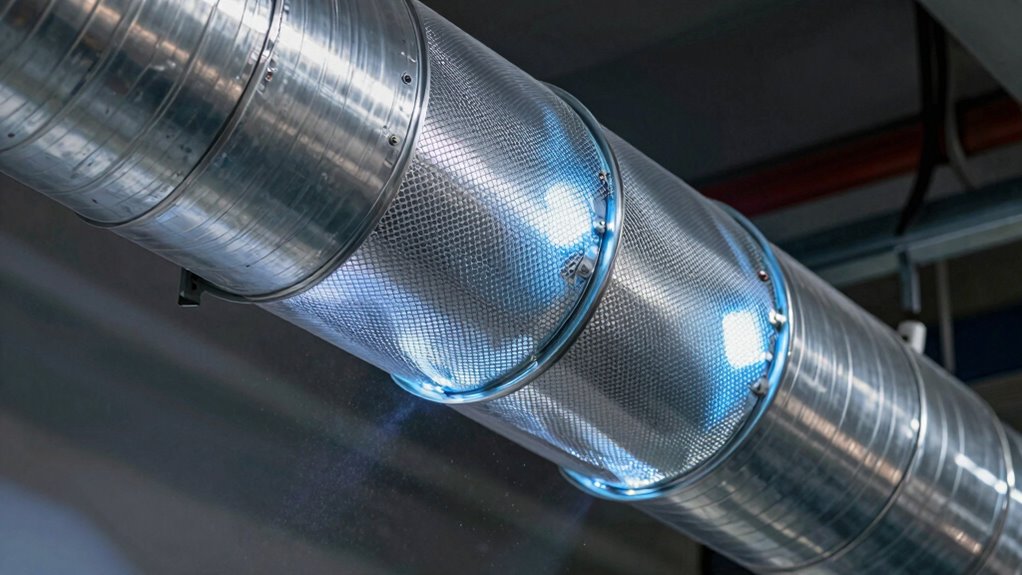
In-Duct UV lights are an innovative solution for improving indoor air quality by targeting airborne pathogens and pollutants directly within your HVAC system. These systems are designed to neutralize bacteria, viruses, mold spores, and other contaminants as air circulates through your ductwork. While they can markedly reduce the presence of certain microbes, it’s important to understand their capabilities and limitations. One key aspect to weigh is how they impact airflow efficiency. Properly installed UV lights won’t obstruct airflow if positioned correctly, but if the system isn’t optimized, they could create minor resistance or increase pressure within the ducts. This may lead to slightly higher energy consumption or strain on your HVAC fan. Regular maintenance helps guarantee that the UV lights operate efficiently, preventing dust or debris buildup that can diminish their effectiveness or hinder airflow. Maintenance requirements are relatively straightforward but essential; replacing UV bulbs periodically is necessary since their germicidal effectiveness diminishes over time. Neglecting this can cause the system’s performance to decline, affecting both air quality and energy costs. Additionally, understanding the air filtration process is crucial for optimizing overall indoor air quality.
However, in-duct UV lights aren’t a cure-all. They can’t eliminate every airborne contaminant, especially larger particles like dust or pollen, which are usually filtered out by your HVAC filters. They also don’t remove odors or chemical pollutants that may linger in indoor air. Additionally, UV lights don’t have the capacity to sterilize every surface or eliminate existing mold growth in ductwork or other hidden areas. Their primary function is to prevent microbial growth on the coils and within the ducts, which can help maintain cleaner air over time. But if mold or bacteria have already established a significant presence, UV lights alone won’t eradicate the problem completely—they should be part of a thorough air quality strategy that includes regular cleaning and proper filtration.
Frequently Asked Questions
Can In-Duct UV Lights Eliminate All Airborne Viruses?
In-duct UV lights can’t eliminate all airborne viruses completely. While they substantially reduce airborne virus levels through UV light exposure, limitations like airflow speed and light placement can hinder full elimination. You should understand that UV lights are effective against many pathogens, but they don’t guarantee complete airborne virus elimination. To maximize safety, combine UV technology with other air purification methods for thorough airborne virus control in your space.
Do UV Lights Require Regular Maintenance or Bulb Replacement?
You’ll need to replace your UV light bulbs every 9 to 14 months, as their lifespan diminishes with use. Regular maintenance is essential; a typical schedule involves inspecting the bulbs quarterly and changing them before their effectiveness drops. Think of it like a car’s oil change—staying on top ensures peak performance. Neglecting this can lead to reduced germ-killing power, so set reminders to keep your system running smoothly.
Are In-Duct UV Lights Safe for Pets and Children?
In-duct UV lights are generally safe for pets and children when installed properly, as they are contained within your HVAC system. However, you should still guarantee that the UV exposure is minimal and avoid direct contact with the lights. Regular maintenance and professional installation help maintain safety, preventing potential risks. Always follow manufacturer guidelines to maximize pet safety and child safety while enjoying cleaner indoor air.
How Long Does It Take for UV Lights to Disinfect a Space?
It usually takes about 15 to 30 minutes for UV lights to disinfect a space, depending on air circulation and light intensity. You should guarantee good airflow so the UV light can reach all surfaces effectively. Higher light intensity speeds up the process, but for thorough disinfection, maintaining consistent air circulation helps distribute the UV rays evenly, making the cleaning more efficient.
Can UV Lights Reduce Mold Growth in HVAC Systems?
You’ll be glad to know that UV lights can help reduce mold growth in HVAC systems, enhancing mold prevention and air quality. Studies show UV-C light can inactivate up to 99% of mold spores, preventing them from spreading. By installing in-duct UV lights, you actively combat mold buildup, improving indoor air quality and protecting your health. Regular maintenance ensures peak performance, making UV technology an effective tool for mold control.
Conclusion
Think of in-duct UV lights as a lighthouse guiding your home’s air safely through storms of germs and mold. While they can’t eliminate every threat, they shine a hopeful beacon, reducing harmful microbes and improving air quality. Remember, no single light can conquer all darkness, but with these fixtures, you’re illuminating a healthier path—one breath at a time. Embrace their glow as a symbol of protection, guiding you toward a safer, cleaner home.