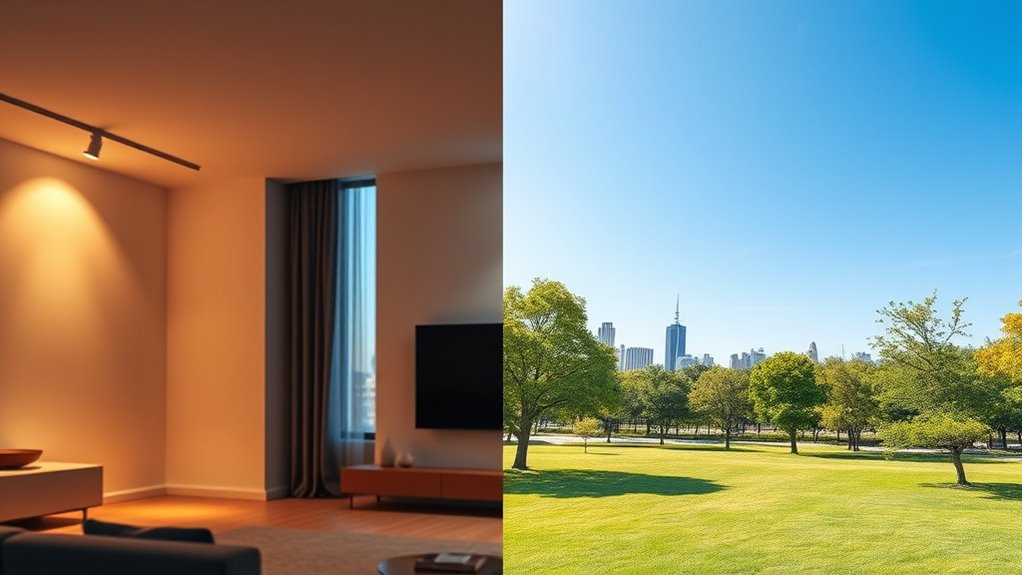

Indoor air quality can often be worse than outdoor levels, especially with poor ventilation and indoor sources like cooking fumes, smoking, and cleaning chemicals that trap pollutants inside. While outdoor air generally benefits from natural movement dispersing pollutants, indoor spaces can accumulate harmful particles and VOCs quickly. Proper ventilation and reducing indoor pollution sources are key to improving air quality indoors. Keep exploring to discover practical ways to protect yourself from both indoor and outdoor pollutants.
Key Takeaways
- Indoor air quality can be worse than outdoor air during poor ventilation and high pollution source activity indoors.
- Outdoor air typically disperses pollutants more effectively, often resulting in cleaner air than enclosed indoor spaces.
- Indoor pollutants like VOCs, dust, and mold can accumulate quickly without proper ventilation, exceeding outdoor pollutant levels.
- Outdoor pollution levels fluctuate with traffic, industry, and weather, but generally stay lower than poorly ventilated indoor environments.
- Effective ventilation and pollution source control improve indoor air quality, often making it healthier than outdoor air during high outdoor pollution events.

When comparing indoor and outdoor air quality, it’s important to understand that both environments can considerably impact your health. One key factor influencing this is ventilation rates. Inside, proper ventilation helps remove pollutants and bring in fresh air, reducing the concentration of harmful substances. Poor ventilation, on the other hand, allows indoor pollutants to accumulate, making the air less healthy to breathe. Outdoors, natural air movement often ensures higher ventilation rates, dispersing pollutants more effectively. However, indoor spaces with inadequate ventilation can trap pollutants like dust, mold, and volatile organic compounds, leading to higher exposure levels compared to outdoor air.
Pollution sources play a significant role in shaping air quality in both environments. Indoors, common pollution sources include smoking, cooking fumes, cleaning products, and building materials that emit VOCs. These sources often generate pollutants that remain concentrated in enclosed spaces, especially when ventilation is limited. Outdoors, pollution sources are more varied and widespread, including vehicle emissions, industrial activities, construction dust, and natural factors like pollen and wildfires. While outdoor air is often cleaner due to the dispersal of pollutants, high pollution levels in urban areas can lead to serious health issues.
The difference in pollutant levels between indoor and outdoor environments also hinges on how well each space manages its pollution sources. Indoor environments with high pollution sources and low ventilation rates tend to have elevated pollutant levels, sometimes exceeding outdoor concentrations. For example, a poorly ventilated kitchen during cooking can lead to high particulate matter and VOC buildup. Conversely, outdoor air may be cleaner overall but can become heavily polluted during rush hours or wildfires, making outdoor air quality fluctuate significantly.
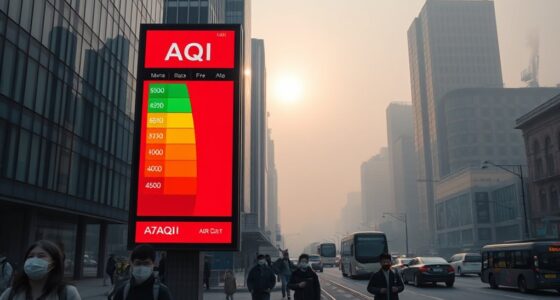
You might notice that indoor air quality can sometimes be worse than outdoor air, particularly in poorly ventilated spaces or in areas with high pollution sources. To mitigate this, you should aim to improve ventilation by opening windows, using exhaust fans, or installing air purifiers. These steps help dilute indoor pollutants and reduce their impact. Also, being mindful of pollution sources—like avoiding smoking indoors or limiting the use of harsh cleaning chemicals—can make a noticeable difference. Outdoors, staying informed about air quality indexes and avoiding outdoor activities during high pollution periods can help protect your health.
Additionally, adopting data-driven strategies for managing air quality can provide measurable improvements in both indoor and outdoor environments. In essence, understanding how ventilation rates and pollution sources influence air quality allows you to make smarter choices about your environment. Whether indoors or outdoors, reducing exposure to pollutants and improving air circulation are crucial steps toward safeguarding your health.
Frequently Asked Questions
How Do Seasonal Changes Affect Indoor and Outdoor Air Quality?
Seasonal variations profoundly impact your indoor and outdoor air quality by causing pollutant fluctuations. In winter, colder temperatures trap indoor pollutants, increasing their levels, while outdoor air may have higher levels of pollutants from heating sources. During summer, increased ventilation can improve indoor air, but outdoor levels might rise due to pollen and vehicle emissions. You can reduce risks by monitoring air quality and adjusting ventilation based on seasonal changes.
What Are the Long-Term Health Impacts of Indoor Air Pollutants?
Did you know that prolonged exposure to indoor air pollutants can increase your risk of respiratory diseases by up to 50%? Long-term health impacts include chronic respiratory issues, cardiovascular problems, and even cancer. Regular inhalation of indoor pollutants poses significant health risks, especially with sustained exposure. To protect yourself, make certain good ventilation, reduce sources of indoor pollution, and monitor air quality to minimize these long-term health threats.
How Do Building Materials Influence Indoor Air Pollution Levels?
Building materials substantially influence indoor air pollution levels because they can emit pollutants over time. When you choose materials like pressed wood or certain carpets, they release volatile organic compounds (VOCs) and other harmful substances. These pollutant emissions accumulate indoors, impacting your health. To reduce risks, opt for low-emission, eco-friendly building materials, guarantee proper ventilation, and regularly clean your living space to minimize indoor pollutant levels.
Can Indoor Air Purifiers Significantly Improve Air Quality?
Yes, indoor air purifiers can substantially improve air quality. Their effectiveness depends on the device’s quality and the type of pollutants you’re targeting. A good air purifier traps dust, allergens, and airborne microbes, boosting indoor air quality. You should choose one with a high CADR rating and proper filtration to guarantee it effectively removes pollutants and creates a healthier environment inside your home.
How Do Outdoor Pollution Levels Vary by Geographic Location?
Imagine breathing in a world where pollution varies like a rollercoaster. In urban areas, smog and vehicle emissions spike, creating thick air pockets, while rural regions often have cleaner air with emissions from farming and natural sources. Geographic location dramatically impacts outdoor air quality, with cities suffering higher pollutant levels due to dense traffic and industrial activity, whereas rural areas generally enjoy fresher air, but still face occasional pollution from agricultural activities.
Conclusion
Remember, indoor air is your cozy cave, while outdoor air is the wild frontier. Both have their secrets—hidden pollutants lurking in your living space and unseen dangers lurking outside. By staying vigilant and breathing smart, you’re the captain of your air quality ship. Keep windows open when you can, and clean regularly. With a little effort, you can turn your home into a fresh oasis, no matter what the outside world throws your way.